A new scientific review highlights cannabis polysaccharides—long carbohydrate molecules found in the plant—as a promising area of research with potential applications in health and wellness.
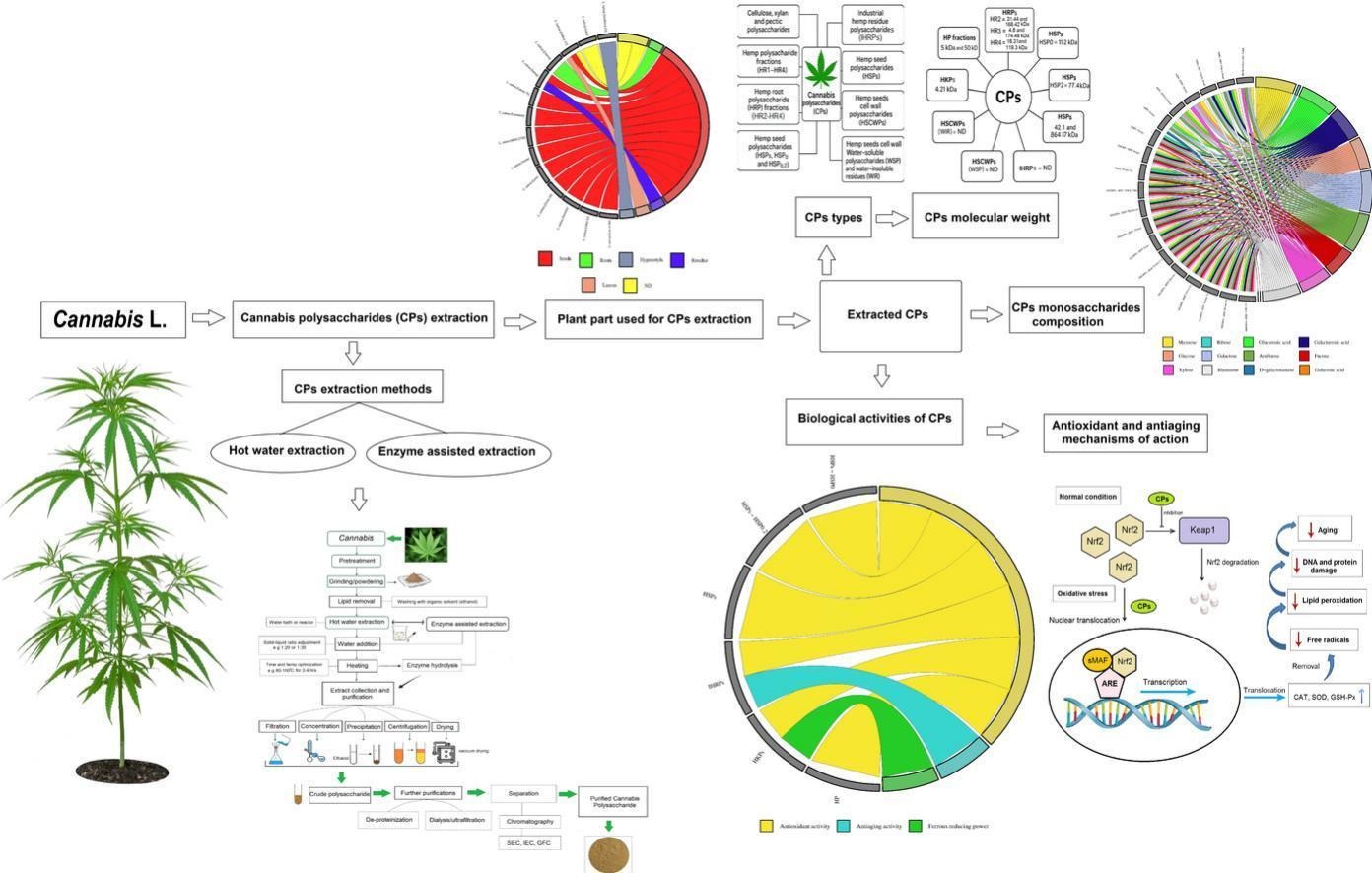
Researchers examined how these polysaccharides are extracted, their structural makeup, and the biological activities linked to them. The review, published by the International Journal of Biological Macromolecules, found that cannabis polysaccharides show strong antioxidant and anti-aging properties, effects that appear to be driven largely through the Nrf2/Keap1-ARE pathway, a central defense mechanism against oxidative stress.
The study notes that most work so far has focused on seed-derived polysaccharides, leaving cannabis leaves, roots, and other plant material largely unexplored despite their potential. The researchers found wide variation in molecular weight, ranging from just over 4 kilodaltons to more than 800, which can significantly alter both solubility and biological activity. They also emphasized that structural features such as branching, sulfation, and the presence of uronic acids may enhance antioxidant effects.
While the findings point to potential use in pharmaceuticals, nutraceuticals, and functional foods, the authors stress that more work is needed. Current data is mostly limited to lab studies, with little known about safety, absorption, or effects in humans. They recommend further investigation into cannabis polysaccharides from non-seed plant material, as well as standardized methods for extraction and analysis.
The review concludes that cannabis polysaccharides represent a promising but underdeveloped field of study, with early evidence suggesting they could one day play a role in combating oxidative stress and age-related conditions.
The full text of the study can be found by clicking here.
Sponsors: