Lawmakers in Thailand are preparing to vote on elevating Anutin Charnvirakul, the politician who spearheaded the country’s marijuana decriminalization, to prime minister.

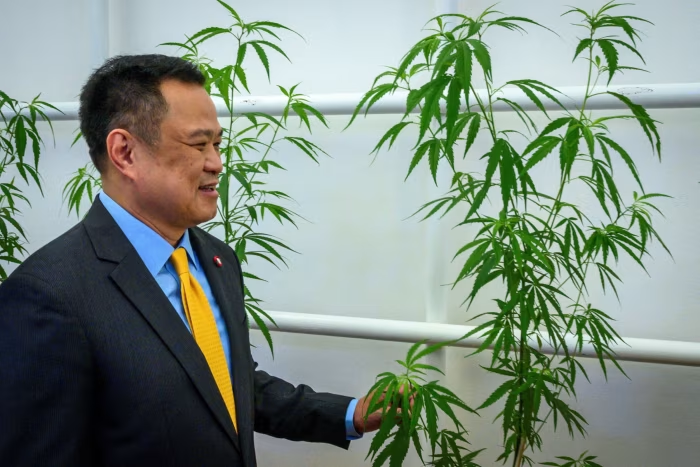
(Photo credit: Financial Times).
Known by many as “cannabis king,” Anutin is expected to secure enough support to form a government, making him Thailand’s third leader in less than a year.
Anutin, 58, rose to prominence as health minister during the pandemic, where he became the leading force behind Thailand’s 2022 decision to decriminalize marijuana—the first such move in Asia. His Bhumjaithai (Pride of Thailand) Party has built much of its brand on that reform, which helped drive tourism and new business before calls for tighter regulations emerged. While Anutin has since supported additional controls on cannabis, his image as the face of marijuana reform remains central to his political identity.
Backed by a family construction empire and years as a power broker in Thai politics, Anutin is now positioned to take the top role after striking a deal with the opposition People’s Party, the largest bloc in parliament. The pact is expected to give him enough votes in the lower house to win Friday’s leadership contest. As part of the agreement, Anutin has promised to dissolve parliament within four months and call fresh elections. The People’s Party, however, has said it will not join his government despite backing him in the vote.
His potential elevation follows the dramatic removal of Paetongtarn Shinawatra, who was ousted by the constitutional court last week for ethics violations. The ruling was another blow to the Shinawatra dynasty, which has shaped Thai politics for two decades but is now losing its grip.
Thailand remains mired in political turmoil, with five prime ministers removed by the judiciary in the last 17 years. Its economy, heavily dependent on exports and tourism, is also under strain, facing new tariffs from the U.S. and slow post-pandemic recovery. Anutin’s rise highlights both the volatility of Thailand’s political landscape and the lasting impact of marijuana policy on its shifting balance of power.
Sponsors: