A newly published study in Biomedicine & Pharmacotherapy reports that cannabidiol (CBD) may counter several long-term emotional, neurological, and gut microbiota disturbances caused by fetal alcohol spectrum disorder.

The research was conducted by scientists from Åbo Akademi University and the University of Turku.
Using a C57BL/6 J mouse model of fetal alcohol spectrum disorder, the team examined how prenatal alcohol exposure affects emotional behavior, brain biomarkers, and gut microbiota composition. The study also tested whether chronic CBD treatment beginning at weaning—30 mg/kg per day administered intraperitoneally—could reverse or reduce those impacts.
For the study, mice exposed to alcohol before birth displayed elevated anxiety- and depressive-like behaviors, along with sex-dependent disruptions in synaptic density, dopamine D2/D3 receptor availability, cannabinoid receptor expression, tyrosine hydroxylase, and serotonin transporter gene activity. Researchers also documented clear gut microbiota dysbiosis.
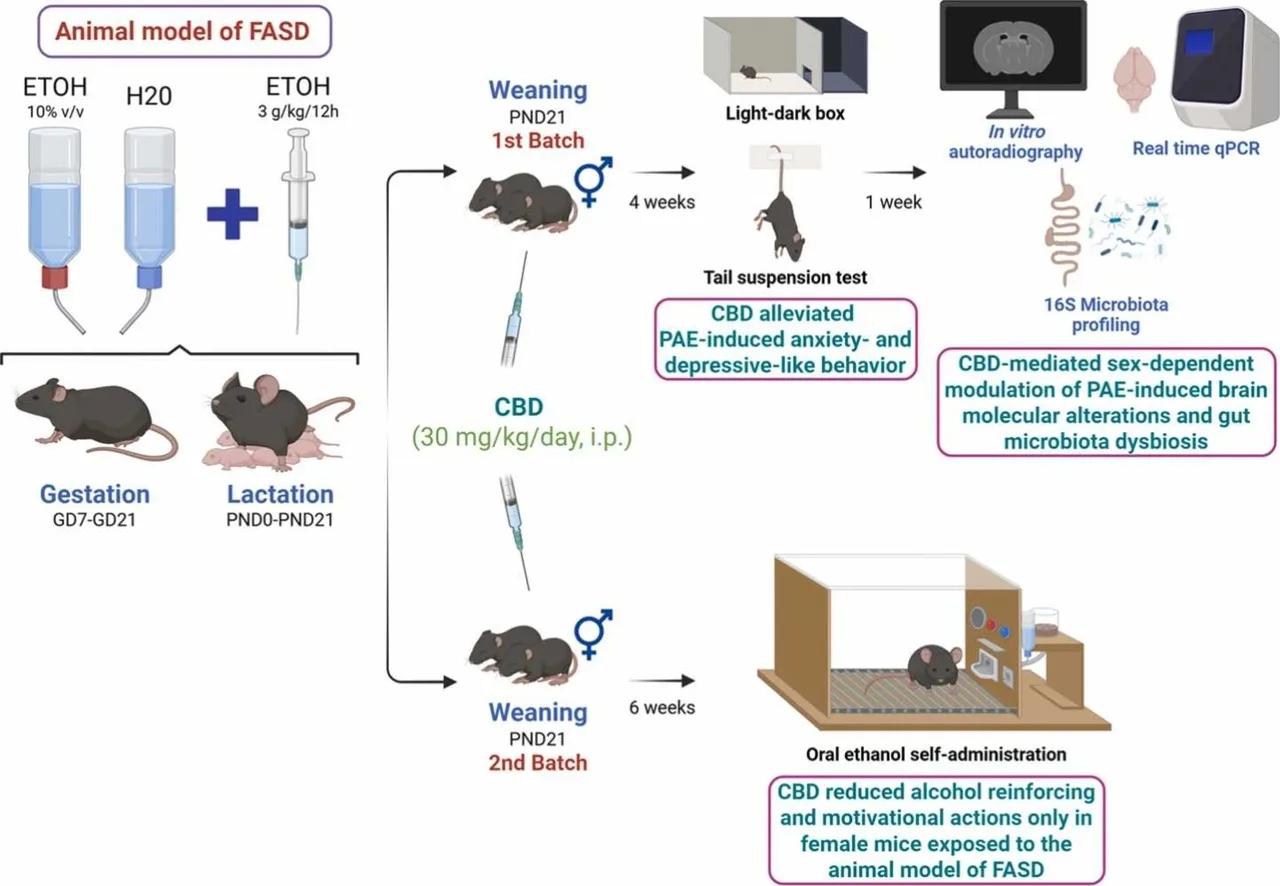
CBD treatment improved or normalized many of these behavioral and molecular disturbances, with the effects varying by sex. One of the most notable findings involved alcohol-seeking behavior: females exposed to the FASD model showed a higher motivation to drink alcohol, but CBD eliminated this increased drive, while males showed no comparable vulnerability.
Researchers say the results suggest that CBD could play a future therapeutic role in managing emotional symptoms and alcohol-related behaviors associated with fetal alcohol spectrum disorder, particularly when sex-specific factors are taken into account.
You can find the full text of this study by clicking here.
Sponsors: