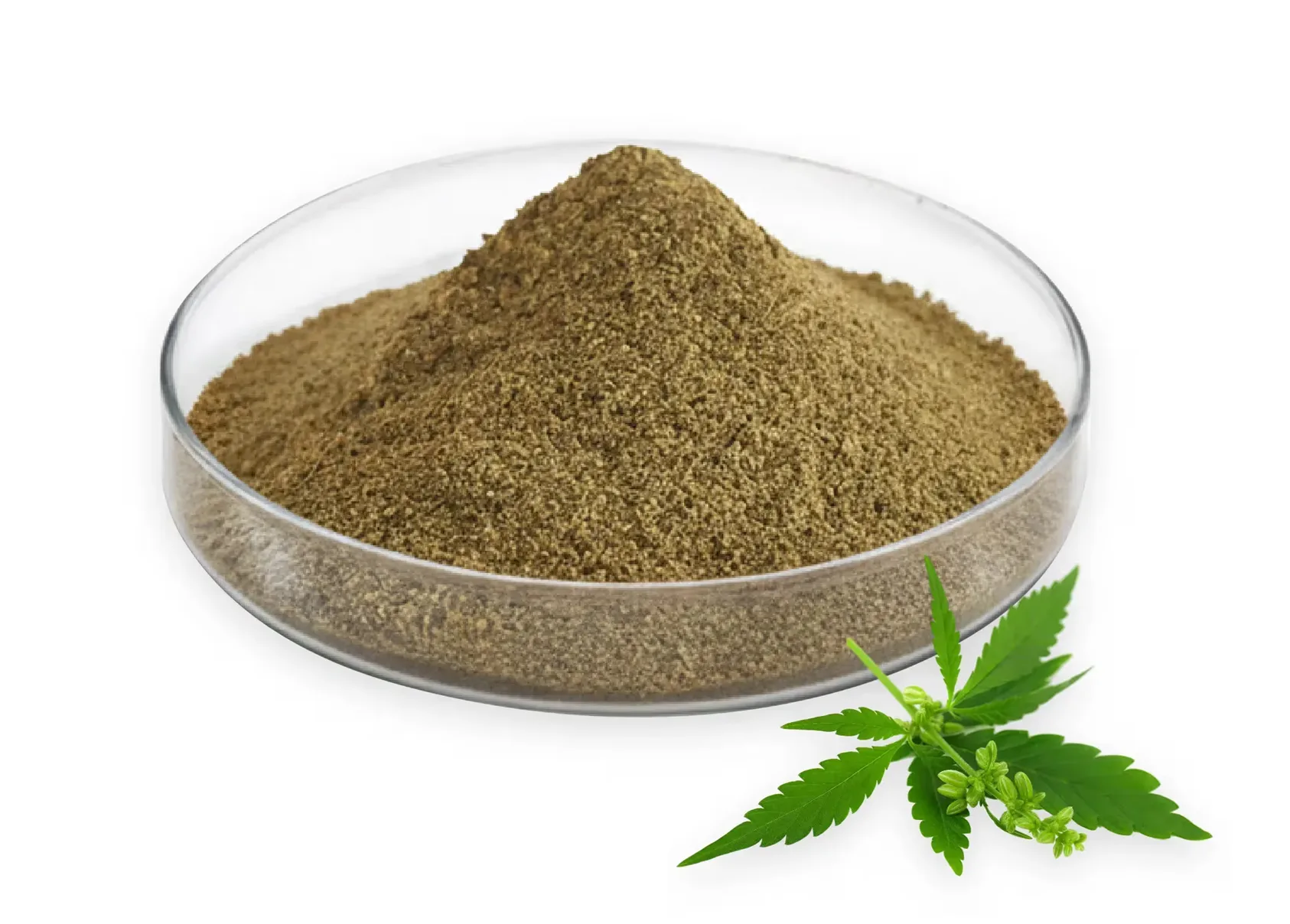
Hempseed meal (photo credit: Thaiva groups).
A study published today by the journal Poultry Science finds that adding hempseed meal to the diets of laying hens can improve egg production, feed efficiency and yolk fatty acid content without harming the birds’ health.
Researchers from Erciyes University in Turkiye, along with Government College University Faisalabad and the University of Agriculture in Pakistan, evaluated how cold- and hot-processed hempseed meal affected performance and egg quality in 150 Super Nick hens over a 16-week period.
The hens, all 37 weeks old at the start of the trial, were divided into three groups: a control group fed no hempseed meal, a group fed 15% cold-processed hempseed meal (60°C), and a group fed 15% hot-processed hempseed meal (120°C). Researchers tracked body weight, feed intake, egg production, shell quality, yolk color and fatty acid composition, along with several blood biochemical markers.
While final body weight and feed intake were unchanged, hens receiving cold-processed hempseed meal showed a statistically significant improvement in feed conversion ratio compared to the control group. Both hempseed meal diets led to higher hen-day egg production and noticeably deeper yolk pigmentation.
Hot-processed hempseed meal had additional benefits for shell strength, increasing eggshell weight, thickness and shell ratio. Internal egg quality measures, however, remained consistent across all groups.
Fatty acid analysis revealed higher levels of linoleic acid (C18:2n6c) and alpha-linolenic acid (C18:3n3) in the yolks of hens fed hempseed meal, alongside a reduction in oleic acid (C18:1n9c). These shifts indicate enrichment with beneficial polyunsaturated fatty acids.
Blood testing showed lower triglyceride levels in hens fed the hot-processed hempseed meal, while markers of liver and kidney function, including creatinine, AST and ALT, were unaffected.
Researchers concluded that incorporating 15% hempseed meal into laying hen diets can enhance productivity, improve shell characteristics and enrich yolk fatty acids without adverse physiological effects, with processing temperature influencing the degree of impact.
Sponsors: