Exosome.
A study published in Cancer Letters by researchers from the University of Louisville found that a specially designed oral CBD formulation significantly improved tumor targeting and slowed the growth of aggressive triple-negative breast cancer in mice, while also altering the activity of more than 1,000 genes tied to cancer progression.
Triple-negative breast cancer is among the hardest forms of breast cancer to treat, in part because it is highly metastatic and current treatment options can come with substantial side effects. In this study, researchers examined whether exosomes, which are tiny naturally derived vesicles, could be used to improve how CBD is delivered in the body. They tested both standard CBD-loaded exosomes and a folic acid-functionalized version designed to better target tumors.
The findings indicate that the folic acid-functionalized formulation, referred to as FA-ExoCBD, outperformed both free CBD and non-functionalized exosome formulations in several key areas. The researchers found that the treatment improved oral delivery, enhanced tumor targeting and retention, and produced stronger inhibition of tumor growth in an orthotopic mouse model using MDA-MB-231 triple-negative breast cancer cells.
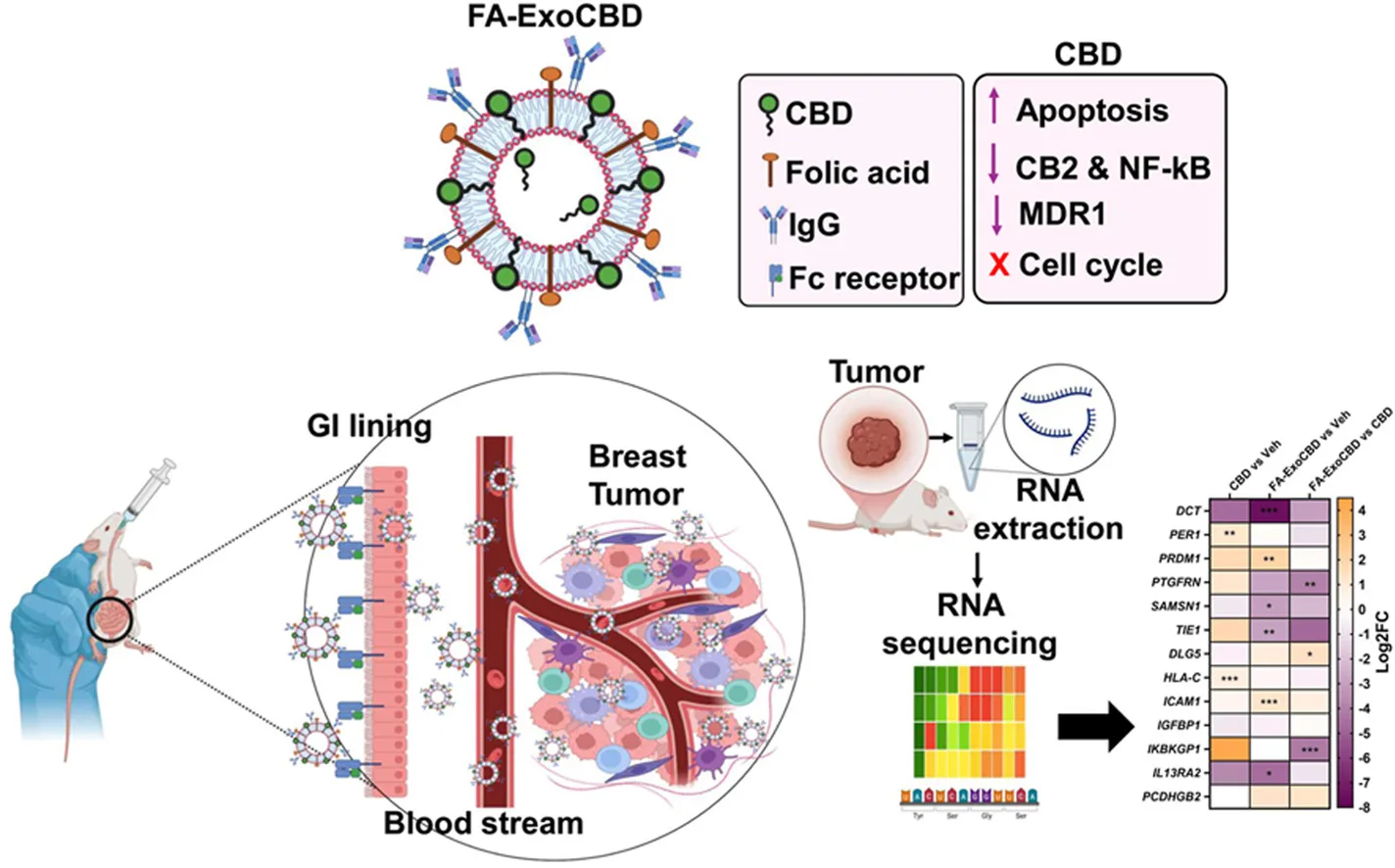
The study also found that triple-negative breast cancer cell lines, including a taxol-resistant version, were more sensitive to CBD’s growth-inhibiting effects than estrogen receptor-positive breast cancer cell lines. According to the researchers, the exosome-based formulations also showed controlled, time-dependent release of CBD under simulated gastric and intestinal conditions while remaining stable in acidic environments.
In addition to reducing tumor growth, CBD and FA-ExoCBD affected important molecular pathways. Researchers reported that CBD reduced anti-apoptotic and anti-inflammatory markers, while RNA sequencing showed that both treatments changed the expression of more than 1,000 genes in tumor tissue. FA-ExoCBD in particular significantly lowered IL13RA2, a gene associated with lung metastasis, as well as tumor biomarkers TRPM2 and SAMHD1. At the same time, it increased tumor suppressor genes including PRDM1, PCDHGB2 and ICAM1.
The researchers say these results suggest that exosome-based oral CBD delivery may improve CBD’s therapeutic profile by increasing bioavailability, strengthening tumor selectivity and boosting anti-cancer activity. Although the findings remain preclinical and were not conducted in humans, they point to a potentially important new approach for using CBD against difficult-to-treat breast cancers.
Sponsors: