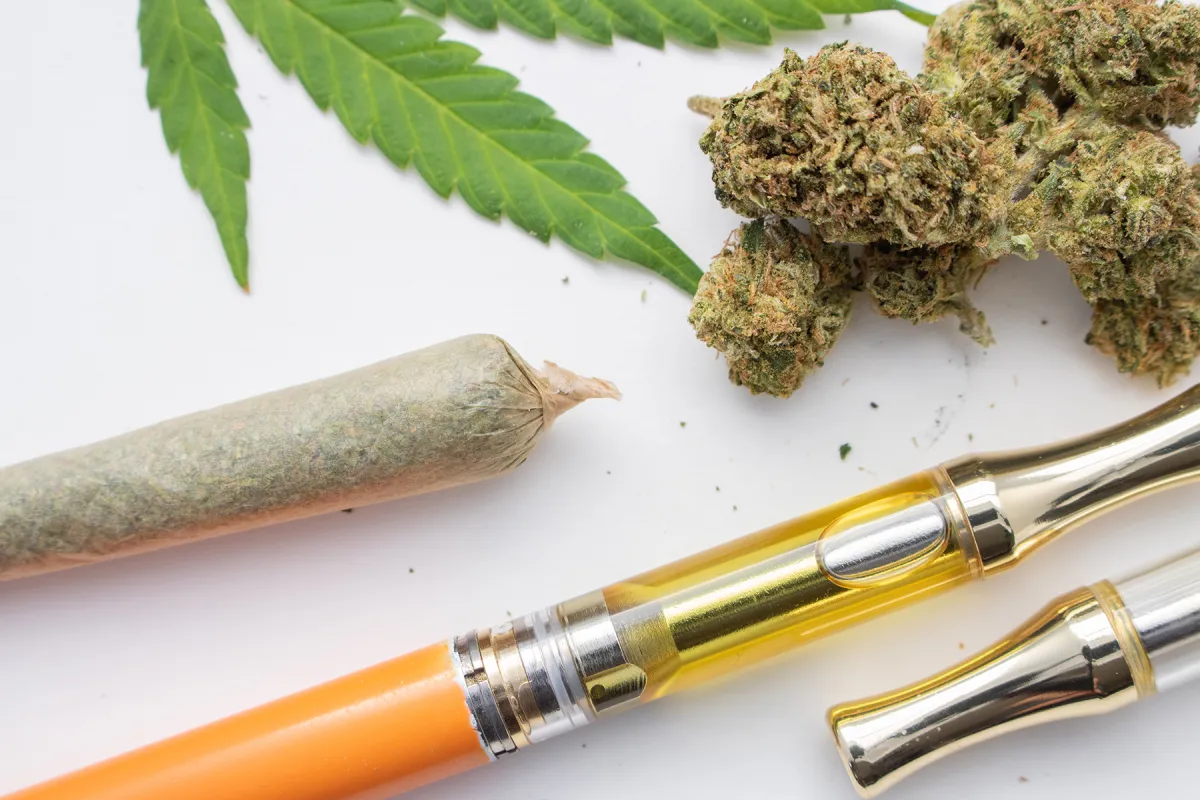
Cannabis vape pens expose users to significantly less harmful toxins than smoked joints, according to a new lab study sponsored by California NORML.
The study compared the emissions of two different vape pens – a disposable and a reusable cartridge model – with pre-roll joints purchased from a San Diego dispensary. The vape pens emitted significantly cleaner emissions than the joint for almost all toxins tested, and, unlike the joint, were within EPA safe daily exposure limits for regular users.
“The dangers of vapes have been misrepresented by anti-smoking advocates to suggest their emissions are as hazardous as smoke,” says Cal NORML director Dale Gieringer. “They are not.”
Because federal regulations have limited research involving state-legal cannabis products, Cal NORML sponsored a first-of-its-kind pilot study using vape pens purchased from a licensed California dispensary. Unlike herbal vaporizers, vape pens use concentrates, often with added terpenes, and include metal components that may create separate safety concerns.
The study, conducted by NN Analytics with input from MayThe5th, used a puffing machine to collect equal samples from vape pens and a cannabis joint. Researchers then tested the emissions for cannabinoids and a dozen key toxic compounds using standard mass spectrometry methods.
KEY RESULTS
- The vape pens completely eliminated benzene and acrolein, two highly noxious compounds that appeared above safe exposure levels in the joint. Most other toxins were reduced tenfold or more, except for heavy metals and formaldehyde. High temperatures are known to generate formaldehyde and other toxins from terpenes and vape oils.
- The vape pen concentrates were nearly 4 times more potent than the joint (83-86% THC vs 23% THC), but emitted only 1.2 to 2.2 times as much delta-9 THC per puff as the joint. THC delivery varies greatly depending on device design, temperature, and usage – factors that deserve further research. In practice, some users report they can’t get as high from a vape as a joint, while others report the opposite. “Potency differences are not an accurate gauge of THC vapor delivery,” comments Gieringer.
- The only toxins for which vapes scored worse than the joint were the heavy metals nickel and chromium. Both metals are key components of nichrome wire, which is used for vape heating coils but might well be replaced by a less volatile substitute. The joint had higher levels of lead and cadmium.
- Devices were evaluated for safety to human health based on EPA and OSHA exposure standards. Exposure to toxins was measured on the assumption that a regular user inhales 22 puffs per day, or about three joints. The vapes were well within all applicable EPA daily exposure limits, while the joint was not. Heavy metals were far below OSHA, NIOSH and Cal-OSHA occupational exposure limits for both vapes and joints.
Study sponsors (Cal NORML, MayThe5th and NN Analytics) call on the industry and public health agencies to support further research on cannabis vape pens. Vape products are now outselling flower in California, yet virtually all published research on inhaled cannabis has focused on smoking, not vaping.
“It’s time to end government restrictions that have hindered research into cannabis vape products that are readily available to U.S. consumers,” says Gieringer. The recent federal rescheduling order could help open the way for state-licensed medical cannabis products to finally become eligible for research.
Since 1972, California NORML has advocated for the rights, health and safety of cannabis consumers in California, including sponsoring some of the first studies on vaporizers, starting in 2001.
To view the full White Paper, click here.
Sponsors: