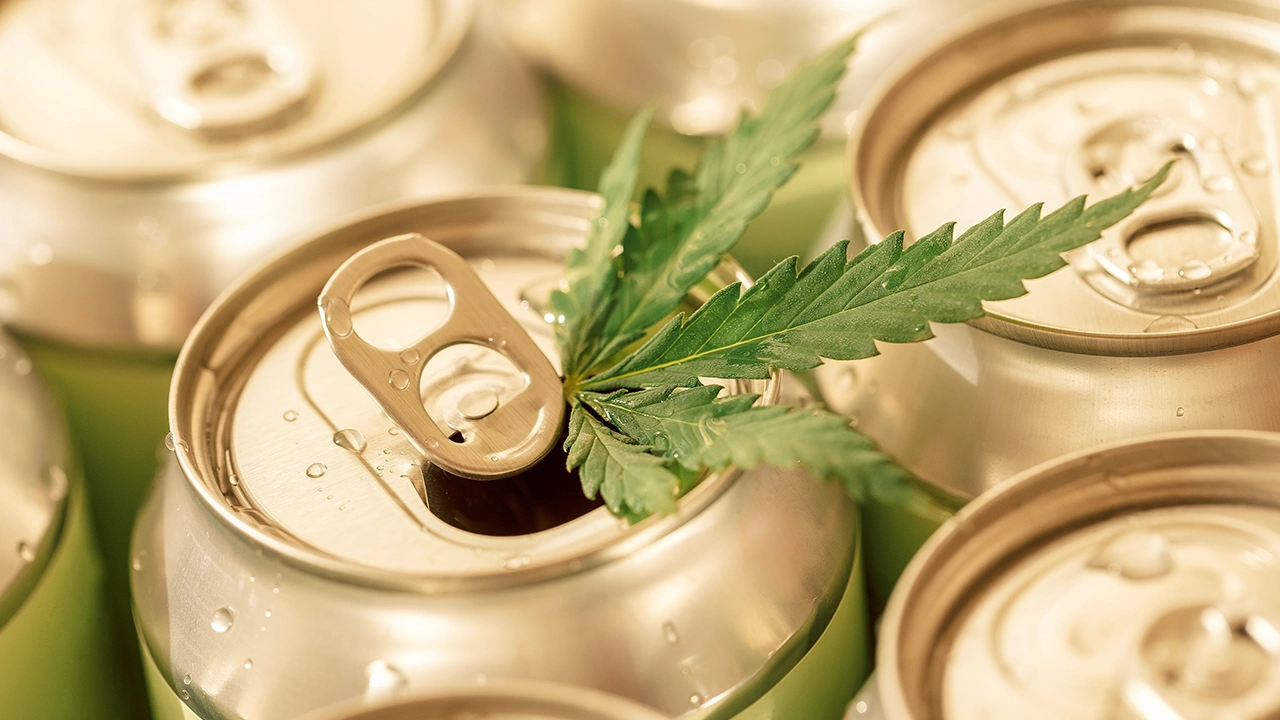
Delaware’s Senate Banking, Business, Insurance & Technology Committee today advanced legislation that would create a statewide regulatory system for THC-infused beverages, sending the measure to the Senate Finance Committee.
House Bill 373 has already passed the House, which approved it on June 16 in a 34 to 5 vote, with one member not voting and one absent.
The proposal, filed by Representative Debra Heffernan (D) and cosponsored by Representatives Edward Osienski (D), Nnamdi Chukwuocha (D) and Alonna Berry (D), along with State Senators Daniel Cruce (D), Stephanie Hansen (D) and Raymond Seigfried (D), would amend Delaware’s alcohol and marijuana laws to regulate the manufacture, distribution and sale of THC-infused beverages.
Under the bill, infused beverages would be defined as nonalcoholic drinks containing delta-9 extract, with no more than 10 milligrams per container and no more than 60 milligrams in a multi-container package. The beverages could not contain any THC other than delta-9 extract or nonintoxicating cannabinoids.
The measure would allow the products to be sold for off-premises consumption by licensed package stores and retail marijuana stores. Package stores would need to keep infused beverages in a designated section separate from alcohol, nonalcoholic mixers, marijuana and marijuana products, with signage clearly stating that the products contain THC.
The bill would also allow certain microbreweries to sell infused beverages for off-premises consumption if they meet state requirements, including maintaining a designated storage area, paying required fees, complying with product holding rules and reporting direct-to-consumer sales to the Division of Revenue.
House Bill 373 would impose a tax of $0.50 per infused beverage container, with revenue credited to the Marijuana Regulation Fund. The measure also increases potential penalties for selling marijuana, marijuana products or infused beverages to someone under 21, allowing fines of up to $10,000 for subsequent violations within a five-year period.
The proposal includes packaging, labeling, testing and advertising requirements, including a ban on packaging or advertising designed to appeal to children. It would also prohibit third-party delivery, mail delivery and other indirect sales to consumers, though package stores could accept online orders for in-store pickup or curbside delivery.
According to the official synopsis, the legislation would take effect 90 days after enactment. Because it includes a tax and license fee, the bill requires a three-fifths vote in each chamber for passage.
With today’s committee action, HB 373 now awaits consideration in the Senate Finance Committee before it can advance to the full Senate.
Sponsors: