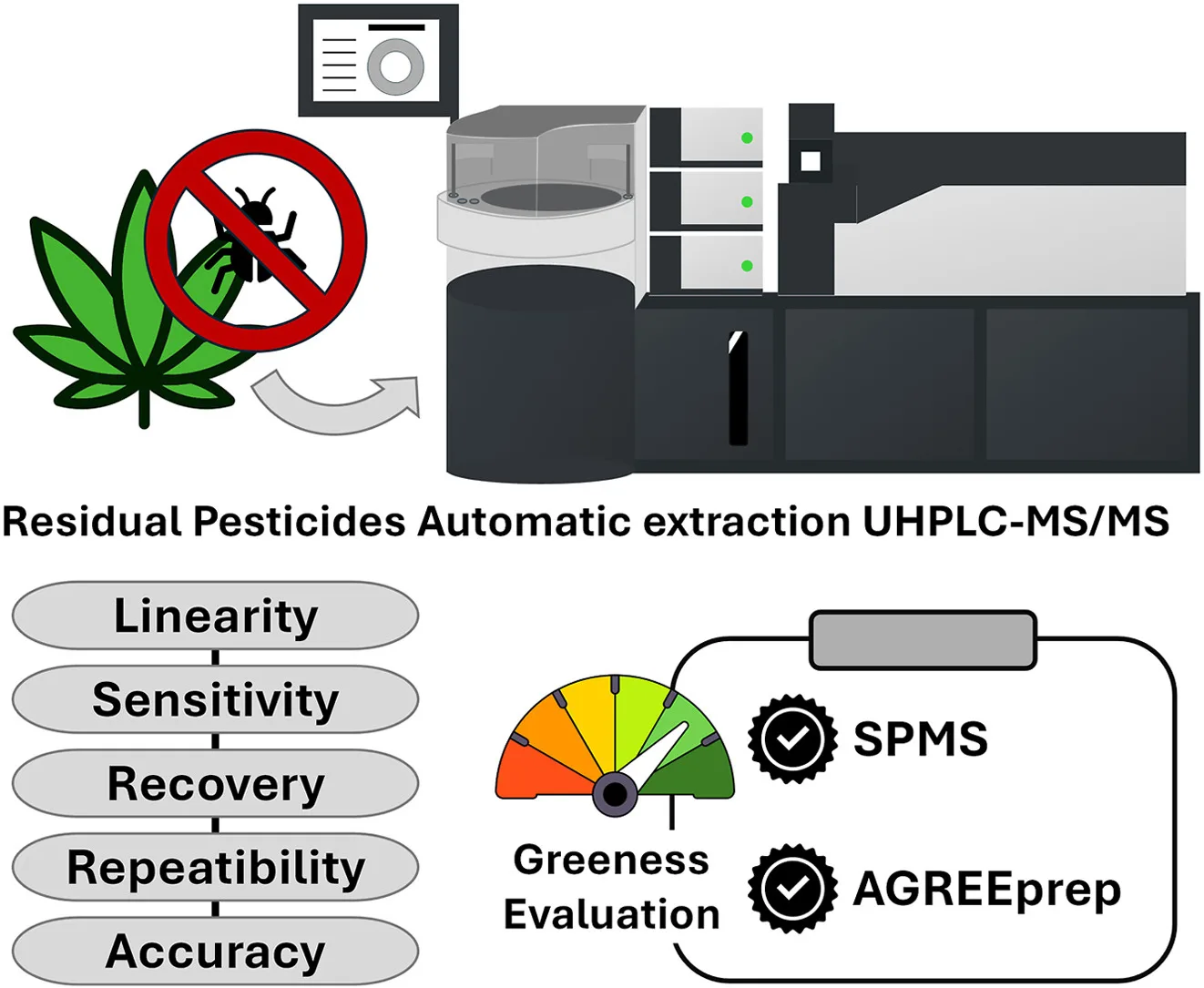
A study published in Talanta found that a robotic platform paired with ultra-high-performance liquid chromatography-tandem mass spectrometry (UHPLC-MS/MS) can rapidly screen cannabis for pesticide residues using a small, sustainable sample preparation process.
Researchers from the University of Messina and the University of Urbino Carlo Bo developed an automated method for testing Cannabis sativa L. flowering tops, requiring just 30 mg of dried sample and 200 μL of acetonitrile as the sole extraction solvent. The full analysis took 25 minutes per sample, including a 10-minute extraction cycle.
The study focused on improving pesticide testing at a time when cannabis cultivation continues to expand globally, and pesticide residue screening remains important for protecting consumers, particularly those using cannabis products by smoking or vaping.
According to the researchers, the method showed strong performance across several validation measures, including repeatability, recovery, accuracy and linearity. Limits of quantification were 0.005 μg/g for most analytes, with slightly higher limits of 0.01 μg/g for aldicarb and boscalid. Recoveries ranged from 72.3% to 116.2%, within the acceptable 70% to 120% range under SANTE guidelines.
The researchers also evaluated the environmental sustainability of the method using SPMS and AGREEprep tools. The automated method scored higher than the conventional QuEChERS workflow, suggesting it may offer a greener and more efficient alternative for pesticide residue testing in cannabis.
The study concludes that automated, miniaturized sample preparation could help laboratories screen cannabis flower more quickly while reducing solvent use, sample size and manual handling.
Sponsors: