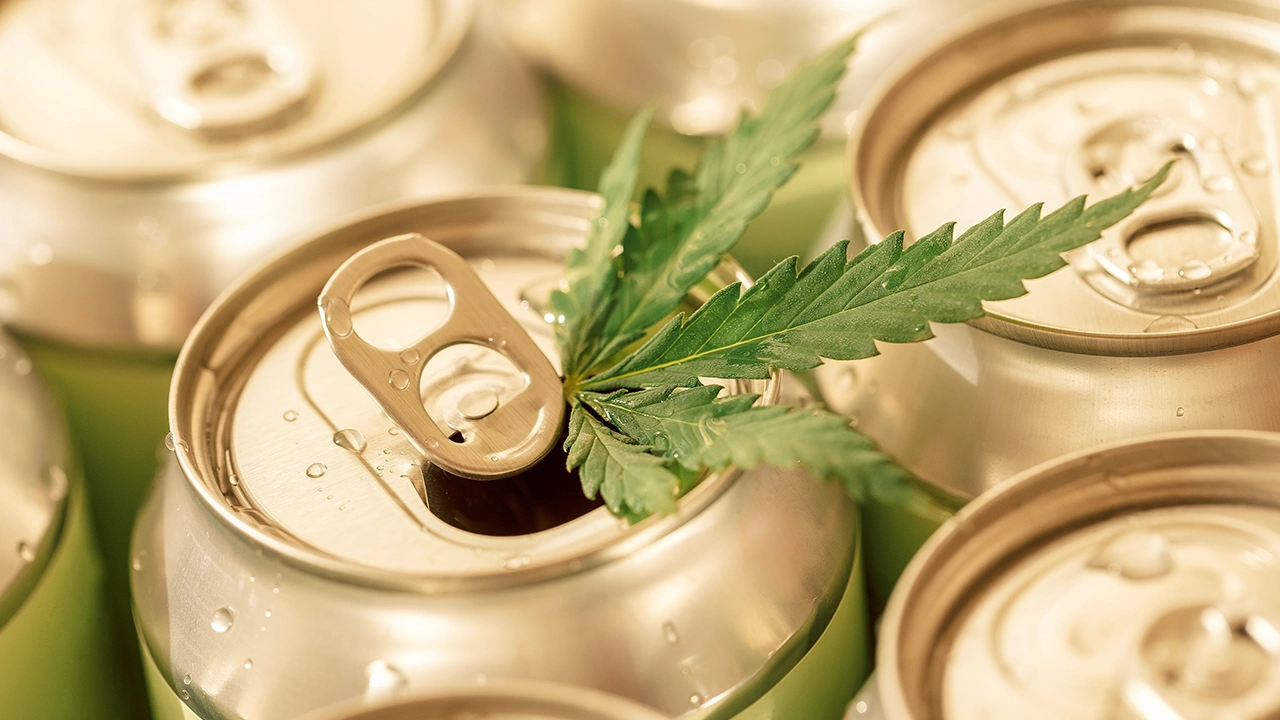
A new survey from Crescent Canna found that more than three-in-four THC beverage consumers say they have reduced or eliminated alcohol consumption since trying THC drinks.
The company’s second annual THC Beverage Consumer Survey included responses from 1,637 adults 21 and older who had tried a THC beverage at least once. The survey was conducted from May 29 to June 11, with responses gathered from Crescent Canna customers, social media, LinkedIn and a broader network of THC beverage consumers.
According to the survey, 76.6% of respondents said they have reduced alcohol consumption since trying THC beverages. This includes 36.8% who said they now drink much less alcohol, 18.7% who said they drink slightly less and 21.1% who said they have quit alcohol entirely. Just 0.5% said they are consuming more alcohol.
Relaxation was the most common reason respondents gave for consuming THC beverages, with 79.4% saying they use them to relax or unwind. That was followed by liking how the products make them feel at 65.9%, avoiding hangovers at 59.5%, avoiding the negative effects of alcohol at 51.1% and helping with sleep at 50%.
The survey also found that THC beverage consumers tend to use the products regularly. A total of 69.8% said they consume THC beverages at least once per week, including 37.7% who said they consume them three or more times per week. The most common dose purchased was 10 milligrams, chosen by 29.4% of respondents, followed by 50 milligrams at 23.7% and 5 milligrams at 22.7%.
Crescent Canna also asked respondents how THC beverages have affected their use of other cannabis products. More than a third, 36.3%, said they use other THC products less often since adopting beverages, while 14.5% said they now consume THC only in drink form. Another 40.6% said their use of other THC products has not changed.
The survey comes as the hemp-derived THC beverage industry faces uncertainty at the federal level. Crescent Canna notes that federal legislation could make hemp-derived THC products illegal as soon as November 12, 2026. The survey found that 86.7% of respondents were aware of the potential ban, including 51.4% who said they have been following the issue closely.
That awareness appears to be affecting purchasing behavior. According to the survey, 26.9% of respondents said they are already stocking up or buying more frequently than usual, while 41.2% said they plan to change their purchasing behavior but have not yet done so.
If hemp-derived THC beverages became unavailable, 67.3% of respondents said they would shift to other forms of THC, while 23.4% said they would drink more alcohol. Just 8% said they would stop consuming THC entirely.
The company says the results show that THC beverages have become a regular part of many consumers’ routines, particularly among adults using them as an alternative to alcohol. The survey found that 44.3% of respondents consider THC beverages part of their regular wellness routine, while 83.2% said they would be more likely to consume them if they were more widely available at bars, restaurants and venues.




