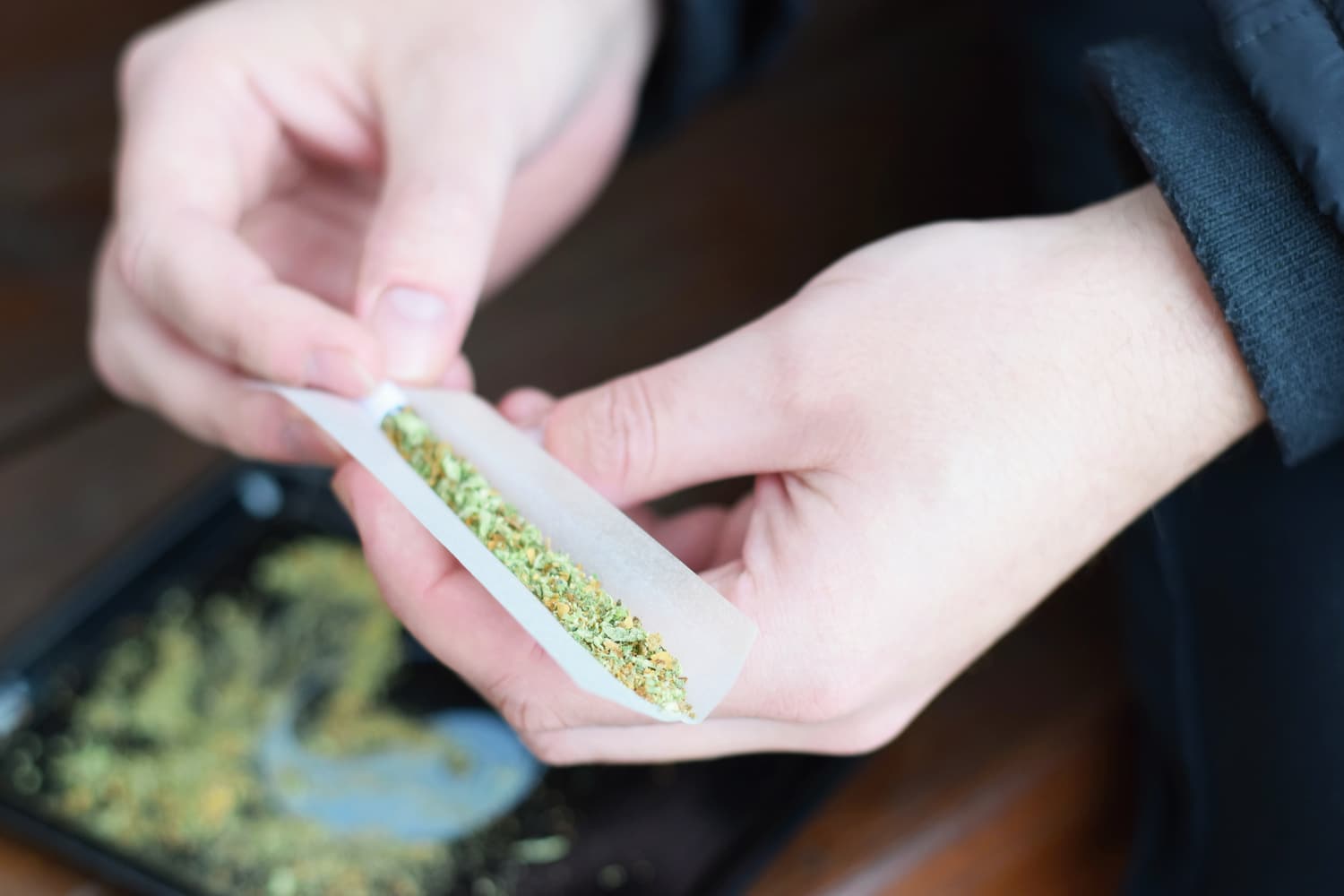
Some form of commercial or regulated on-site marijuana consumption is authorized or recognized in 15 states, although availability varies significantly depending on local laws and how far regulators have progressed with licensing.
Alaska, Arizona, California, Colorado, Illinois, Maryland, Massachusetts, Michigan, Minnesota, Missouri, Nevada, New Jersey, New Mexico, New York and Rhode Island have laws allowing some form of on-site marijuana use. Washington, D.C., also allows certain medical marijuana dispensaries to operate permitted consumption spaces.
However, being legal at the state level does not mean lounges are available statewide—or that any have opened. Most states require cities or counties to affirmatively allow consumption businesses, and several are still developing regulations or preparing to accept applications.
The types of businesses also differ. Some states allow dispensaries to add consumption areas, while others license independent lounges where customers bring marijuana purchased elsewhere. Several states authorize only temporary events or impose restrictions on smoking, food and product sales.
Alcohol is prohibited at marijuana consumption establishments in nearly every state, and entry is generally limited to adults 21 and older.
Here is where marijuana consumption lounges are legal in 2026 and how each state’s system works.
Alaska
Alaska allows licensed marijuana retailers to apply for endorsements permitting on-site consumption in designated areas attached to dispensaries, but local governments must authorize the businesses before they can operate. Indoor smoking may be allowed in freestanding buildings with proper ventilation and a separate smoke-free monitoring area for employees, while outdoor areas must be screened from public view.
Retailers may sell non-marijuana food and beverages, but alcohol cannot be sold or consumed on the property.
Arizona
Arizona does not have a dedicated state license for marijuana consumption lounges. However, private, membership-based establishments may allow on-site use under private-property rules, provided they comply with state and local restrictions. Marijuana smoking remains prohibited in public places and open spaces.
Arizona’s structure is more limited than systems in states such as Nevada or California because it does not create the same direct dispensary-to-lounge purchasing model.
California
California allows cities and counties to authorize marijuana retailers to operate on-site consumption areas, while the state also issues temporary marijuana event licenses that may allow consumption at approved festivals and other gatherings. Local governments determine whether lounges can operate and establish many of the rules governing them, creating a patchwork in which communities such as West Hollywood, Palm Springs, San Francisco, Oakland, Coachella and Hawthorne have authorized some form of on-site use while most others continue to prohibit it.
Assembly Bill 1775, enacted in 2024, expanded what licensed consumption lounges may offer beginning in 2025. Approved businesses may prepare and sell non-marijuana food and beverages and host live entertainment, subject to local authorization and health requirements. Before the change, lounges often had to rely on food delivery or separate businesses because marijuana retailers generally could not operate like traditional cafés. Local governments may allow indoor smoking and vaping, but businesses must comply with ventilation and filtration requirements intended to prevent smoke and odors from escaping. Alcohol remains prohibited.
California was home to what was widely described as the country’s first licensed marijuana café when the Original Cannabis Cafe opened in West Hollywood in 2019. The state now has one of the country’s largest and most diverse lounge markets, although several high-profile businesses have struggled or closed because of high costs and regulatory restrictions.
Colorado
Colorado has two primary marijuana hospitality license types. Marijuana hospitality establishments allow customers to bring their own products but cannot sell marijuana and may operate from fixed locations or as mobile businesses, such as marijuana tour vehicles. Marijuana hospitality and sales establishments may sell products for use on the property but cannot operate as mobile businesses. Cities and counties must opt in before either license type can operate, with Denver emerging as the state’s leading market while many other communities have declined to allow them.
Local governments may authorize indoor smoking and vaping. Mobile lounges must separate the driver from the consumption area and maintain an independent ventilation system. Businesses with appropriate food-service authorization may prepare food, while others may generally offer prepackaged food, pastries and hot nonalcoholic drinks. Alcohol cannot be sold, possessed or consumed at licensed marijuana hospitality businesses. Colorado lawmakers considered proposals in 2025 and 2026 to authorize temporary marijuana hospitality events, but neither became law.
Illinois
Illinois allows local governments to approve marijuana consumption areas connected to licensed dispensaries and may also authorize on-site use at certain tobacco retailers. Dispensary consumption areas must be separated from the retail portion of the business by a secured door, while approved tobacco retailers generally operate under a bring-your-own-marijuana model because they cannot sell marijuana.
Municipalities may authorize indoor smoking, but businesses must comply with ventilation, building and public health requirements. Prepackaged food may be available, although food cannot be prepared in areas where smoking is allowed, and alcohol sales and consumption are prohibited. While state law authorizes consumption areas, Illinois does not have an extensive statewide lounge market, and availability depends heavily on local ordinances.
Maryland
Maryland’s recreational marijuana law creates licenses for up to 50 on-site consumption establishments statewide, although cities and counties may decide whether to allow them and may further restrict smoking and vaping. Indoor smoking is prohibited, while smoking may be allowed outdoors in approved areas such as patios. Consumption establishments may also operate as food-service businesses if they meet state and local health requirements.
Only single-serving marijuana products may be sold for on-site use, and customers cannot bring outside marijuana into an establishment or remove leftover products from the premises. Alcohol is also prohibited. Maryland initially placed on-site consumption licensing in a later phase of the recreational market, but lawmakers changed the process in 2025 by removing a planned allotment of 15 licenses from the second licensing round. As of July 2026, the Maryland Cannabis Administration had not issued any on-site consumption licenses.
Massachusetts
Massachusetts’ social consumption regulations took effect January 2, 2026, creating three categories of licenses.
A supplemental license will allow an existing marijuana business to add on-site consumption. A hospitality license will allow qualifying marijuana businesses to work with new or existing non-marijuana businesses. An event organizer license will authorize temporary marijuana consumption events.
Cities and towns must opt in through an ordinance, bylaw or voter referendum. Businesses must also negotiate host community agreements and comply with additional local zoning and operating conditions.
Municipalities can prohibit smoking and require establishments to limit consumption to nonsmoked products.
Licensed businesses will be allowed to sell shelf-stable, prepackaged and non-marijuana food. They may also arrange restaurant delivery or establish partnerships with nearby food businesses.
Alcohol and tobacco cannot be sold or consumed at social consumption establishments.
Although the regulations are in effect, Massachusetts had not immediately opened license applications when the rules were adopted. The Cannabis Control Commission said it still needed to build the application system, develop staff procedures and complete other implementation work. The first businesses may therefore not open until well after the regulations’ effective date.
The licenses will initially be reserved for Social Equity Program participants, certified economic empowerment applicants, microbusinesses and craft marijuana cooperatives. The 36-month exclusivity period will begin once at least one licensee in each of the three social consumption license categories has received authorization to commence operations.
Michigan
Michigan licenses designated consumption establishments where adults may use marijuana in approved commercial settings. Businesses generally operate under a bring-your-own model, although they may be located next to affiliated marijuana retailers or microbusinesses. Customers must complete purchases outside the lounge before entering the consumption area, and local governments must approve the establishments. Michigan also licenses temporary marijuana events where products may be sold and consumed within an approved area.
Indoor smoking is allowed at locally approved establishments, but businesses must install ventilation and filtration systems designed to remove visible smoke and provide employees with a smoke-free monitoring area. Consumption establishments must be separated from other businesses, including those that serve alcohol. Food service is restricted unless the business or event has received the required authorization, and alcohol cannot be sold or consumed in the licensed area.
Minnesota
Minnesota allows certain marijuana microbusinesses to receive endorsements for on-site consumption, while lower-potency hemp edible retailers may also offer qualifying products for use on the property. Microbusinesses may sell marijuana products for consumption in an approved area, but smoking and vaping are prohibited, generally limiting customers to edibles, beverages and other nonsmoked products.
Lower-potency hemp businesses may prepare and serve qualifying THC-infused food and drinks, as well as sell alcohol under applicable state licensing laws. However, THC products cannot be sold to visibly intoxicated customers or be designed or marketed for mixing with alcoholic beverages. Businesses may also offer live or recorded entertainment.
Minnesota separately authorizes temporary marijuana events, where smoking may be allowed with local approval and compliance with state regulations. The state’s model differs from most lounge systems by emphasizing marijuana-infused food and beverages rather than indoor smoking.
Missouri
Missouri’s constitution allows local governments to regulate designated marijuana-consumption areas, including locations serving freshly prepared infused dishes or beverages.
Local governments may establish zoning, safety and operational requirements for those areas.
However, the state has not established a detailed, dedicated consumption-lounge licensing system comparable with those in states such as Nevada, New Jersey and Massachusetts. The availability and operating rules depend largely on decisions made by individual local governments.
Nevada
Nevada has one of the country’s most developed marijuana consumption lounge systems.
The state licenses retail consumption lounges attached or adjacent to dispensaries and independent consumption lounges that are not owned by a marijuana retailer.
Retail lounges may sell marijuana from their affiliated dispensary for use on the property. Independent lounges obtain products through licensed marijuana businesses and may sell single-use or ready-to-consume products under state rules.
Smoking and vaping are allowed, but smoking areas must be located in completely separate rooms with approved ventilation systems. Employees must be able to monitor the rooms while minimizing the amount of time they are required to enter them. Protective equipment must also be available.
Lounges may sell non-marijuana food and drinks if they comply with local health regulations. Alcohol and tobacco are prohibited.
Nevada has placed an emphasis on Las Vegas as a potential marijuana tourism destination. The first state-regulated lounge opened near the Las Vegas Strip in 2024, followed by additional businesses offering flower, concentrates, infused drinks and other products for on-site use.
State rules generally prevent customers from taking partially consumed products away from a lounge, although unused products may be placed in compliant packaging when permitted.
New Jersey
New Jersey allows licensed marijuana retailers to add consumption areas with approval from the municipality and the New Jersey Cannabis Regulatory Commission.
A consumption area may be located indoors or in an exterior structure connected to the dispensary. The area must be physically separated from the retail sales floor and cannot be visible from a public place.
Only adults 21 and older may enter.
Customers may consume products purchased from the attached dispensary and may bring other regulated New Jersey marijuana products when allowed under the establishment’s operating policies. Businesses must take steps to prevent unregulated products from entering the consumption area.
Dispensaries cannot prepare or sell food in consumption areas, but customers may have food delivered. Independent food trucks can operate outside when allowed under local law.
Alcohol and tobacco are prohibited.
Customers generally cannot leave with an open marijuana package. The business must provide compliant resealable packaging or require the remaining product to be discarded.
New Jersey’s first state-approved consumption areas opened in 2025, making it one of the newest states with operating lounges.
New Mexico
New Mexico issues Cannabis Consumption Area licenses to applicants that meet the state’s qualifications for marijuana retailers.
Indoor smoking may be authorized if the dispensary is in a standalone building. Businesses may also establish outdoor smoking areas that meet state and local requirements.
New Mexico law does not establish extensive statewide food restrictions specific to lounges. Licensees may generally conduct other lawful activities at the property, subject to health, zoning and business regulations.
Alcohol cannot be sold or consumed at a licensed marijuana establishment.
Several New Mexico communities have considered or approved consumption areas, but the market remains relatively small compared with the state’s retail industry.
New York
New York’s Marijuana Regulation and Taxation Act created a license category for on-site consumption businesses where marijuana may be purchased and used on the property. Cities, towns and villages had until December 31, 2021, to opt out of allowing the licenses. Municipalities that did not opt out may impose reasonable zoning and operating requirements but cannot prohibit the businesses or make them effectively impossible to operate. Indoor smoking may be allowed under the framework, while alcohol and tobacco are prohibited.
Food service remains restricted, although legislation has been introduced to allow on-site consumption businesses to sell food. Despite being authorized under state law, New York has focused most of its licensing efforts on cultivators, processors, distributors and dispensaries and has not developed a broad lounge market comparable with Nevada or California. The state also allows temporary Cannabis Showcase Events where licensed retailers, growers and processors may sell products away from their regular locations, but those events are separate from permanent consumption lounge licenses.
Rhode Island
Rhode Island law allows bring-your-own-marijuana consumption establishments.
Adults may smoke marijuana at an approved establishment wherever cigarette smoking would otherwise be allowed under applicable state and local laws.
The businesses cannot operate like dispensaries unless separately authorized to sell marijuana. Customers would instead bring products obtained legally elsewhere.
Rhode Island was still awaiting detailed regulations governing the establishments in 2026. Until regulators establish licensing procedures and approve businesses, the authorization does not provide consumers with widespread access to legal lounges.
Washington, D.C.
Washington, D.C., does not have a conventional recreational marijuana retail system because Congress has repeatedly prevented the district from spending local funds to regulate adult-use sales.
However, the district’s medical marijuana program allows licensed retailers to apply for safe-use treatment facility permits and other endorsements authorizing certain forms of on-site consumption.
D.C. permits adults 21 and older to self-certify for the medical marijuana program, making access significantly broader than in traditional medical-only states.
Approved dispensaries may establish indoor or outdoor consumption spaces and host experiences involving products such as flower, edibles and tinctures. Higher Ground opened a large safe-use consumption area in 2026 with indoor space and an outdoor patio.
These locations technically operate through the medical program rather than a recreational lounge system, even though self-certification allows nearly any adult to participate.
Sponsors: