(Photo credit: Nordic Hemp).
Hemp seed polysaccharides improved several blood-related markers, reduced spleen damage and altered gut bacteria in a study examining their potential effects on blood deficiency syndrome.
The study, published in Food Research International, was conducted by researchers from Heilongjiang University of Chinese Medicine and Guangdong Pharmaceutical University. Researchers evaluated polysaccharides extracted from both raw hemp seeds and stir-fried hemp seeds, comparing their chemical characteristics and biological effects.
Blood deficiency syndrome, a concept used in traditional Chinese medicine, is described by the researchers as involving insufficient blood supply and associated problems that can include anemia, immune dysfunction and metabolic disturbances. The study used a model in which blood deficiency syndrome was induced with cyclophosphamide and acetylphenylhydrazine.
Researchers found that both raw hemp seed polysaccharides, referred to as HSP, and stir-fried hemp seed polysaccharides, or FHSP, significantly improved red blood cell counts, white blood cell counts, hemoglobin and hematocrit. Both preparations also regulated several cytokines and hematopoietic factors, including erythropoietin, granulocyte colony-stimulating factor, tumor necrosis factor-alpha and interleukin-6.
The treatments also alleviated damage to the spleen. Stir-fried hemp seed polysaccharides generally produced stronger improvements across several of the measurements evaluated by researchers.
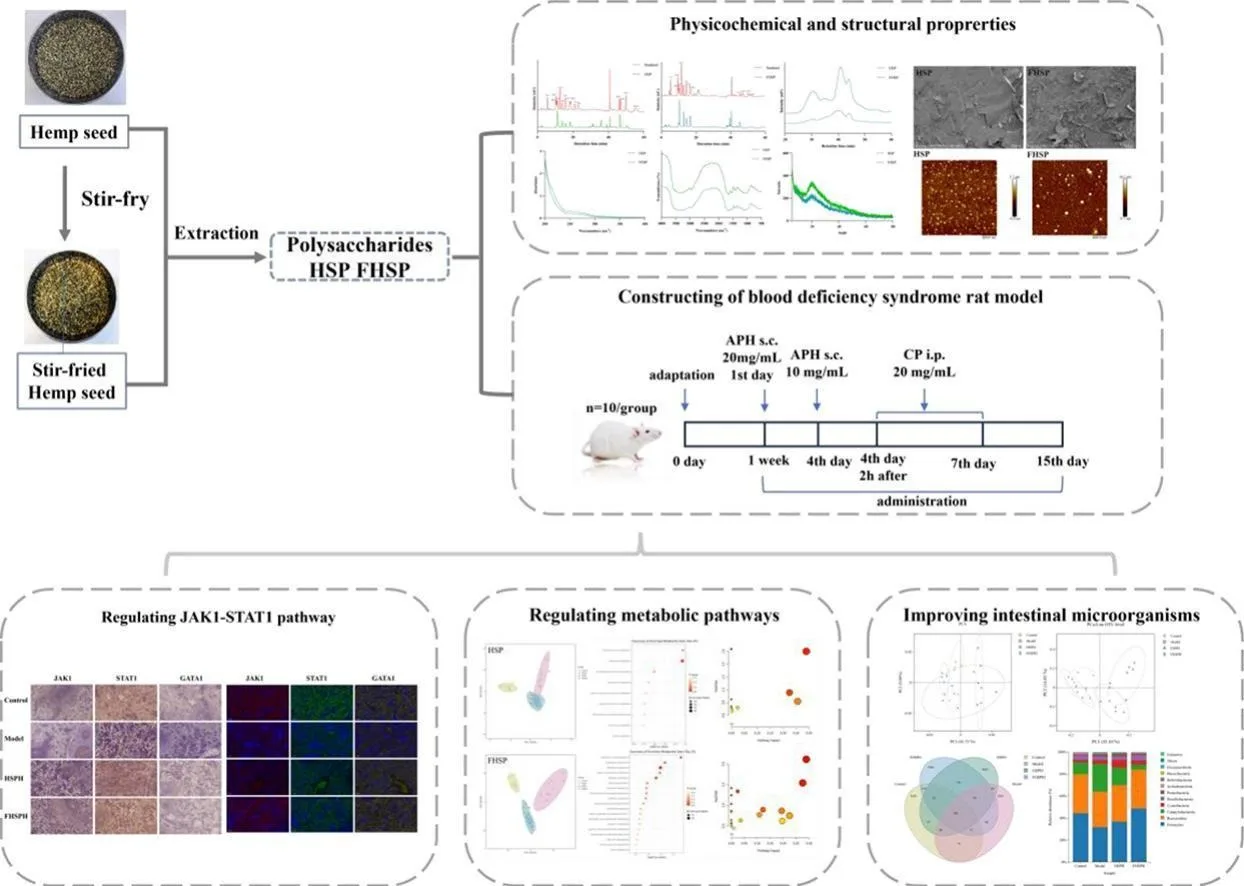
Further analysis indicated that the effects of the stir-fried polysaccharides may involve the JAK1-STAT1 signaling pathway, which plays a role in blood cell production and immune regulation. Researchers also observed changes in metabolic pathways involving arachidonic acid, glutathione, riboflavin, and arginine and proline metabolism.
The stir-fried hemp seed polysaccharides also altered the composition of the gut microbiota, suggesting that changes in intestinal bacteria could be among the mechanisms contributing to the observed effects. The study’s highlights note that FHSP altered both splenic metabolic profiles and gut microbiota composition.
Chemical analysis found that both forms of hemp seed polysaccharides were acidic heteropolysaccharides composed primarily of sugars including arabinose, galacturonic acid and galactose, although stir-frying changed their molecular weight, monosaccharide ratios, chemical composition and microscopic structure.
Researchers said the findings provide evidence supporting further investigation of hemp seed polysaccharides for potential use in functional foods, nutraceuticals and pharmaceuticals. They cautioned, however, that the findings come from an animal model rather than a human clinical trial.
The study is titled “Effects of stir-fried Hemp (Cannabis sativa L.) seed polysaccharides on blood deficiency syndrome in rats based on metabolomics and gut microbiota.”
Sponsors: