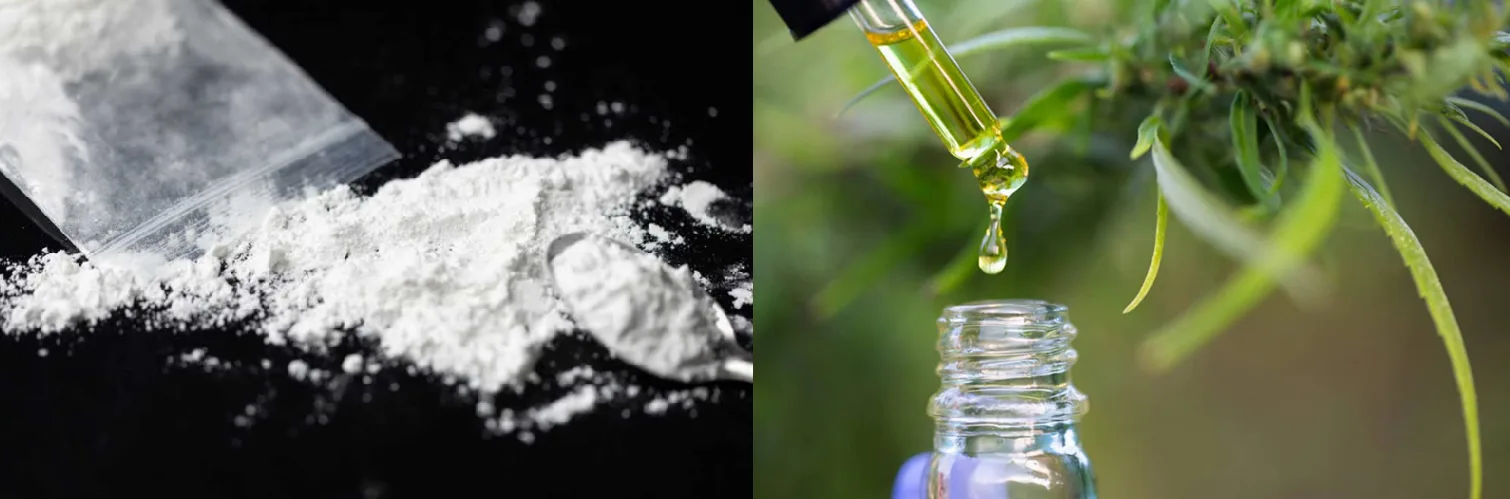
A new study found that low-THC, high-CBD cannabis extracts may reduce cocaine relapse by disrupting cocaine-associated memories, supporting further research into its potential role in treating cocaine use disorder.
The study, titled Non-Psychoactive Cannabis Extract Disrupts Reinstatement and Reconsolidation in Cocaine-Induced Conditioned Place Preference in Mice, was conducted by researchers from the National University of Colombia and Malmö University in Sweden, and it was published by the journal Brain Sciences.
Researchers evaluated the effects of a low-THC, CBD-rich cannabis extract on male CD1 mice using a conditioned place preference model, a common preclinical method used to study drug reward and relapse-like behavior. The extract was administered at a dose equivalent to 20 mg/kg of CBD.
The extract contained 41.05% CBD and just 0.70% THC, along with small amounts of CBN, CBG and CBC. The researchers said the CBD-to-THC ratio was 58:1, corresponding to 20 mg/kg of CBD and 0.34 mg/kg of THC.
According to the study, treatment with the cannabis extract significantly reduced both cocaine-primed and stress-induced reinstatement of cocaine-conditioned place preference. In other words, mice given the extract were less likely to return to behavior associated with cocaine reward after being exposed to either a cocaine trigger or an acute stressor.
The study also found that the extract disrupted reconsolidation of cocaine-associated memories, with the effect lasting for at least two weeks after memory reactivation. Reconsolidation refers to the process in which a recalled memory becomes temporarily changeable before being stored again.
Importantly, the extract alone did not produce conditioned preference or aversion, suggesting it did not show reinforcing or aversive effects in the model used by researchers.
“These findings suggest that NPCE modulates drug-associated memory processes involved in relapse-like behavior,” the authors stated, while noting that the underlying mechanisms were not directly evaluated.
The researchers said the findings support further exploration of non-psychoactive full-spectrum cannabis extracts as a potential strategy for targeting drug-associated memories and relapse-like behavior tied to cocaine use disorder. However, they emphasized that more research is needed, including studies involving both sexes, multiple behavioral models, comparisons between full-spectrum extracts and isolated cannabinoids, and receptor-specific testing to better understand how the extract works.