In a new study, researchers have developed a dry powder inhalation form of CBD that may help treat conditions like chronic obstructive pulmonary disease (COPD) and asthma more effectively than traditional methods.

Researchers at the University of Otago have created an inhalable formulation of cannabidiol (CBD) that could overcome the limitations of oral delivery, such as poor bioavailability and liver metabolism. Published in the International Journal of Pharmaceutics, the study focuses on delivering CBD directly to the lungs using a dry powder formulation combined with inulin and L-leucine.
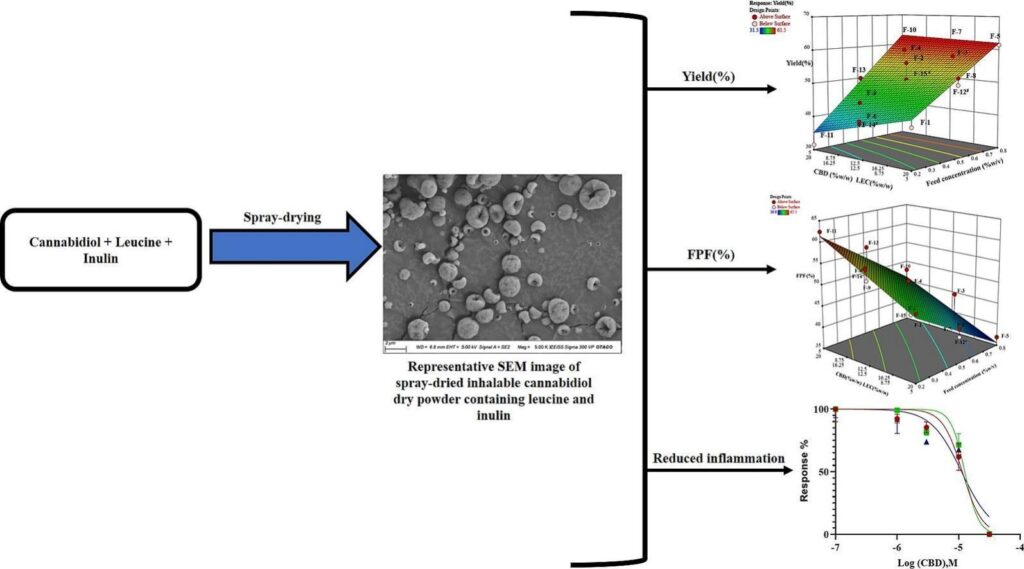
The formulation was produced using spray drying and optimized through a design of experiments approach. Researchers tested different concentrations of CBD, L-leucine, and feed solution, ultimately achieving up to 61% yield. The best-performing formula contained 20% L-leucine and achieved a Fine Particle Fraction (FPF) of 62%, indicating high efficiency in delivering particles small enough to reach deep lung tissue.
The powder also demonstrated physical stability over 28 days under different humidity conditions and showed minimal toxicity in lung cells. Most notably, the formulation reduced inflammation in a cell model exposed to lipopolysaccharide (LPS), suggesting it could be a useful treatment for diseases like asthma and COPD.
The researchers concluded that “The formulations demonstrated improved aerosolization properties, stability, and promising anti-inflammatory effects, potentially making them a viable therapeutic option for inflammatory lung diseases.”
For the full study, click here.
Sponsors: