New research published in The Journal of Pharmacology and Experimental Therapeutics by researchers from the University of California finds that several lesser-known marijuana compounds—including cannabidiol (CBD), cannabigerol (CBG), cannabinol (CBN), and cannabichromene (CBC)—interact with pain-sensing neurons in notably different ways, offering insight into how they may contribute to pain relief.
The study focused on dorsal root ganglion (DRG) neurons, which play a key role in detecting pain and inflammation. Using mouse neuron cultures, researchers examined how each cannabinoid activated these cells, including differences in potency, dose-response patterns, and the types of neurons affected.
They found that CBD, CBG, and CBC generally produced stronger activation responses than CBN. CBD and CBG also activated a broader range of neuron sizes, including smaller neurons associated with heightened sensitivity to pain stimuli. In contrast, CBN and CBC were more likely to activate larger neurons.
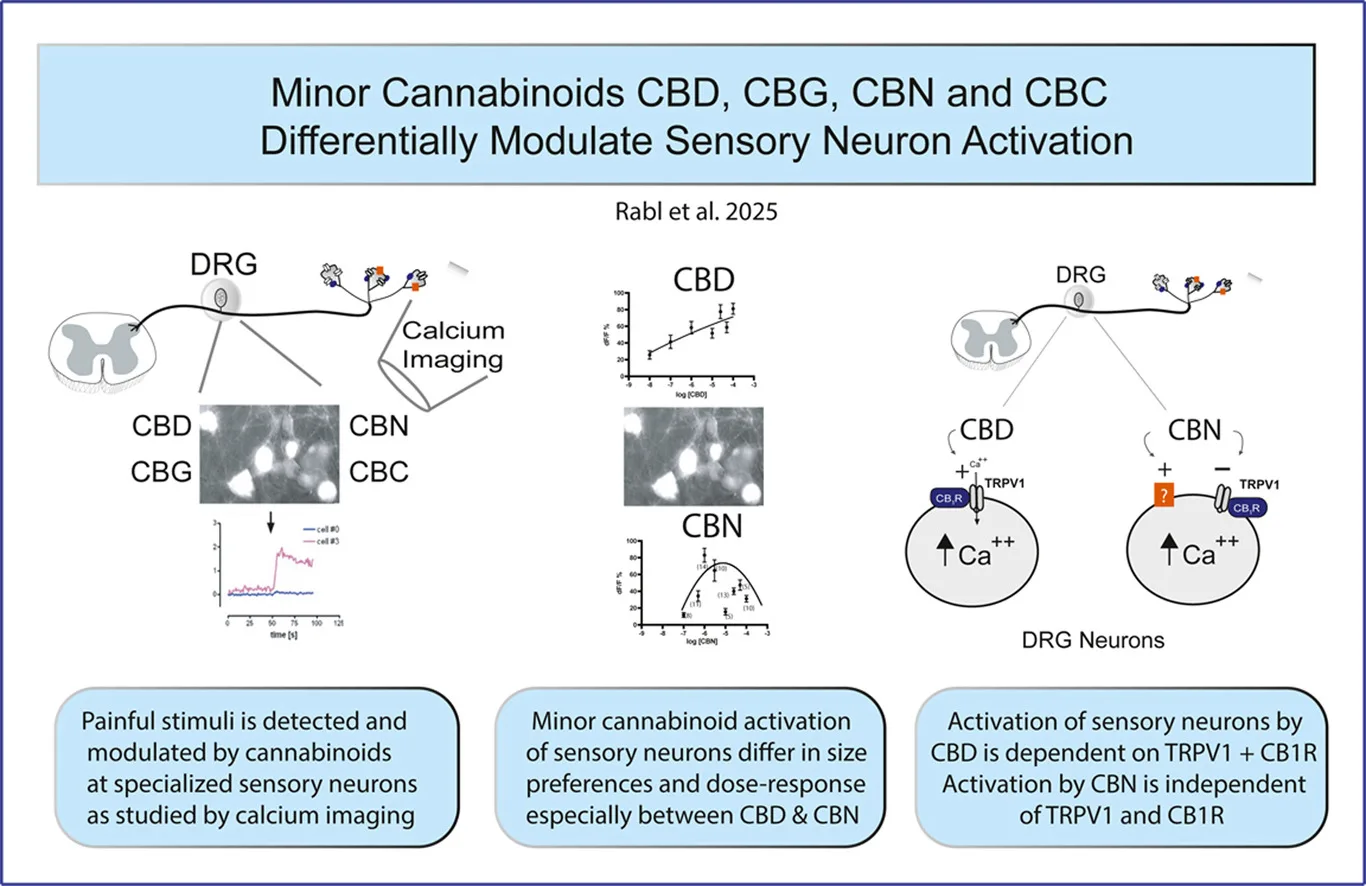
Each compound also showed a distinct dose-response pattern. CBD demonstrated a linear response, meaning its effects increased steadily with dosage. Meanwhile, CBG and CBC followed a more traditional sigmoidal curve, and CBN showed an inverted U-shaped response—suggesting its effects may diminish at higher doses.
Importantly, CBD’s effects were linked to activation of both the TRPV1 pain receptor and the CB1 cannabinoid receptor, while CBN appeared to operate independently of these pathways. This distinction suggests that different cannabinoids may engage separate biological mechanisms to influence pain signaling.
Researchers say these findings support the idea that combining multiple cannabinoids could produce complementary effects, potentially enhancing their therapeutic value without relying on delta-9 THC.