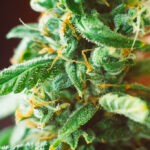
A new study published by the Journal of Ethnopharmacology suggests that several non-intoxicating compounds found in marijuana may have meaningful anti-inflammatory effects, particularly when combined with other components naturally present in the plant. The research was conducted by scientists from the University of Chemistry and Technology and the Academy of Sciences of the Czech Republic.
Researchers examined 10 major non-psychotropic phytocannabinoids derived from Cannabis sativa L., a plant long used in traditional Asian and European medicine to treat pain and inflammatory conditions. The goal was to evaluate both the individual anti-inflammatory and antioxidant properties of these compounds, as well as whether they work more effectively when paired with non-cannabinoid plant matrices such as polar, non-polar and terpenoid fractions.
Using macrophage-differentiated THP-1 cells, the team measured inflammation by tracking the production of pro-inflammatory cytokines and activation of the NF-κB pathway, a key regulator of immune responses. All tested phytocannabinoids showed some level of anti-inflammatory activity. Cannabidivarin, or CBDV, stood out for significantly reducing levels of IL-6 and TNF-α while also suppressing NF-κB activation.
The study also assessed antioxidant activity. Several phytocannabinoids, particularly acidic forms, showed strong oxygen radical absorption capacity. However, none demonstrated significant cellular antioxidant activity, which researchers attributed to limited bioavailability in the cellular model.
Notably, combinations of phytocannabinoids with plant-derived matrices produced synergistic anti-inflammatory effects. Mixtures containing cannabigerol or cannabinol were among the most potent.
“All tested phytocannabinoids demonstrated anti-inflammatory effects, in particular, cannabidivarin (CBDV) reduced IL-6, TNF-α production and also inhibited NF-κB activation”, states the study. “Several phytocannabinoids, especially their acidic forms, exhibited high oxygen radical absorption capacity (ORAC), but none showed significant cellular antioxidant activity (CAA), possibly due to limited bioavailability. Importantly, several phytocannabinoid-matrix mixtures displayed synergistic anti-inflammatory effects, with combinations containing cannabigerol (CBG) or cannabinol (CBN) being particularly potent.”
Researchers conclude by saying “These findings highlight the potential of lesser-known phytocannabinoids, especially in combination with specific C. sativa L. matrix components, to modulate inflammatory pathway supporting their development as functional ingredients for managing chronic gut-associated inflammation.”