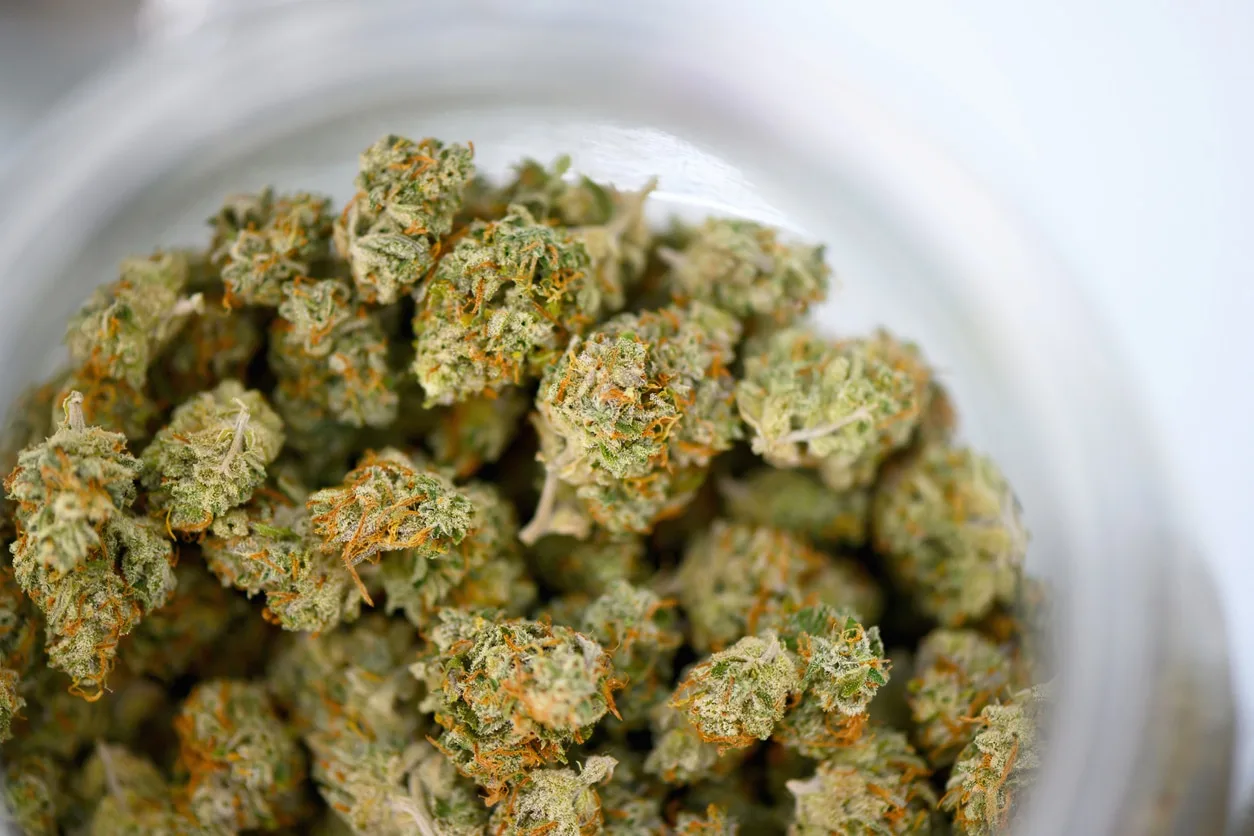
(Photo credit: Getty Images).
Recreational marijuana remains illegal under North Carolina state law, and the state does not have a comprehensive medical marijuana program. However, possession of one-half ounce or less is treated as a Class 3 misdemeanor with no active jail sentence, while a narrow state law provides protection for certain hemp extracts used to treat intractable epilepsy.
North Carolina also presents an unusual jurisdictional exception. The Eastern Band of Cherokee Indians allows legal recreational and medical marijuana sales on the Qualla Boundary in western North Carolina. Great Smoky Cannabis Company in Cherokee sells marijuana to adults 21 and older under Tribal law, but those protections do not extend to possession elsewhere in North Carolina. The dispensary itself warns customers that state marijuana laws apply once they leave the Qualla Boundary.
This page covers North Carolina marijuana possession penalties, medical marijuana, hemp and CBD, home cultivation, Tribal marijuana sales and other major laws. For laws in other states, visit The Marijuana Herald’s Marijuana Laws by State guide.
Last updated: September 13, 2026
North Carolina Marijuana Laws at a Glance
| Law | Current Rule |
|---|---|
| Recreational marijuana under state law | Illegal |
| Legal recreational possession limit | None |
| 1/2 ounce or less | Class 3 misdemeanor; active jail sentence prohibited |
| More than 1/2 ounce through 1.5 ounces | Class 1 misdemeanor |
| More than 1.5 ounces | Class I felony |
| Statewide recreational sales | Illegal |
| Recreational home cultivation | Illegal |
| Comprehensive medical marijuana program | No |
| Limited medical hemp extract protection | Yes, for intractable epilepsy under specific requirements |
| Medical marijuana dispensaries under state law | None |
| Tribal recreational marijuana sales | Legal on the Eastern Band of Cherokee Indians’ Qualla Boundary |
| Statewide marijuana delivery | Illegal outside authorized Tribal jurisdiction |
| Qualifying hemp | Excluded from marijuana Schedule VI when within the statutory THC limit |
Is Recreational Marijuana Legal in North Carolina?
No. Recreational marijuana remains illegal under North Carolina state law.
Marijuana is classified as a Schedule VI controlled substance under North Carolina General Statute § 90-94. The statute also lists tetrahydrocannabinols as Schedule VI substances except when contained in a product with no more than 0.3% delta-9 THC on a dry-weight basis.
North Carolina has not established a statewide system of licensed recreational marijuana dispensaries, and adults do not receive legal possession rights simply because they are 21 or older.
The major exception involves Tribal land belonging to the Eastern Band of Cherokee Indians, which operates its own legal marijuana market under Tribal law.
How Much Marijuana Can You Legally Possess in North Carolina?
There is no legal recreational marijuana possession amount under North Carolina state law.
However, state law uses different criminal classifications depending on the quantity possessed.
Under G.S. § 90-95:
- One-half ounce or less is a Class 3 misdemeanor.
- More than one-half ounce but no more than 1.5 ounces is a Class 1 misdemeanor.
- More than 1.5 ounces is a Class I felony.
- More than one-twentieth of an ounce of hashish triggers a Class 1 misdemeanor.
- More than three-twentieths of an ounce of hashish triggers a Class I felony.
North Carolina law specifically requires any imprisonment imposed for the lowest-level Schedule VI possession offense to be suspended.
What Are the Penalties for Marijuana Possession in North Carolina?
North Carolina’s marijuana possession penalties depend primarily on the amount involved.
| Marijuana Possession Amount | Classification |
|---|---|
| 1/2 ounce or less | Class 3 misdemeanor |
| More than 1/2 ounce through 1.5 ounces | Class 1 misdemeanor |
| More than 1.5 ounces | Class I felony |
For possession of one-half ounce or less, a Class 3 misdemeanor normally carries a maximum fine of $200. North Carolina law also requires any imprisonment imposed for this marijuana possession offense to be suspended.
A Class 1 misdemeanor can carry up to 120 days depending on the person’s prior conviction level. The amount of a Class 1 misdemeanor fine is left to the court’s discretion.
A Class I felony sentence depends on the defendant’s prior record and North Carolina’s structured sentencing laws.
Is Marijuana Decriminalized in North Carolina?
North Carolina has partially reduced the consequences for small-scale possession, but marijuana is not fully decriminalized.
Possession of one-half ounce or less remains a Class 3 misdemeanor. However, active incarceration is prohibited for that possession offense, and the maximum ordinary Class 3 misdemeanor fine is $200.
That makes North Carolina’s treatment of a small amount less severe than traditional criminal prohibition, but the offense is still classified as a misdemeanor rather than a civil violation.
Lawmakers considered going further in 2026.
Senate Bill 937 proposed making possession of 5 grams or less of marijuana legal while increasing some other marijuana and intoxicating-product penalties. The bill was introduced April 29 and referred to the Senate Appropriations/Base Budget Committee, where it had not advanced further as of September 13.
Is Medical Marijuana Legal in North Carolina?
North Carolina does not have a comprehensive statewide medical marijuana program.
There is no state medical marijuana card that gives patients access to THC-rich marijuana, no statewide medical dispensary system and no general protection allowing patients with conditions such as cancer, chronic pain or post-traumatic stress disorder to possess marijuana.
North Carolina does have a narrow exemption involving qualifying hemp extract used to treat intractable epilepsy.
Separately, medical marijuana is available under Tribal law through the Eastern Band of Cherokee Indians on the Qualla Boundary.
What Is North Carolina’s Medical CBD Law?
North Carolina law provides a narrow exemption for qualifying hemp extract used to treat intractable epilepsy.
Under G.S. § 90-94.1, qualifying hemp extract must:
- Contain less than 0.9% THC by weight
- Contain at least 5% CBD by weight
- Contain no other psychoactive substance
The hemp extract must be used only to treat intractable epilepsy.
The person possessing it must also have a certificate of analysis showing the product’s ingredients and cannabinoid percentages and must qualify as a caregiver under North Carolina law.
This limited exemption should not be confused with a comprehensive medical marijuana program.
Can You Get a Medical Marijuana Card in North Carolina?
North Carolina does not issue conventional statewide medical marijuana cards authorizing patients to purchase THC-rich marijuana from state-licensed dispensaries.
The state’s limited hemp extract law for intractable epilepsy operates separately from the medical marijuana card systems used in most medical-use states.
Patients may encounter medical marijuana sales on the Eastern Band of Cherokee Indians’ Qualla Boundary, but that market operates under Tribal law rather than North Carolina’s statewide medical marijuana laws.
What Conditions Qualify for Medical Marijuana in North Carolina?
North Carolina does not have a statewide comprehensive medical marijuana program and therefore does not maintain the type of broad qualifying-condition list found in medical marijuana states.
The state’s narrow statutory hemp extract protection applies specifically to treatment of intractable epilepsy.
Legislation introduced in recent sessions has proposed broader medical marijuana access, but those proposals have not become law.
House Bill 1011, the North Carolina Compassionate Care Act, was introduced in 2025 and would establish a regulated medical marijuana program. The bill was referred to the House Rules, Calendar and Operations Committee in April 2025 and had not advanced further as of September 2026.
Are There Legal Marijuana Dispensaries in North Carolina?
There are no recreational or comprehensive medical marijuana dispensaries licensed under North Carolina state law.
However, the Eastern Band of Cherokee Indians operates Great Smoky Cannabis Company on Tribal land in Cherokee.
The store offers both recreational and medical marijuana and serves recreational customers who are at least 21. Its inventory includes products such as marijuana flower, edibles and vape products.
The important distinction is jurisdiction.
Marijuana purchased legally on the Qualla Boundary does not become legal under North Carolina law once it is taken off Tribal land. Great Smoky Cannabis Company expressly cautions customers that North Carolina state law applies after leaving the Qualla Boundary.
Can Anyone 21 or Older Buy Marijuana in Cherokee, North Carolina?
Adults 21 and older may purchase recreational marijuana from Great Smoky Cannabis Company in Cherokee under the Eastern Band of Cherokee Indians’ laws.
The store describes itself as offering adult-use recreational and medical marijuana to customers in Cherokee.
However, customers should understand that the Qualla Boundary has a different legal framework from the surrounding state.
Taking marijuana off Tribal land can expose a person to North Carolina possession laws.
Is Marijuana Legal Everywhere on the Qualla Boundary?
The Eastern Band of Cherokee Indians has legalized and regulated marijuana within its jurisdiction, including commercial adult-use sales.
That does not change North Carolina’s statewide marijuana laws.
The Qualla Boundary is therefore best understood as a separate jurisdictional exception within the geographic borders of North Carolina, rather than evidence that marijuana is legal statewide.
Can You Bring Marijuana From Cherokee Into the Rest of North Carolina?
Doing so can expose you to prosecution under North Carolina law.
A purchase may be legal where it occurs under Eastern Band of Cherokee Indians law, but possession outside the Qualla Boundary is governed by North Carolina state law.
North Carolina’s ordinary marijuana possession penalties therefore apply once someone leaves the area where Tribal law protects the possession.
The dispensary itself warns consumers that upon leaving the Qualla Boundary they are subject to state marijuana laws.
Can You Buy Marijuana in Virginia and Bring It Into North Carolina?
No.
Even when marijuana is legally acquired in another jurisdiction, bringing it into North Carolina does not create a defense to the state’s possession laws.
Transporting marijuana across state lines also remains prohibited under federal law.
The same principle applies to marijuana purchased on Tribal land or in any other jurisdiction where the sale itself is lawful.
Can You Grow Marijuana at Home in North Carolina?
No.
North Carolina does not authorize recreational marijuana home cultivation.
It also does not have a comprehensive medical program allowing patients to grow marijuana.
Growing marijuana can be prosecuted under North Carolina’s controlled-substance manufacturing laws. Marijuana is a Schedule VI controlled substance, and manufacturing, delivering or possessing with intent to manufacture, sell or deliver a Schedule VI substance is generally a Class I felony. Selling a Schedule VI controlled substance is generally a Class H felony.
There is therefore no legal personal marijuana plant allowance under statewide North Carolina law.
Can You Give Marijuana to Someone Else in North Carolina?
North Carolina does not have a general legal recreational marijuana gifting system.
However, state law contains a narrow exception to its delivery offense: transferring less than 5 grams of marijuana without receiving payment does not constitute “delivery” under G.S. § 90-95(a)(1).
That does not mean the marijuana itself becomes legal to possess.
The person giving and receiving the marijuana can still be subject to North Carolina’s possession laws.
Selling marijuana remains a much more serious offense.
Is CBD Legal in North Carolina?
Qualifying hemp-derived CBD products are generally treated separately from marijuana.
North Carolina’s Schedule VI law excludes tetrahydrocannabinols contained in products with a delta-9 THC concentration of no more than 0.3% on a dry-weight basis.
That allows many federally compliant hemp-derived CBD products to be sold and possessed without being treated as marijuana under the state’s Schedule VI classification.
North Carolina also has the separate medical hemp extract exemption for intractable epilepsy described above, which allows a higher THC concentration under specific circumstances.
Are Delta-8 THC and Other Intoxicating Hemp Products Legal in North Carolina?
North Carolina currently distinguishes marijuana from qualifying hemp based largely on the statutory delta-9 THC threshold.
The state’s Schedule VI law excludes THC found in a product containing no more than 0.3% delta-9 THC on a dry-weight basis.
That framework has allowed numerous hemp-derived cannabinoid products to be sold in North Carolina.
However, lawmakers have repeatedly considered stricter rules for intoxicating hemp.
Senate Bill 937, introduced in April 2026, proposed major changes to the state’s definition of hemp and restrictions on certain THC and cannabis products. As of September 13, the bill remained in committee and had not changed current law.
Consumers should therefore distinguish products that meet North Carolina’s legal hemp definition from marijuana products that exceed the statutory threshold.
Can You Smoke Marijuana in Public in North Carolina?
Recreational marijuana use is illegal under state law regardless of whether it occurs in public or on private property.
North Carolina does not have state-licensed marijuana consumption lounges or other statewide recreational consumption establishments.
The rules may differ within the jurisdiction of the Eastern Band of Cherokee Indians, but those Tribal rules do not create a statewide right to publicly consume marijuana.
Can You Drive After Using Marijuana in North Carolina?
No.
Driving while impaired by marijuana is illegal.
North Carolina’s impaired-driving laws apply when a person drives while under the influence of an impairing substance.
Neither possession of a legal hemp product nor marijuana use authorized under another jurisdiction’s laws gives someone permission to drive while impaired in North Carolina.
Does North Carolina Recognize Out-of-State Medical Marijuana Cards?
No.
An out-of-state medical marijuana card does not authorize someone to possess marijuana under North Carolina state law.
North Carolina does not have a comprehensive medical marijuana reciprocity system.
A patient who legally purchases or possesses medical marijuana in another state can still face North Carolina penalties if they bring that marijuana into the state.
The Eastern Band of Cherokee Indians’ medical marijuana system operates separately under Tribal law.
What Changed With North Carolina Marijuana Laws in 2026?
North Carolina did not legalize recreational or comprehensive medical marijuana in 2026, but lawmakers introduced several notable proposals.
Five-Gram Decriminalization Proposal
Senate Bill 937, filed April 29, proposed legalizing possession of 5 grams or less of marijuana.
The bill also contained major changes involving hemp-derived products, marijuana offenses, vapor products and enforcement.
It was referred to the Senate Appropriations/Base Budget Committee on April 30 and had not advanced further as of September 13.
Cannabis Constitutional Amendment Proposed
Senate Bill 1072 was introduced in May and proposed constitutional amendments concerning qualified marijuana decriminalization and medical use.
The measure was referred to the Senate Rules and Operations Committee and had not advanced out of committee as of September 13.
Medical Marijuana Proposal Remained Stalled
House Bill 1011, the North Carolina Compassionate Care Act, would establish a statewide medical marijuana program.
The proposal was filed in April 2025 but remained in the House Rules, Calendar and Operations Committee without further action through September 2026.
As a result, North Carolina’s core statewide marijuana laws remain largely unchanged: recreational marijuana is illegal, small possession remains a misdemeanor and the state still lacks a comprehensive medical marijuana program.
Frequently Asked Questions About North Carolina Marijuana Laws
Is marijuana legal in North Carolina in 2026?
No. Recreational marijuana remains illegal under North Carolina state law, and the state does not have a comprehensive medical marijuana program.
How much marijuana can you possess in North Carolina?
There is no legal recreational possession amount. Possession of one-half ounce or less is a Class 3 misdemeanor, more than one-half ounce through 1.5 ounces is a Class 1 misdemeanor and more than 1.5 ounces is a Class I felony.
Can you go to jail for less than half an ounce of marijuana?
North Carolina classifies possession of one-half ounce or less as a Class 3 misdemeanor, but the statute requires any imprisonment imposed for that offense to be suspended.
Is marijuana decriminalized in North Carolina?
Small-scale possession receives reduced penalties, but it remains a misdemeanor rather than a legal or purely civil offense.
Is medical marijuana legal in North Carolina?
North Carolina does not have a comprehensive statewide medical marijuana program. It has a narrow hemp extract exemption for intractable epilepsy.
Can you buy marijuana legally in Cherokee?
Yes. Adults 21 and older may purchase recreational marijuana from Great Smoky Cannabis Company on the Eastern Band of Cherokee Indians’ Qualla Boundary under Tribal law.
Can you take marijuana purchased in Cherokee elsewhere in North Carolina?
Doing so can expose you to North Carolina’s marijuana possession laws. Tribal legalization does not make marijuana legal elsewhere in the state.
Can you grow marijuana at home in North Carolina?
No. North Carolina does not authorize recreational or medical marijuana home cultivation under statewide law.
Does North Carolina accept out-of-state medical marijuana cards?
No. An out-of-state medical marijuana card does not authorize possession under North Carolina state law.
Is CBD legal in North Carolina?
Qualifying hemp-derived CBD products are generally legal when they meet the state’s hemp requirements, including the applicable 0.3% delta-9 THC dry-weight limit.
Official Sources
- North Carolina General Statute § 90-94: Schedule VI Controlled Substances
- North Carolina General Statute § 90-95: Marijuana Possession and Controlled Substance Penalties
- North Carolina General Statute § 90-94.1: Hemp Extract Medical Exemption
- North Carolina General Statute § 15A-1340.23: Misdemeanor Sentencing
- North Carolina General Assembly: Senate Bill 937, Marijuana and Vapor Products Reform
- North Carolina General Assembly: House Bill 1011, NC Compassionate Care Act