The U.S. Supreme Court Could Realistically End Cannabis Prohibition in the Near Future

The federal prohibition of cannabis may soon face its most significant challenge since its inception.

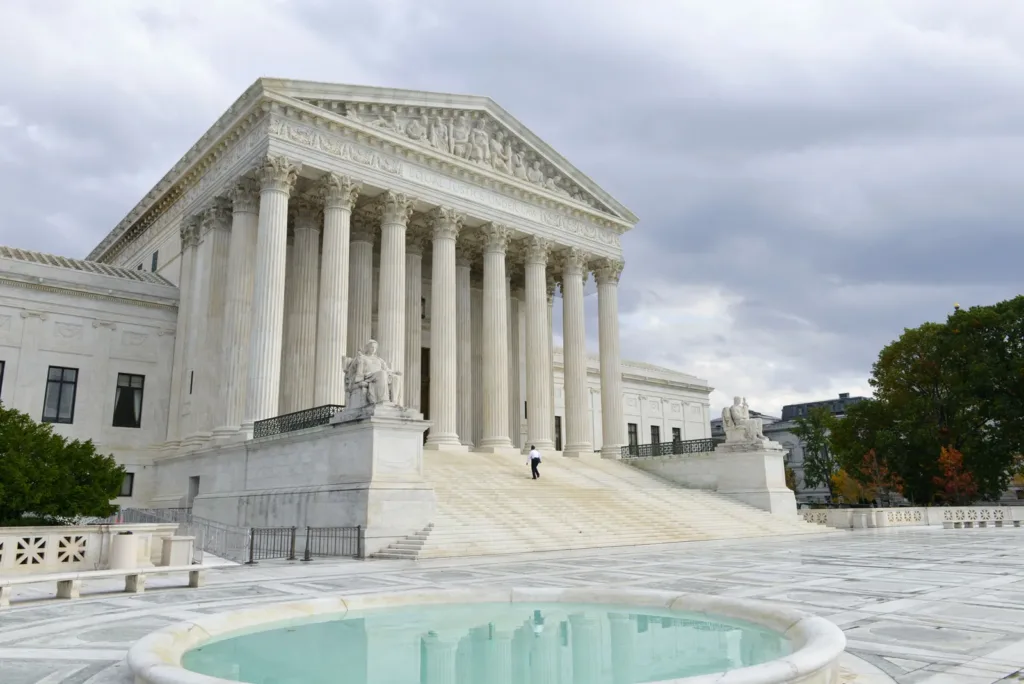
On May 27, 2025, the 1st U.S. Circuit Court of Appeals rejected a lawsuit by Massachusetts-based cannabis businesses seeking to overturn the federal ban on marijuana. The plaintiffs argued that the federal prohibition is outdated, citing Congress’s evolving stance and state-level legalization in 38 states, including Massachusetts. The court upheld the U.S. Supreme Court’s 2005 decision in Gonzales v. Raich, which affirmed Congress’s authority to criminalize marijuana possession under the Commerce Clause, even in states allowing medical use.

Jonathan Schiller, founding partner of Boies Schiller Flexner and chair of the board of trustees at Columbia University, who is representing the cannabis companies, said, “It is fair to assume that we shall seek Supreme Court review.”
Continue reading

Minnesota Reaches Settlement With Social Equity Applicants Over Canceled Marijuana Lottery

The Minnesota Office of Cannabis Management (OCM) has reached a settlement with a group of social equity marijuana license applicants, resolving a legal dispute over a canceled lottery that could have delayed the state’s adult-use licensing process.

The agreement, revealed Friday during a Ramsey County District Court hearing, comes just days before the OCM is set to begin awarding licenses through multiple lotteries starting June 5. The dispute centered around the state’s original preapproval lottery for social equity applicants, which was scrapped in November following lawsuits from several individuals who argued they were wrongly excluded.

Last month, Judge Stephen L. Smith ruled that the OCM was obligated to carry out the lottery. With the settlement now in place, Smith is expected to dismiss the order, clearing the path for the OCM to move forward with the licensing process.
Continue reading

U.S. Congress: Legislation to End Federal Marijuana Prohibition in Legal States Gains New Sponsor

Congressmember Gregory Steube, a Republican from Florida, has signed on as the fourth sponsor of the STATES 2.0 Act, a federal proposal to end marijuana prohibition in states that have legalized it.

The legislation, officially reintroduced last month by Congressmembers Dave Joyce (R-OH), Max Miller (R-OH), and Dina Titus (D-NV), would amend the Controlled Substances Act to exempt individuals and businesses from federal enforcement if they are operating in accordance with state or tribal marijuana laws. The bill mirrors a version introduced during the previous session of Congress.

Along with protecting state-legal marijuana operations, the STATES 2.0 Act would legalize interstate cannabis commerce between legal states, overhaul IRS policy to treat marijuana businesses like other lawful companies, and establish a framework for future federal regulation and taxation of marijuana.
Continue reading

Vermont Legislature Passes Bill to Expand Criminal Record Sealing, Sends it to Governor

The Vermont Legislature has approved a bill that would significantly broaden eligibility for sealing certain criminal history records, sending the measure to Governor Phil Scott for consideration.

(Photo credit: Shutterstock.com).

Senate Bill 12, introduced in January by State Senator Nader Hashim (D), has now cleared both the Senate and House. The legislation replaces Vermont’s current dual system of expungement and sealing with a simplified process centered on record sealing. It also expands the types of offenses eligible for relief, including many non-violent property crimes and drug possession offenses.

The bill excludes certain serious crimes such as domestic assault, sexual offenses, and offenses committed by commercial drivers. For those eligible, individuals can petition to have their records sealed after completing their sentences and remaining conviction-free for a set period, typically ranging from three to ten years depending on the offense.
Continue reading

New Jersey Assembly Overwhelmingly Approves Bill Adding Sickle Cell Anemia to Medical Marijuana Program

The New Jersey Assembly has voted 71 to 2 to approve legislation that would add sickle cell anemia as a qualifying condition for the state’s medical marijuana program.

The proposal, Assembly Bill 913, now heads to the Senate Health, Human Services and Senior Citizens Committee for further consideration.

The measure would explicitly authorize the use of medical marijuana for those suffering from sickle cell anemia, a chronic and often excruciating blood disorder that disproportionately affects Black Americans. Supporters say the bill would provide patients with an important alternative treatment option.
Continue reading

Kentucky Launches Medical Cannabis Dispensary Map, Governor Signs Order Waiving Renewal Fee for 2025 Cardholders

Governor Andy Beshear today signed an executive order waiving the 2026 renewal fee for medical marijuana cardholders who received their cards in 2025.

The move comes as Team Kentucky confirms locations for 39 of the 48 planned dispensaries across the state. To help patients locate nearby access points, the Kentucky Office of Medical Cannabis has launched a public Dispensary Directory, available by clicking here.

Patients began applying for medical cannabis cards on January 1, 2025. Since then, over 10,000 cards have been issued, along with more than 15,000 written certifications from medical providers. The Office of Medical Cannabis has already licensed 81 cannabis businesses across all license types.
Continue reading

Study: CBD Reduces Seizures and Brain Damage in Post-Traumatic Epilepsy Model

A new study published in the Journal of Ethnopharmacology finds that cannabidiol (CBD) may offer protective and anticonvulsant effects in cases of post-traumatic epilepsy (PTE).

Researchers from Hunan University of Medicine and Ningxia Medical University in China conducted the study using a rat model of PTE triggered by ferric chloride (FeCl₃), including genetically modified rats with overexpressed TRPV1 receptors in the brain. CBD treatment led to a marked decrease in seizure severity and brain tissue damage. EEG monitoring showed that CBD reduced seizure-related electrical activity, including total power and spike-wave discharges.

At the molecular level, the study found that CBD inhibits the TRPV1/HSF1/HSP70 signaling pathway. Specifically, it blocks the phosphorylation of heat shock factor 1 (HSF1) by acting on TRPV1 receptors, which in turn suppresses the stress-induced expression of heat shock protein 70 (HSP70)—a pathway believed to contribute to seizure susceptibility and neuronal stress.
Continue reading

Massachusetts Committee Advances Bipartisan Bill to Overhaul State Cannabis Laws

A comprehensive cannabis reform bill backed by 15 bipartisan lawmakers was officially introduced today in the Massachusetts House of Representatives and has been reported favorably by the Joint Committee on Cannabis Policy.

The bill, House Bill 4160, titled An Act Modernizing the Commonwealth’s Cannabis Laws, has now been referred to the powerful House Ways and Means Committee for further consideration. The legislation is sponsored by lawmakers from both parties and aims to modernize and streamline the state’s marijuana and hemp regulations.

Among the many provisions, the measure would establish a new three-member Massachusetts Cannabis Control Commission, with commissioners appointed by the governor and tasked with overseeing both the marijuana and hemp industries. The bill would also create a Cannabis Advisory Board composed of experts and stakeholders from public health, law enforcement, social justice, agriculture, and industry to provide policy recommendations to the commission.
Continue reading

New York Senate Bill Would Establish New Rules for Marijuana Store Locations and Proximity Waivers

A bill introduced today in the New York Senate would establish stricter regulations around where licensed marijuana stores can operate and how exemptions to proximity restrictions are granted.

New York State Capitol Building.

Filed by State Senator Jeremy Cooney (D), Senate Bill 8278 has been referred to the Committee on Investigations and Government Operations. The legislation would amend Section 85 of New York’s cannabis law to set minimum distance requirements for adult-use marijuana dispensaries while outlining a formal process for proximity protection waiver requests.

Under the bill, licensed adult-use dispensaries would need to be at least 1,000 feet apart in municipalities with populations of 20,000 or more. In smaller jurisdictions, the minimum distance would double to 2,000 feet. The legislation would also give the Cannabis Control Board authority to consider waiver requests but would require a rigorous and transparent process.
Continue reading

Maine Committee Advances Bill to Decriminalize Personal Possession of Psilocybin

The Maine House Criminal Justice and Public Safety Committee has voted to advance legislation that would decriminalize the possession of small amounts of psilocybin, moving the proposal to the full House for consideration.

Dried psilocybin.

House Bill 1034, introduced by a bipartisan group of nine lawmakers from both chambers, would remove criminal penalties for adults 21 and older who possess up to one gram of psilocybin or one ounce of psilocybin-containing mushrooms. The measure does not create a regulated system for distribution or therapeutic access, but instead focuses on eliminating criminal consequences for possessing personal-use quantities.

Supporters of the bill point to a growing body of research suggesting psilocybin may hold mental health benefits, particularly in treating conditions such as depression and PTSD. The legislation reflects a national trend of easing restrictions on psychedelics, with Oregon and Colorado already implementing broader psilocybin reform and several cities across the U.S. adopting decriminalization policies. Some states, like New Mexico, are working to establish medical psilocybin programs.
Continue reading