The U.S. Supreme Court Could Realistically End Cannabis Prohibition in the Near Future

The federal prohibition of cannabis may soon face its most significant challenge since its inception.
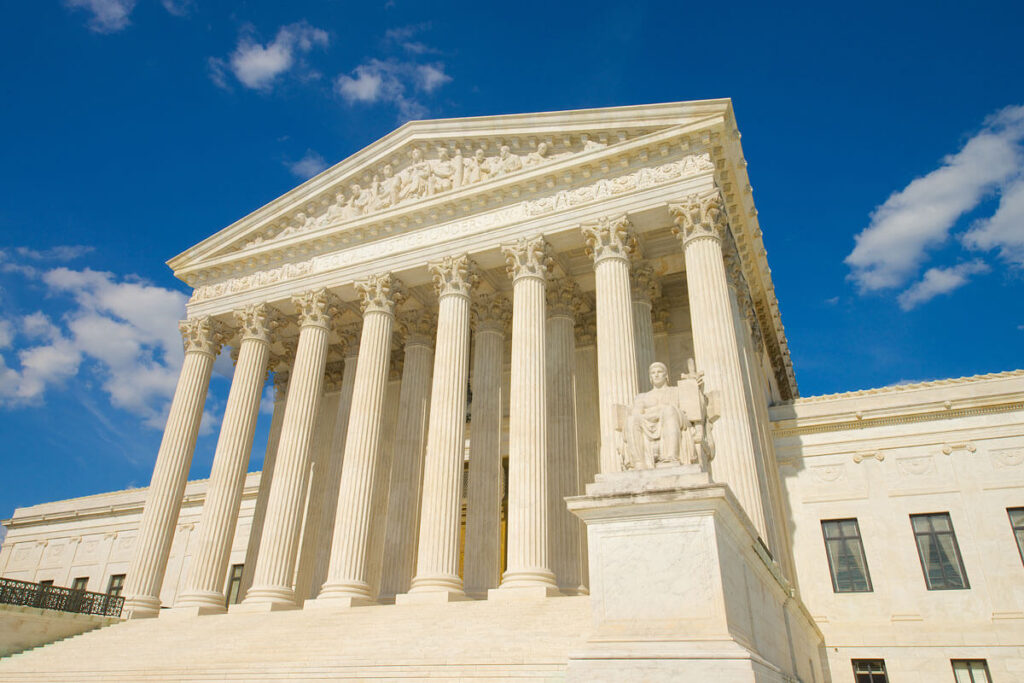
On May 27, 2025, the 1st U.S. Circuit Court of Appeals rejected a lawsuit by Massachusetts-based cannabis businesses seeking to overturn the federal ban on marijuana. The plaintiffs argued that the federal prohibition is outdated, citing Congress’s evolving stance and state-level legalization in 38 states, including Massachusetts. The court upheld the U.S. Supreme Court’s 2005 decision in Gonzales v. Raich, which affirmed Congress’s authority to criminalize marijuana possession under the Commerce Clause, even in states allowing medical use.

Jonathan Schiller, founding partner of Boies Schiller Flexner and chair of the board of trustees at Columbia University, who is representing the cannabis companies, said, “It is fair to assume that we shall seek Supreme Court review.”

Should the Court accept the case, it would mark the first time in nearly 20 years that the justices reexamine the constitutionality of marijuana prohibition.

Although most of the justices have not made public comments regarding cannabis laws, Justice Clarence Thomas has previously expressed skepticism about the federal government’s inconsistent approach to marijuana policy. In a 2021 statement, he argued that the federal prohibition on marijuana “may no longer be necessary or proper,” highlighting the contradictions in federal enforcement and the evolving legal landscape across states .

If the Supreme Court takes up the case, the three liberal justices—Sonia Sotomayor, Elena Kagan, and Ketanji Brown Jackson—are likely to side with Justice Thomas in ending prohibition. This means that just one of the remaining five justices would need to agree to end the federal ban, potentially on personal freedom grounds, for prohibition to be put to an end.

Some legal experts believe the case stands a realistic chance of being taken up by the U.S. Supreme Court. Jesse Alderman, co-chair of the cannabis practice at Foley Hoag LLP, said the Court’s current makeup may be more receptive than in past decades, noting that several justices have shown “antipathy for how broadly…previous U.S. Supreme Courts have treated the Commerce Clause.”

The Commerce Clause has long been the constitutional basis for federal marijuana prohibition, including in the 2005 Gonzales v. Raich decision, where the Court ruled that Congress could ban even locally grown and consumed cannabis because it could impact interstate commerce. Critics argue this interpretation vastly overextends federal power, especially in today’s landscape where dozens of states have legalized marijuana. A narrower reading of the Commerce Clause by the Court could undermine the constitutional foundation of federal prohibition.

When it comes to the 2005 ruling from the Supreme Court that validated prohibition, attorney David Boies says the factual basis for the 2005 decision no longer exists, stating, “I think there can be no doubt that the predicates of that decision no longer exist.”

A realistic timeline for this process could see the Supreme Court deciding to hear the case in the coming months, with oral arguments potentially occurring in late 2025 or early 2026. A decision could then be expected by mid-2026, potentially making it a key issue for the midterm elections.

As the legal landscape continues to evolve, the Supreme Court’s potential review of the federal marijuana ban could mark a significant turning point in U.S. cannabis policy.

Thank you for reading The Marijuana Herald! You can find more news stories by clicking here, and you can signup for our newsletter by clicking here


More articles from The Marijuana Herald.

Florida Lawmaker Files Bill to Ban Public Marijuana Smoking Across the State

Florida Lawmaker Files Bill to Ban Public Marijuana Smoking Across the State

Massachusetts Cannabis Regulators Expected to Finalize Long-Delayed Social Consumption Rules by Christmas

Massachusetts Cannabis Regulators Expected to Finalize Long-Delayed Social Consumption Rules by Christmas

Curaleaf Appeals $31.8 Million Judgment in Michigan Contract Fight With Hello Farms

Curaleaf Appeals $31.8 Million Judgment in Michigan Contract Fight With Hello Farms

Arizona Marijuana Tax Revenue Reached $20.7 Million in October, $233.2 Million Year-to-Date in 2025

Arizona Marijuana Tax Revenue Reached $20.7 Million in October, $233.2 Million Year-to-Date in 2025

New Jersey Bill Would Expand Dispensary Access, Loosen CRC Restrictions, and Strengthen Enforcement Against Illegal Operators

New Jersey Bill Would Expand Dispensary Access, Loosen CRC Restrictions, and Strengthen Enforcement Against Illegal Operators

THC Strengthens Brain-Based Pain Filtering in Fibromyalgia, New Clinical Trial Finds

THC Strengthens Brain-Based Pain Filtering in Fibromyalgia, New Clinical Trial Finds

Hemp Shows Strong Antiviral Activity Against Japanese Encephalitis Virus

Hemp Shows Strong Antiviral Activity Against Japanese Encephalitis Virus

Higher Light Intensity During Flowering Found to Boost CBD Production in Hemp

Higher Light Intensity During Flowering Found to Boost CBD Production in Hemp

Psilocybin Shows Potential to Improve Long-Term Effects of Repetitive Brain Injuries Linked to Intimate Partner Violence

Psilocybin Shows Potential to Improve Long-Term Effects of Repetitive Brain Injuries Linked to Intimate Partner Violence

Florida Campaign to Legalize Recreational Cannabis Has Submitted 675,000 Verified Signatures for 2026 Initiative

Florida Campaign to Legalize Recreational Cannabis Has Submitted 675,000 Verified Signatures for 2026 Initiative

Ohio Marijuana Market Generated $1.25 Billion in Sales Since Adult-Use Launch in August 2024, Producing $164 Million in Tax Revenue

Ohio Marijuana Market Generated $1.25 Billion in Sales Since Adult-Use Launch in August 2024, Producing $164 Million in Tax Revenue

Study: Medical-Grade THC Vape Delivers Precise Microdoses, While Retail Pens Hit Hard but With Unstable Output

Study: Medical-Grade THC Vape Delivers Precise Microdoses, While Retail Pens Hit Hard but With Unstable Output

Arkansas Medical Marijuana Program Reaches 112,760 Registered Patients

Arkansas Medical Marijuana Program Reaches 112,760 Registered Patients

New Mexico Marijuana Sales Reach $475 Million in 2025, Nearly $2 Billion All-Time

New Mexico Marijuana Sales Reach $475 Million in 2025, Nearly $2 Billion All-Time

Curaleaf Reports $320 Million in Q3 Revenue, 158 Dispensaries Across the U.S.

Curaleaf Reports $320 Million in Q3 Revenue, 158 Dispensaries Across the U.S.

Aurora Cannabis Reports $90.4 Million in Fiscal Q2 2026 Revenue, Driven by Record Medical Sales

Aurora Cannabis Reports $90.4 Million in Fiscal Q2 2026 Revenue, Driven by Record Medical Sales

Trulieve Reports $288 Million in Q3 Revenue and $173 Million Year-to-Date Free Cash Flow

Trulieve Reports $288 Million in Q3 Revenue and $173 Million Year-to-Date Free Cash Flow

Study: CBD Shown to Suppress Growth Pathways in Aggressive Breast Cancer Cells

Study: CBD Shown to Suppress Growth Pathways in Aggressive Breast Cancer Cells