The global medical cannabis market is expected to grow significantly over the next decade, expanding from $37 billion in 2024 to $68.6 billion by 2033, according to a new report from Research and Markets.
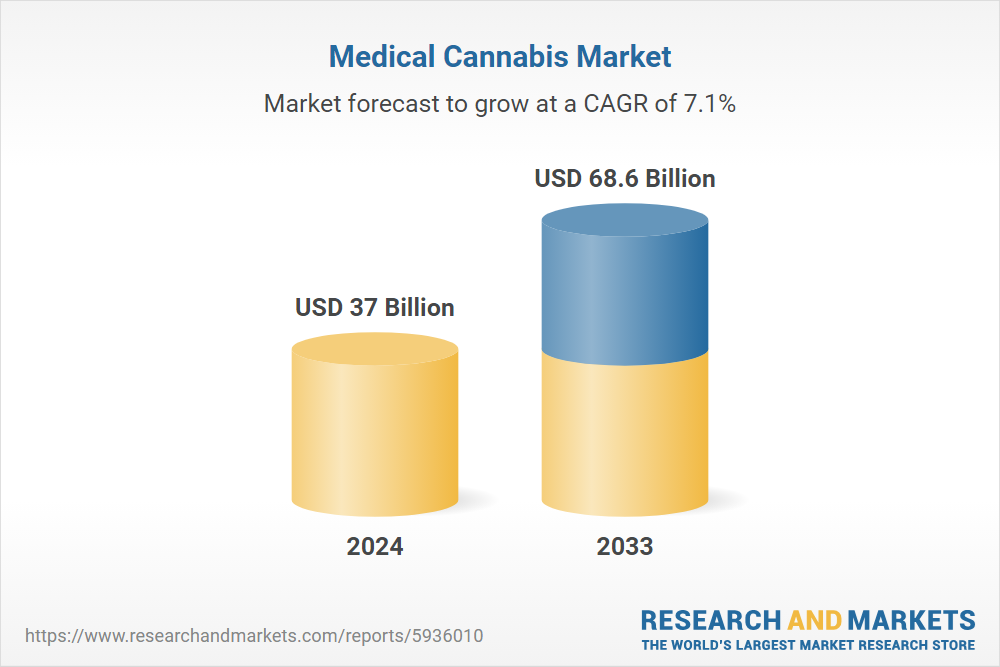
This 7.1% compound annual growth rate reflects rising global acceptance of marijuana as a legitimate medical treatment, as well as increasing demand for natural and plant-based healthcare options.
Multiple factors are propelling this growth, including a surge in research and development, more countries and U.S. states legalizing marijuana for medicinal use, and broader public awareness of cannabis’ therapeutic potential. The expanding aging population, the ongoing opioid crisis, and a preference for alternatives to conventional pharmaceuticals are also contributing to the rising demand.
One of the most important drivers behind this market expansion is the rise in clinical trials and commercialization of cannabis-based medications. As more data emerges from controlled studies showing the efficacy of cannabinoids like THC and CBD in treating conditions such as chronic pain, epilepsy, and chemotherapy-induced nausea, medical professionals and patients are increasingly willing to consider cannabis as part of treatment regimens. Pharmaceutical companies are also investing heavily in standardizing cannabis-derived medications, improving dosage consistency and product safety.
North America remains the dominant region for medical cannabis, led by the United States and Canada. Legal frameworks in both countries have enabled widespread patient access and have encouraged major investments from both private and public sectors. A growing number of U.S. states now allow medicinal use of marijuana, and recent moves by federal lawmakers and regulators to ease restrictions have boosted confidence in the industry.
Among the various cannabis strains, indica holds the largest market share. Known for its high CBD content and calming effects, indica is commonly used to treat anxiety, sleep disorders, and chronic pain—making it a top choice for medicinal users. On the derivative front, THC leads the market due to its widespread use in products targeting cancer-related symptoms, multiple sclerosis, and appetite stimulation.
When it comes to specific applications, cancer dominates the global medical cannabis market. Products containing THC and CBD have proven especially useful for managing chemotherapy side effects, including severe nausea, and for alleviating cancer-related pain. As research continues to explore possible anti-tumor properties of cannabinoids, interest in their use as adjunct therapies is growing.
The pharmaceutical sector represents the largest end-use segment. This is largely due to the increasing involvement of major drug companies in cannabis research, which is helping integrate marijuana-based medicines into mainstream clinical practice. Pharmaceutical companies are now rolling out a variety of cannabis formulations—from oral solutions to capsules and topicals—designed for patients seeking safer, non-inhalable treatment options.
Oral solutions and capsules currently lead the market in terms of route of administration. These delivery methods offer patients precise dosing and a more familiar, discreet alternative to smoking or vaping. They are particularly popular among elderly patients and those managing chronic illnesses.
The competitive landscape of the medical cannabis market includes major players such as Canopy Growth Corporation, GW Pharmaceuticals, Aurora Cannabis, Aphria, and MedReleaf. These companies are not only leading in product development but also in expanding patient access through partnerships and global distribution networks. They’re also funding education initiatives to increase understanding of cannabis’ medical benefits among healthcare professionals and the general public.
With the medical cannabis market poised to nearly double in size over the next decade, the report underscores the growing role that marijuana is playing in global healthcare. As legal barriers continue to fall and clinical evidence mounts, medical cannabis is on track to become a cornerstone of alternative medicine and pharmaceutical innovation.