The California Department of Fish and Wildlife (CDFW) has awarded more than $3.9 million from its Cannabis Restoration Grant Program to the Monterey Bay Salmon and Trout Project (MBSTP), bolstering efforts to preserve critically endangered Coho salmon in Santa Cruz and San Mateo counties.

The grant will support the Kingfisher Flat Conservation Hatchery, the only Coho conservation hatchery south of the San Francisco Bay. Since 2002, the hatchery has raised and released tens of thousands of juvenile Coho salmon into local streams, helping to prevent the species’ extinction at the southern end of its natural range. In recent years, the program has released as many as 32,000 smolts annually.
CDFW officials say the funding is critical to maintaining genetic diversity and avoiding a complete collapse of Coho populations. “The Kingfisher Flat Conservation Hatchery and the Southern Coho Salmon Captive Broodstock Program have been critical in maintaining genetic diversity and preventing the complete extirpation of Coho salmon while ongoing restoration and recovery efforts continue,” said Erin Chappell, regional manager for CDFW’s Bay Delta Region.
Ben J. Harris, executive director of MBSTP, called the grant a lifeline. “This funding will ensure continuity to a vital conservation effort for Coho salmon at the extreme southern end of their range, helping to prevent their extinction south of San Francisco Bay,” he said, adding that the group looks forward to continuing partnerships with agencies, schools, tribes and local communities.
The award marks the first time the Cannabis Restoration Grant Program has directed funds specifically to Coho salmon recovery south of the Bay Area. In addition to supporting operations and education programs, the grant will repair infrastructure at the hatchery damaged during the 2020 CZU Lightning Complex fire.
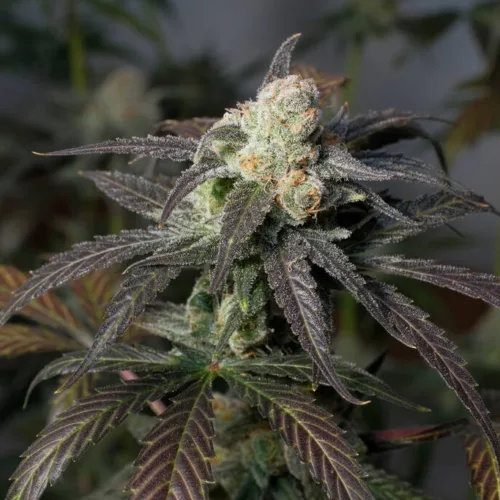
CDFW’s Cannabis Restoration Grant Program distributes roughly $20 million annually from cannabis tax revenue to ecological restoration projects across California. The program was designed to address environmental damage linked in part to unregulated marijuana cultivation and to support broader ecosystem health. Amelia Wright, director of CDFW’s Cannabis Program, said projects like MBSTP’s demonstrate how cannabis tax dollars can be used to strengthen both conservation and community engagement.
“We know the preservation of Coho salmon in this watershed and in others is a shared goal in our cannabis community,” Wright said. “Watersheds in California, and the fish and wildlife that depend on them, can be negatively impacted by unlicensed cannabis cultivation and other ecological stressors, so projects like these are very important.”