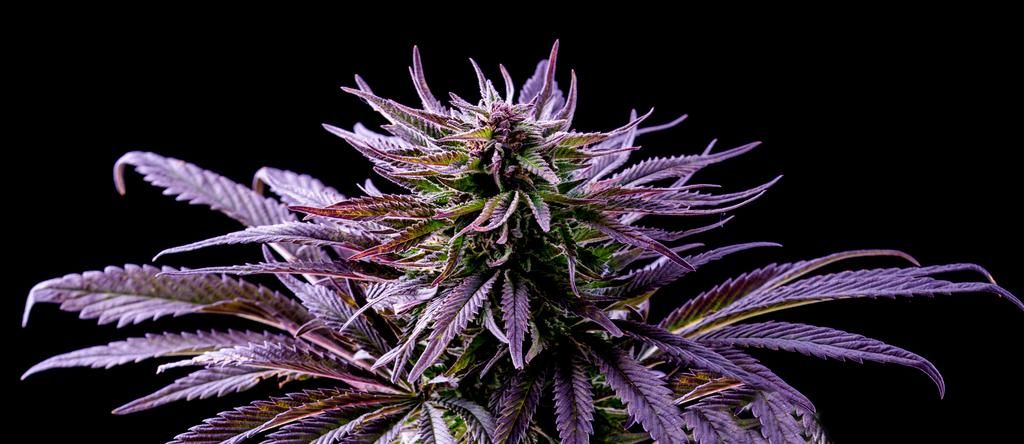
A new study shows that exposing cannabis plants to cooler temperatures significantly increases anthocyanin production—the compound responsible for purple pigmentation—without reducing flower weight or cannabidiol (CBD) content.
Published in the Journal of Cannabis Research, the study was led by researchers from the Pennsylvania Department of Agriculture and the University of Wisconsin. Using a genetically stable purple cultivar, scientists tested how both constant and fluctuating low temperatures affected anthocyanin concentration, flower weight, and CBD levels. Temperature treatments ranged from 0.5°C to 22°C.
The findings revealed that anthocyanin accumulation peaked at constant temperatures of 8°C and 15°C. Plants grown at both the coldest (0.5°C) and warmest (22°C) conditions had significantly lower anthocyanin levels. Interestingly, plants subjected to fluctuating temperatures averaging 8°C and 15°C—intended to mimic natural conditions—showed lower anthocyanin levels than those exposed to constant temperatures, suggesting that cold stimulus itself, not just heat accumulation, is responsible for triggering pigment production.
In contrast, flower weight and CBD concentration increased steadily with temperature, driven primarily by cumulative heat exposure, or growing degree days (GDD). CBD content rose by roughly 0.09% and flower weight by 0.05g per plant for every 1°C increase within the tested range. These increases were not influenced by cold exposure but by how long plants spent in warm, metabolically active conditions.
The study also found a strong correlation between visual pigment scoring and lab-verified anthocyanin levels, suggesting growers may be able to identify high-anthocyanin plants through simple visual inspection.
Researchers say the findings could help cultivators fine-tune environmental conditions depending on their goals—whether maximizing vibrant coloration for shelf appeal, CBD content for medicinal value, or overall flower yield.