A new study published in Global Medical Genetics by researchers at the University of Ljubljana has identified subcritical water extraction (SWE) as a promising and environmentally friendly method for obtaining hemp extracts rich in antioxidants.
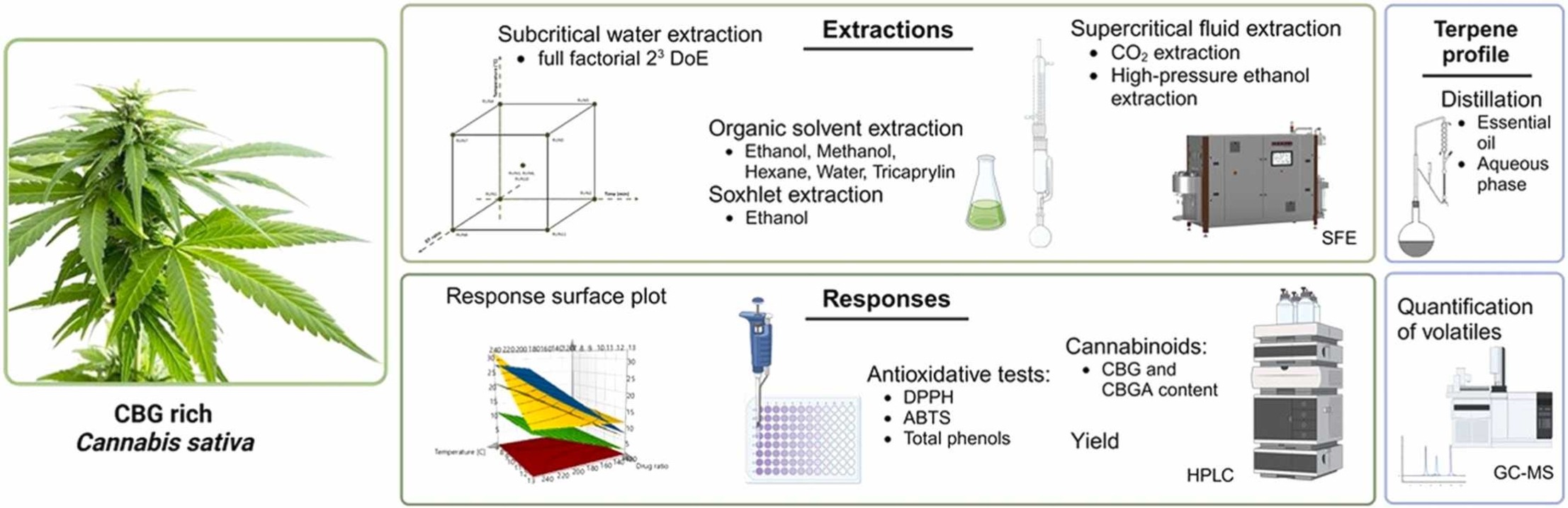
The research evaluated SWE alongside conventional and modern extraction techniques, including Soxhlet ethanol extraction, high-pressure ethanol extraction, and supercritical CO₂ extraction, using CBGA-rich hemp.
The team used a factorial design of experiments to optimize extraction conditions, examining yields, cannabinoid content, and antioxidant activity. SWE produced a yield of 35.9% with strong antioxidant activity, comparable to Soxhlet and high-pressure ethanol methods. According to the study, “temperature and the drug-to-solvent ratio were identified as significant factors affecting the yield.”
While Soxhlet extraction yielded the highest concentration of cannabigerol (36.1%), and high-pressure ethanol extraction produced the greatest amount of cannabigerolic acid (17.4%), SWE demonstrated unique advantages in sustainability. Gas chromatography showed that essential oils from the process were dominated by sesquiterpenes (82.5%), while the aqueous fraction contained primarily oxygenated monoterpenes (35%).
In their conclusion, the authors noted, “Subcritical water extraction is a potential method for obtaining novel hemp extracts with relatively high antioxidant activity and favourable yield, where phenolic compounds are responsible for the antioxidant activity of the extracts.” They emphasized that although SWE was not the most effective for cannabinoid recovery compared to solvent-based methods, it remains a viable option due to its efficiency and reduced environmental impact.
The study highlights SWE’s potential as a sustainable alternative to traditional solvent-based extraction techniques, offering a way to produce antioxidant-rich hemp extracts without relying on toxic or hazardous chemicals.