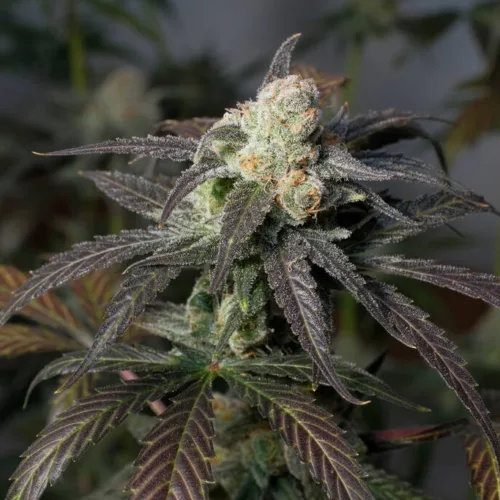
The endocannabinoid system has gained increased attention in recent days following a social media post made by President Trump. In this article, we break down the system and explain what it is, how it works, and why marijuana interacts with it so effectively.

(Photo credit: PBS).
The endocannabinoid system has been described by scientists as the body’s quiet conductor—an internal network that helps stabilize mood, pain, appetite, inflammation, stress responses, sleep, learning, and more. It does this by using its own signaling molecules that look a lot like compounds in marijuana. That similarity is why marijuana can affect so many processes at once: it plugs into a system our cells already use to keep things in balance.
At the heart of this system are two primary receptors, CB1 and CB2. CB1 receptors are found in high density across the brain—especially in regions controlling movement, memory, emotion, pain perception, and nausea. They’re also present in peripheral nerves and some organs. CB2 receptors are most abundant on immune cells and throughout inflammatory pathways, including in the gut, spleen, and peripheral tissues. The body produces its own “endocannabinoids”—most notably anandamide (AEA) and 2-arachidonoylglycerol (2-AG)—that bind to these receptors. When these endocannabinoids have done their job, enzymes quickly break them down; FAAH primarily degrades anandamide, while MAGL handles 2-AG. This rapid, on-demand cycle is crucial: endocannabinoids are synthesized and released where and when they’re needed, then cleared to keep signaling precise.
One of the system’s most important tricks is “retrograde signaling.” In the brain, neurons typically talk to the next cell downstream. Endocannabinoids flip that script: a postsynaptic neuron can release anandamide or 2-AG backward across the synapse, telling the presynaptic neuron to dial down its neurotransmitter release. This is a fine-tuning knob for neural circuits, preventing runaway excitation that could lead to pain amplification, anxiety spirals, seizures, or memory glitches. The same basic logic—sense a disturbance, send a local cannabinoid signal, restore equilibrium—shows up across the body.
An Ancient and Essential System
The endocannabinoid system is not some minor human quirk—it’s deeply conserved across evolution. Nearly all vertebrates, from fish to mammals, have cannabinoid receptors and endocannabinoid signaling. This universality signals its importance: any system preserved for hundreds of millions of years is doing something essential for survival. The ECS can keep the body in balance, constantly fine-tuning other systems so they don’t swing too far out of line.
The fact that marijuana’s compounds can interact with a system this ancient underscores just how fundamental it is to regulating core functions, with cannabis fitting into a biological network that predates humanity itself. That’s why THC and CBD can have such wide-ranging effects without being foreign toxins—they are working with, not against, the body’s own signaling machinery.
Scientists often summarize the ECS’s core responsibilities with five words: Eat, Sleep, Relax, Protect, Forget. Together, they capture its role in appetite and metabolism, rest and recovery, stress regulation, immune control, and memory. Each of these functions is vital to survival, and each is an area where marijuana has well-documented effects.
That last function—helping the brain “forget”—is not a flaw but a feature. Without pruning, memory networks would overload with unnecessary information, and traumatic experiences could remain too vivid. The ECS acts like a filter, clearing away clutter and softening the edges of painful memories. This ability may help explain why cannabis has shown promise in post-traumatic stress disorder, giving patients a tool to release intrusive and disruptive recollections that otherwise dominate their daily lives.
How Cannabis Fits In
Marijuana interacts with this system in ways that are both direct and nuanced. THC, the best-known psychoactive component, is a partial agonist at CB1 and CB2. In practical terms, THC can imitate the body’s endocannabinoids and activate their receptors—especially CB1 in the brain—shifting neural activity toward decreased neurotransmitter release. That’s part of why THC can ease pain, reduce nausea, settle spasticity, and stimulate appetite. It also explains its psychoactivity: CB1 receptors in brain circuits that process reward, time perception, and short-term memory are very sensitive to THC.
CBD, by contrast, is not meaningfully psychoactive and does not “turn on” CB1 the way THC does. Instead, it modulates the endocannabinoid system from several angles. CBD can reduce the ability of other molecules to overstimulate CB1, alter how receptors signal once activated, and interact with non-cannabinoid targets relevant to mood, pain, and inflammation, such as TRPV1 (a heat/pain sensor), certain serotonin receptors, and adenosine signaling. There’s also evidence that CBD can raise anandamide levels in some contexts—supporting tone in the system rather than pushing it in a single direction.
Expanding Therapeutic Frontiers
Because the endocannabinoid system touches so many processes, marijuana has a broad therapeutic footprint. Some of the strongest evidence comes from pain, spasticity, seizures, and nausea. In multiple sclerosis, nabiximols (a spray with a balanced THC:CBD profile) has demonstrated reductions in spasticity and discomfort for patients unhelped by standard therapies. In epilepsy, CBD is firmly established as a treatment for several rare childhood forms, backed by an FDA-approved medicine. For chemotherapy-induced nausea and vomiting, THC-containing medicines remain one of the most reliable options.
Research is also opening new frontiers. Neurodegenerative conditions like Alzheimer’s and Parkinson’s have been found to be benefited by cannabis use, with evidence showing protective effects on neurons and reductions in disease markers. Metabolic disorders like obesity and diabetes are another target, as CB1 signaling influences appetite and insulin sensitivity. And in psychiatric research, cannabis is being investigated for its role in extinguishing traumatic memories—a potential breakthrough for PTSD treatment.
A telling example of how vital this system is comes from a failed pharmaceutical experiment. A drug called rimonabant was designed to block CB1 receptors as a weight-loss aid. It worked for appetite suppression, but it also caused severe depression and suicidal ideation, forcing it off the market. The lesson was clear: blocking the ECS can destabilize mood, while carefully activating it—through marijuana—can provide relief and restore balance.
Endocannabinoid Deficiency Hypothesis
A particularly compelling idea is that some chronic illnesses may arise from an “endocannabinoid deficiency.” Neurologist Ethan Russo and other researchers have argued that certain treatment-resistant conditions—such as fibromyalgia, irritable bowel syndrome, and migraine—may share a common thread: insufficient endocannabinoid tone. In other words, the body may not be producing enough of its own cannabinoids, or the receptors and enzymes in the system may not be working efficiently.
This theory helps explain why patients with these syndromes often respond poorly to conventional medications but report meaningful relief with cannabis. By introducing plant-based cannabinoids like THC and CBD, marijuana may act as a supplement, boosting the system’s signaling and restoring balance where the body falls short.
Supporting evidence is gradually accumulating. Studies have documented lower endocannabinoid levels in some migraine and fibromyalgia patients, while clinical trials and observational research show that cannabinoids can reduce pain, improve sleep, and ease gastrointestinal symptoms in these groups. For many patients, marijuana offers a new option when standard treatments provide little help.
While more large-scale trials are needed, the endocannabinoid deficiency hypothesis highlights the ECS as a unifying link between diverse chronic conditions—and underscores why cannabis may be uniquely positioned to provide relief.
Practical Use and Safety
Delivery matters more than many expect. Inhaled products act within minutes and are easier to titrate for immediate symptoms like breakthrough pain or sudden nausea, though they don’t last as long. Oral products (oils, capsules, edibles) take longer to start—often 45 to 120 minutes—but offer steadier coverage. Oromucosal sprays and sublingual oils split the difference, while topicals and transdermals can provide targeted relief for localized pain and inflammation. Many patients benefit from combining methods for both baseline coverage and fast-acting relief.
The goal in clinical use is not to overwhelm the system but to restore balance. That’s why careful titration is central for medical use. Many patients report that less is more—especially with THC. Ratios also matter. CBD-rich products can blunt THC’s intensity, while balanced formulas often offer wider therapeutic benefit. The “entourage effect,” where cannabinoids and terpenes work together, matches both patient experience and preclinical science.
Most adults tolerate cannabinoids well, and serious adverse events are rare at therapeutic doses. THC can impair reaction time and short-term memory, so people should not drive or perform safety-sensitive tasks after use. Some may experience anxiety at higher doses, another reason to start low and pair THC with CBD when appropriate. Adolescents appear more vulnerable to heavy, high-THC use, so caution and medical oversight are warranted in younger populations.
Further Reading
-
Russo, E. B. (2016). Clinical endocannabinoid deficiency reconsidered: Current research supports the theory in migraine, fibromyalgia, irritable bowel syndrome, and other treatment-resistant syndromes. Cannabis and Cannabinoid Research, 1(1), 154–165.
-
Devinsky, O., Cross, J. H., Laux, L., Marsh, E., Miller, I., Nabbout, R., … & Wright, S. (2017). Trial of cannabidiol for drug-resistant seizures in the Dravet syndrome. New England Journal of Medicine, 376(21), 2011–2020.
-
Blessing, E. M., Steenkamp, M. M., Manzanares, J., & Marmar, C. R. (2015). Cannabidiol as a potential treatment for anxiety disorders. Neurotherapeutics, 12(4), 825–836.
-
Whiting, P. F., Wolff, R. F., Deshpande, S., Di Nisio, M., Duffy, S., Hernandez, A. V., … & Kleijnen, J. (2015). Cannabinoids for medical use: A systematic review and meta-analysis. JAMA, 313(24), 2456–2473.
-
Hampson, A. J., Grimaldi, M., Axelrod, J., & Wink, D. (1998). Cannabidiol and (−)Δ9-tetrahydrocannabinol are neuroprotective antioxidants. Proceedings of the National Academy of Sciences, 95(14), 8268–8273.
-
Rog, D. J., Nurmikko, T. J., Friede, T., & Young, C. A. (2005). Randomized, controlled trial of cannabis-based medicine in central pain in multiple sclerosis. Neurology, 65(6), 812–819.