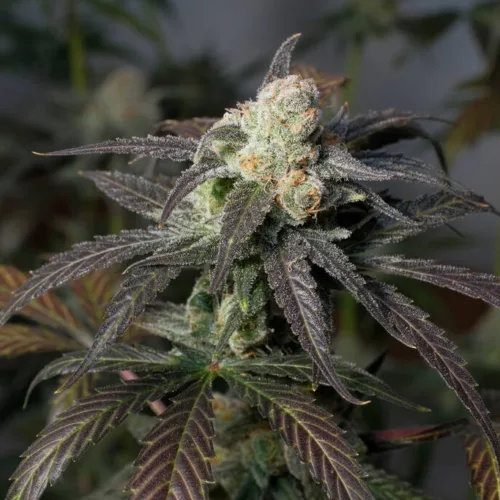
Researchers from King Saud University and Pir Mehr Ali Shah Arid Agriculture University have published a study detailing a novel copper-zinc-selenium (Cu-Zn-Se) nanocomposite using extracts from the Cannabis sativa plant.
Published in the Journal of Cannabis and Cannabinoid Research, the study highlights the potential of cannabis-based nanomaterials in biomedical applications, particularly for their antioxidant properties.
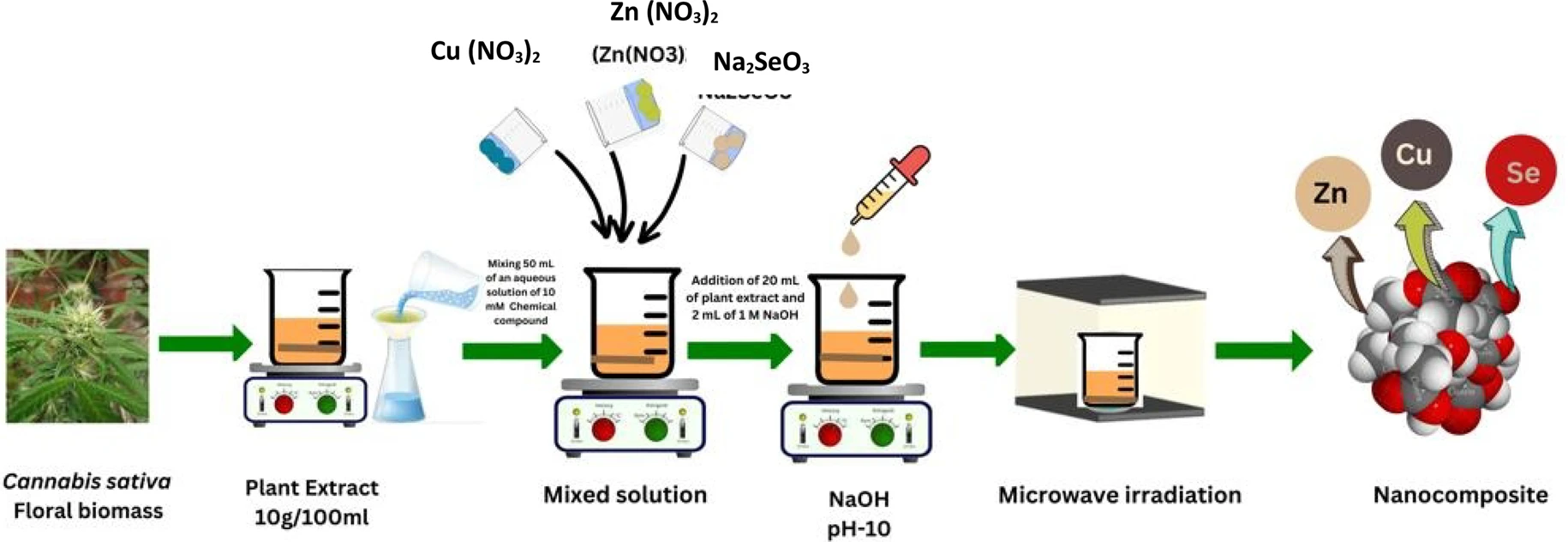
The team employed a green synthesis method, using floral biomass from Cannabis sativa instead of chemical or mechanical processes. Advanced analyses, including UV-Vis spectroscopy, Fourier-transform infrared spectroscopy (FTIR), and Scanning Electron Microscopy (SEM), confirmed the successful creation of spherical nanoparticles with an average size of 40 to 60 nanometers. The phytochemical profile of the plant extract was also characterized through gas chromatography-mass spectrometry.
The synthesized Cu-Zn-Se nanocomposite displayed a strong dose-dependent antioxidant effect, outperforming the cannabis extract itself and showing results comparable to ascorbic acid in multiple assays, including free radical scavenging and hydrogen peroxide reduction. Molecular docking studies further supported these results, indicating stable binding of the nanocomposite to antioxidant target proteins.
According to the authors, “This study is among the first to report the green synthesis of a Cannabis sativa-mediated Cu-Zn-Se trimetallic nanocomposite, highlighting its strong antioxidant potential and interaction pathways at the molecular level.” They note that the work demonstrates not only the biomedical promise of such nanocomposites but also the sustainability of phytogenic synthesis methods.
By showing enhanced antioxidant activity, the research opens the door to further exploration of cannabis-derived nanomaterials as therapeutic agents and contributes to the growing field of sustainable nanotechnology.