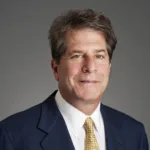
Former Nevada cannabis regulator Tyler Klimas told a Senate Banking Subcommittee that state-legal marijuana businesses remain dangerously cut off from the traditional financial system, despite operating in regulated markets that span most of the country.

Klimas, the founder of Leaf Street Strategies and former executive director of the Nevada Cannabis Compliance Board, testified before the Subcommittee on Financial Institutions and Consumer Protection during a hearing focused on fair access to banking. He said the lack of clear federal protections has forced many marijuana businesses to operate largely in cash, creating public safety risks, inflating compliance costs and undermining regulatory oversight.
Drawing on his experience overseeing Nevada’s medical and adult-use marijuana programs, Klimas told lawmakers that the lack of banking access directly undermines regulators’ ability to do their jobs. As Nevada’s former chief regulator, he said his responsibilities were to “prevent diversion, ensure product safety, and protect public trust and confidence through transparency across the industry,” but added that “each of those responsibilities was made more difficult by the lack of access to traditional banking services.”
Those challenges persist, Klimas said, even as regulated marijuana markets now operate in 40 states and territories.
“Today, 40 states and territories have developed regulated cannabis markets, supporting hundreds of thousands of jobs and generating billions in state tax revenue, yet many state-legal businesses continue to struggle to access basic financial services,” Klimas said, adding that the lack of banking forces many operators to remain cash-intensive and exposes them to heightened public safety risks.
“The SAFER Banking Act would provide the certainty financial institutions need to serve this growing industry, while also making communities safer, and improving transparency and accountability in the marketplace”, he added.
Klimas pointed to federal data showing how limited banking participation remains, noting that, as of the most recent FinCEN figures, “only 507 banks, 182 credit unions, and 127 non-depository institutions” reported serving marijuana businesses, out of thousands of federally insured institutions nationwide. Even when banks do participate, he said the uncertainty drives up costs, explaining that financial institutions “take on risk due to that uncertainty, risk that results in high administrative and compliance costs,” which are then passed on to marijuana businesses through steep fees and limited services.
The ripple effects extend well beyond operators themselves. Klimas said employees and related businesses often face similar barriers, with workers reporting difficulty obtaining loans or even having personal accounts closed. State governments, he added, have also been affected, recalling instances in which marijuana regulation in Nevada “risked disrupting the state’s entire relationship with its banking partner,” forcing regulators to rely on workarounds to avoid disruptions to tax collection and state finances.
Klimas cautioned that rescheduling cannabis would not solve the industry’s banking problems, saying “Rescheduling alone does not alleviate the current banking challenges nor does it have any impact on safe harbor for financial institutions,” stressing that congressional action remains necessary.
During his speach, Klimas noted that”As long the illicit market operators are able to exploit the unnecessary difficulties that legal operators face, we will continue to see unsafe and untested product available to consumers, and a significant loss of tax revenue to states and the federal government.
“To conclude,” Klimas said, “allowing clear and certain access to the financial system for state-legal cannabis businesses does not amount to the federal legalization of cannabis,” but instead would strengthen oversight and allow financial institutions to serve businesses in their communities “without unnecessary fear or uncertainty.”
During the hearing, Senator Catherine Cortez Masto (D-NV) reiterate that passing the SAFER Banking Act remains one of her top legislative priorities, saying she hopes it can “finally pass it into law in the new year.”
Senator Thom Tillis (R-NC), Chairman of the committee, said “Senator Cortez Masto, I absolutely agree with everything you said about the banking situation and this industry. We have to realize that two-thirds of the states have legal cannabis operations. I’m a free market capitalist. Whether or not I agree with a given market activity, if it exist the federal government should exist to regulate it.”
That said, Tillis added he’s not quite there yet on the SAFER Bank, saying “I see that as a forcing mechanism for a more comprehensive framework to get things right, from crop safety… to the FDA, to flavorings, to advertising”, calling the current situation the “wild, wild, west”.