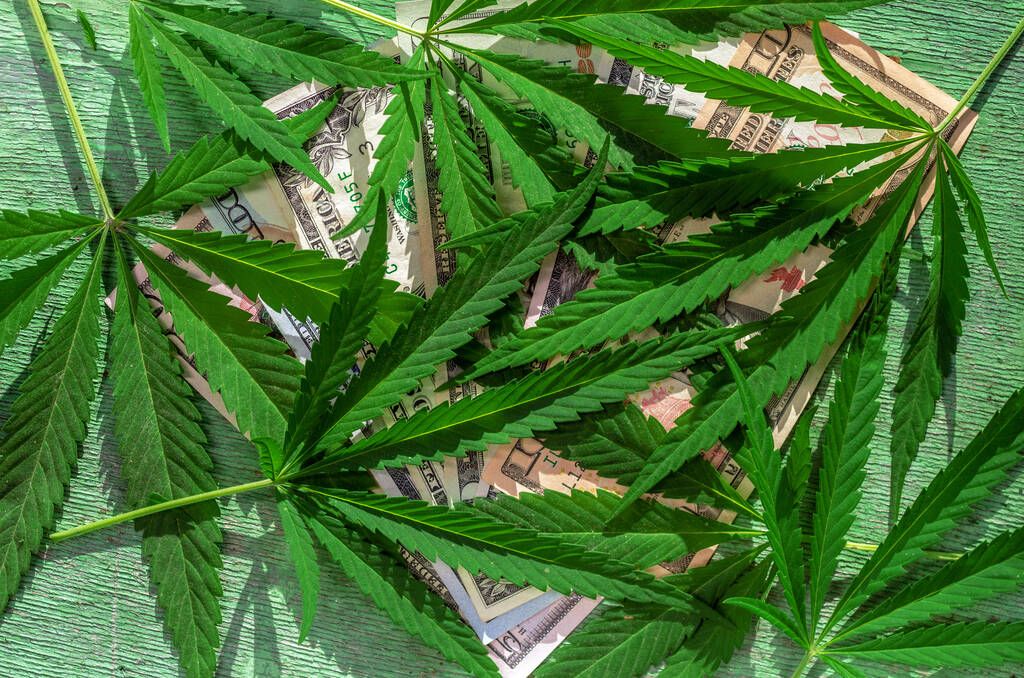
Montana’s legal marijuana market generated approximately $326.9 million in sales during 2025, representing a modest increase from the $324.3 million sold in 2024. This is according to new data from the Montana Department of Revenue.
Monthly sales in 2025 tracked closely with the prior year, with totals generally clustering in the mid-to-high $20 million range and showing no dramatic spikes or collapses across the calendar. February was again the weakest month, with sales just over $25 million, closely matching February 2024’s roughly $25.1 million total. Summer once again delivered the strongest performance, with July and August both approaching or exceeding $28 million in monthly sales, compared with about $28.7 million in July 2024 and nearly $29.7 million in August 2024.
hile several individual months in early and mid-2025 came in slightly below their 2024 counterparts—often by less than $1 million—the gap narrowed later in the year. October, November and December 2025 all posted totals near $27 million, helping offset earlier softness and ultimately pushing the full-year total to above 2024’s total.
Total legal marijuana sales from January 2022 through December 2025 have now surpassed $1.27 billion, underscoring the industry’s continued role as a stable revenue generator for the state even as growth has leveled off.
Montana voters approved recreational marijuana in November 2020 through Initiative 190, alongside a companion measure that established the state’s marijuana tax structure. Legal adult-use sales officially began on January 1, 2022, when licensed retailers were allowed to open statewide.
Under Montana law, adults 21 and older may possess up to 1 ounce of marijuana flower, up to 8 grams of concentrate, and may grow up to four mature plants and four seedlings at home for personal use. Adult-use marijuana is subject to a 20% state excise tax, while medical marijuana carries a 4% tax rate. Revenue is directed toward conservation programs, veterans’ services, local governments and the state’s general fund, ensuring marijuana sales continue to contribute to public funding even as annual totals stabilize.


Related posts:
Oklahoma Recalls Medical Marijuana Flower Over Mold and Yeast Testing Failures, Introduces New Track...
Illinois Seeks Contractor for Multi-Year Statewide Marijuana Media Campaign Focused on Legal Market