A study published today in Neuroscience by researchers from the Russian Academy of Sciences finds that cannabinoid-based treatments may have potential to help preserve cognitive function in people with Parkinson’s disease.
Parkinson’s disease is best known for causing tremors, stiffness and other movement-related symptoms, but it can also lead to serious non-motor issues, including problems with memory, thinking and overall cognitive function. According to the review, these cognitive changes are closely tied to neuronal plasticity, the brain’s ability to adapt and reorganize itself, which is influenced in part by the endocannabinoid system.
The researchers examined experimental and clinical evidence involving endogenous cannabinoids, plant-derived cannabinoids and drugs that alter endocannabinoid signaling. They found that these compounds may affect several key processes involved in Parkinson’s disease, including synaptic plasticity, neuronal excitability and neuroinflammation. All of these are believed to play an important role in how the disease develops and progresses.
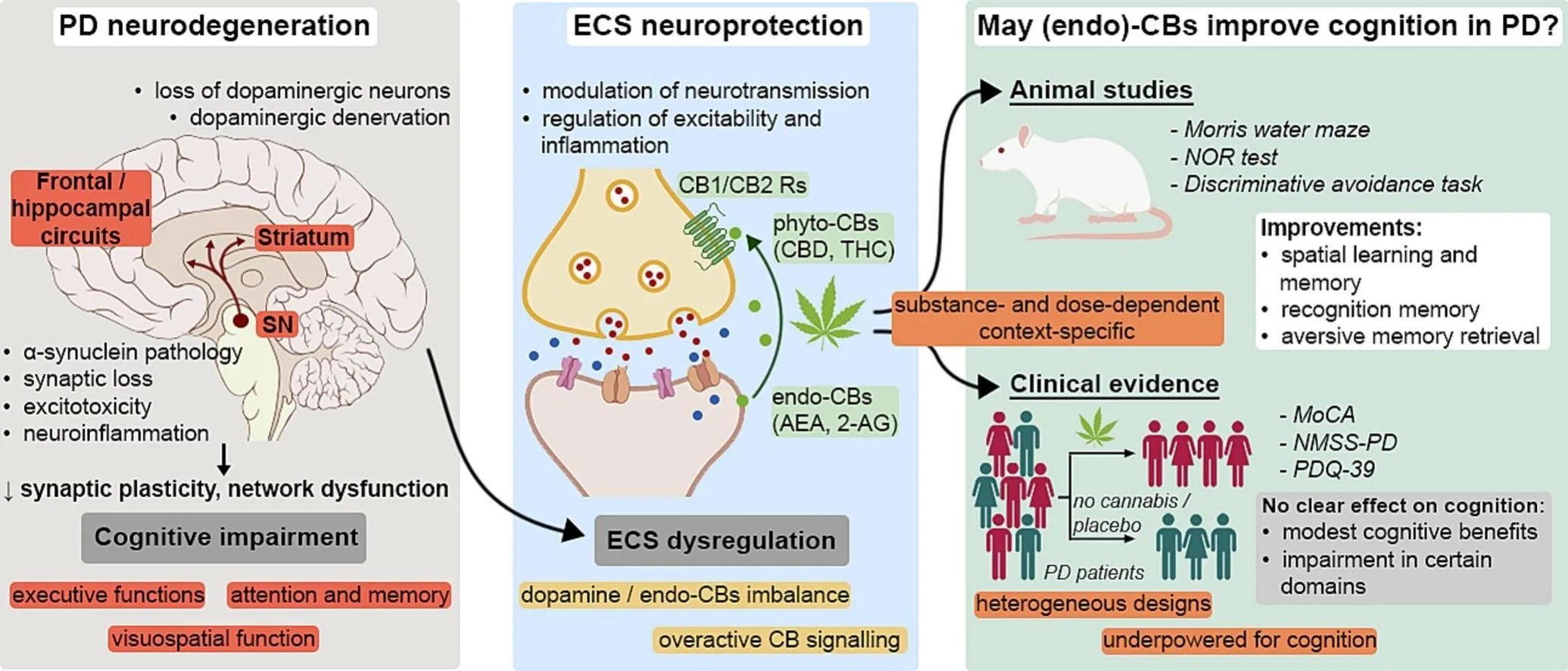
”
At the same time, the review makes clear that human research remains limited. The authors note that available clinical studies are often small, use different cannabinoid formulations and doses, and frequently measure cognition as a secondary outcome rather than the main focus. They also say differences in treatment length, study design and patient characteristics make it difficult to compare results. The primary reason for the lac of clinical trials is cannabis’s Schedule I status under federal law, making research difficult.
Even with those limitations, the review says cannabinoids may hold value as a tool for protecting neural circuits and influencing cognition in Parkinson’s disease. The authors stress that more rigorous trials using standardized cognitive measures are needed before doctors can make reliable treatment recommendations.