A study published online today by Biomedicine & Pharmacotherapy found that a specialized cannabidiol (CBD) nanoparticle formulation significantly improved memory, reduced brain inflammation, and slowed key markers of Alzheimer’s disease in animal and laboratory models.
The study was conducted by researchers from Thammasat University, Mahidol University, Siam University and Kasetsart University in Thailand.
Researchers developed CBD-loaded lipid nanoparticles functionalized with arginylglycylaspartic acid (RGD), a targeting peptide designed to help transport CBD across the blood-brain barrier. One of the biggest challenges in using CBD for neurological conditions is that relatively little of the compound naturally reaches the brain, and the new delivery system was designed to overcome that limitation.
In laboratory experiments, the targeted nanoparticles achieved a threefold increase in cellular uptake and boosted transport across a blood-brain barrier model by 65% compared to non-targeted CBD nanoparticles. The treatment also significantly reduced inflammatory cytokines, including IL-6 and TNF-α, as well as oxidative stress, both of which are believed to contribute to Alzheimer’s progression.
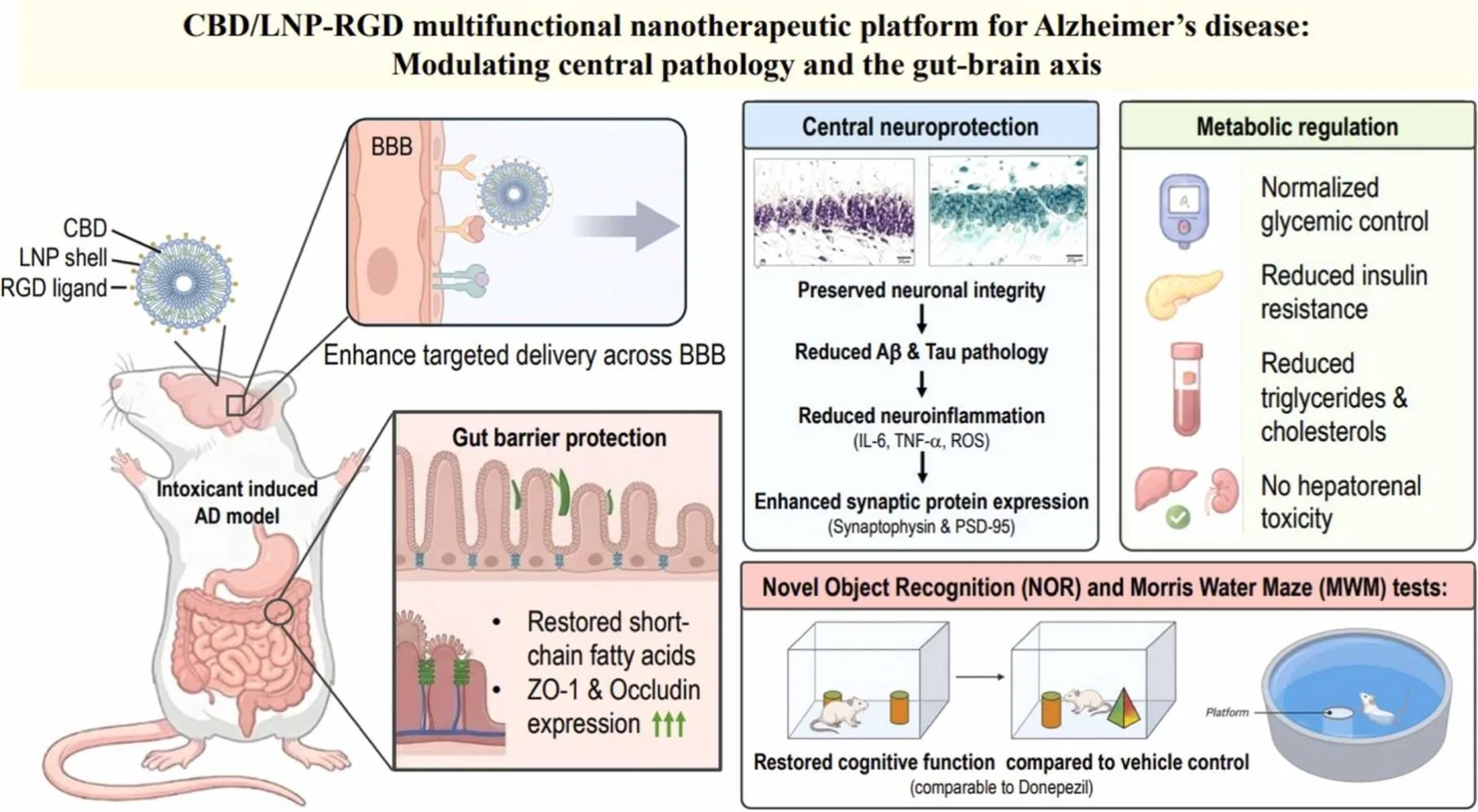
The researchers then tested the formulation in rats with Alzheimer’s-like symptoms. Animals receiving the targeted CBD nanoparticles performed significantly better on memory and learning tests, with improvements comparable to those seen with donepezil, one of the most commonly prescribed medications for Alzheimer’s disease.
Beyond cognitive improvements, the treatment also reduced amyloid-beta and tau pathology, two hallmarks of Alzheimer’s disease. Researchers found that it preserved neurons in the hippocampus, increased proteins involved in healthy synaptic function, restored beneficial short-chain fatty acids linked to gut health, and strengthened markers of intestinal barrier integrity.
The treatment also appeared to improve broader metabolic health, normalizing blood glucose, insulin resistance and triglyceride levels without signs of liver or kidney toxicity.
According to the researchers, the findings suggest that targeted CBD nanoparticles could offer a multifaceted approach to treating Alzheimer’s disease by simultaneously addressing neuroinflammation, oxidative stress, metabolic dysfunction and disruptions to the gut-brain axis.
While the findings are encouraging, the research remains in the preclinical stage. Human clinical trials will be necessary to determine whether the targeted CBD formulation is safe and effective for treating Alzheimer’s disease in people.