A new study published in Scientific Reports provides detailed insight into how cannabinoids degrade over time when stored in cannabis resin.
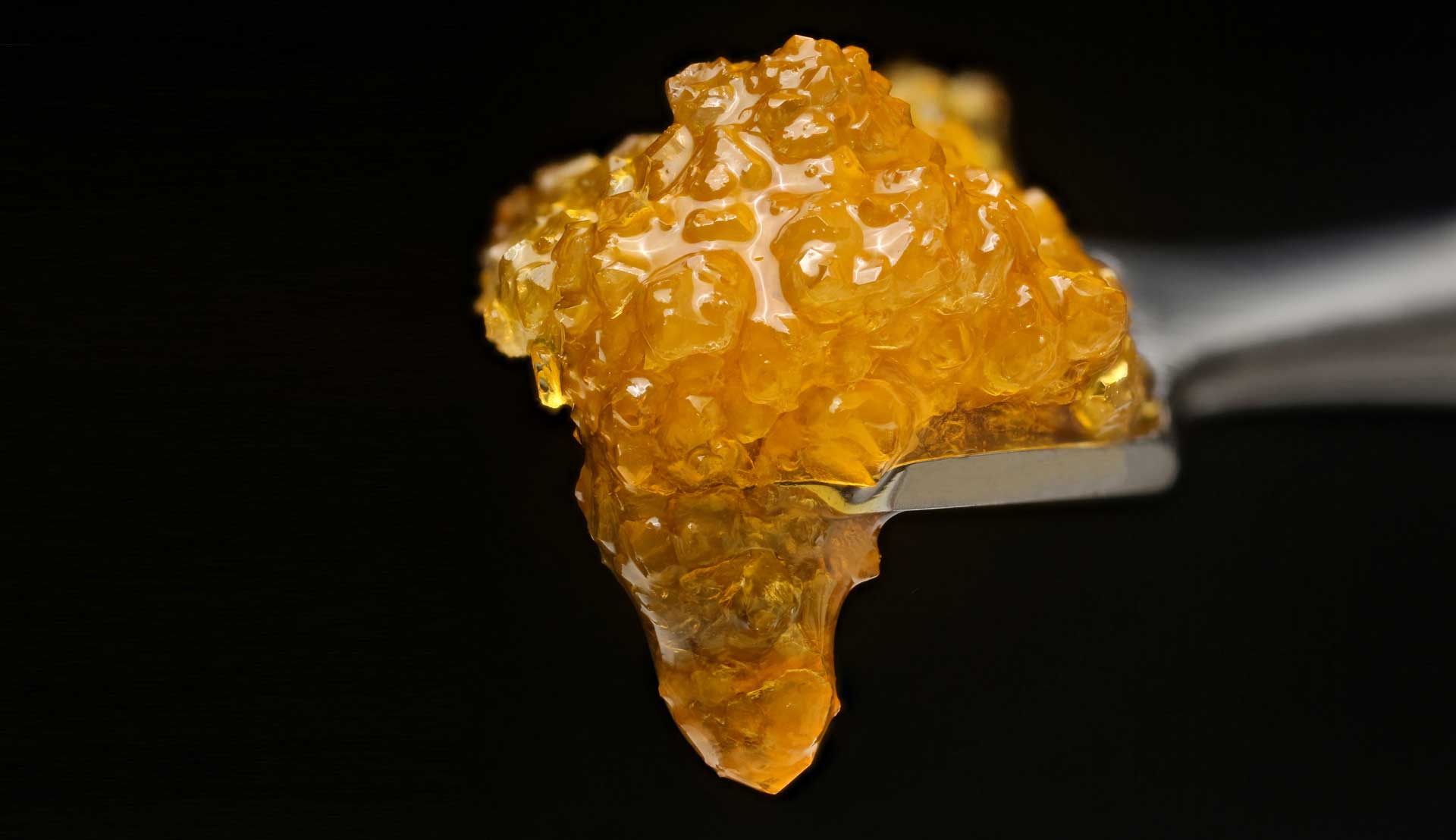
Live Resin.
Researchers from University Sidi Mohammed Ben Abdellah and Rabat-Institut analyzed 150 resin samples seized by Moroccan authorities and stored for up to 8 years, finding major shifts in cannabinoid composition.
Fresh cannabis resin contained the highest yield, with THC levels averaging 35.16%. However, after just two years of storage, THC dropped dramatically to 2.74%, while CBD and CBN rose to 6.71% and 6.94%, respectively. By the eighth year, THC levels fell close to zero (0.44%), while CBD and CBN also declined from their peak but remained elevated compared to fresh samples.
The study confirmed a strong negative correlation between storage time and THC levels, while CBN increased early before later tapering off. Principal component analysis showed that storage duration could be used to classify cannabinoid profiles, and regression modeling indicated that cubic equations most accurately predicted cannabinoid degradation over time. A multiple linear regression model achieved an R² of 0.99, allowing researchers to reliably estimate storage time from cannabinoid content.
These findings are relevant for both medicinal and forensic fields. From a therapeutic standpoint, storage naturally increases CBD and CBN, compounds linked to anti-inflammatory, sedative, and analgesic properties, while lowering THC’s psychoactive potency.
The study concludes that cannabis resin undergoes significant chemical transformation during prolonged storage, with THC rapidly degrading and CBN temporarily spiking, offering valuable implications for quality control, product safety, and forensic investigations.