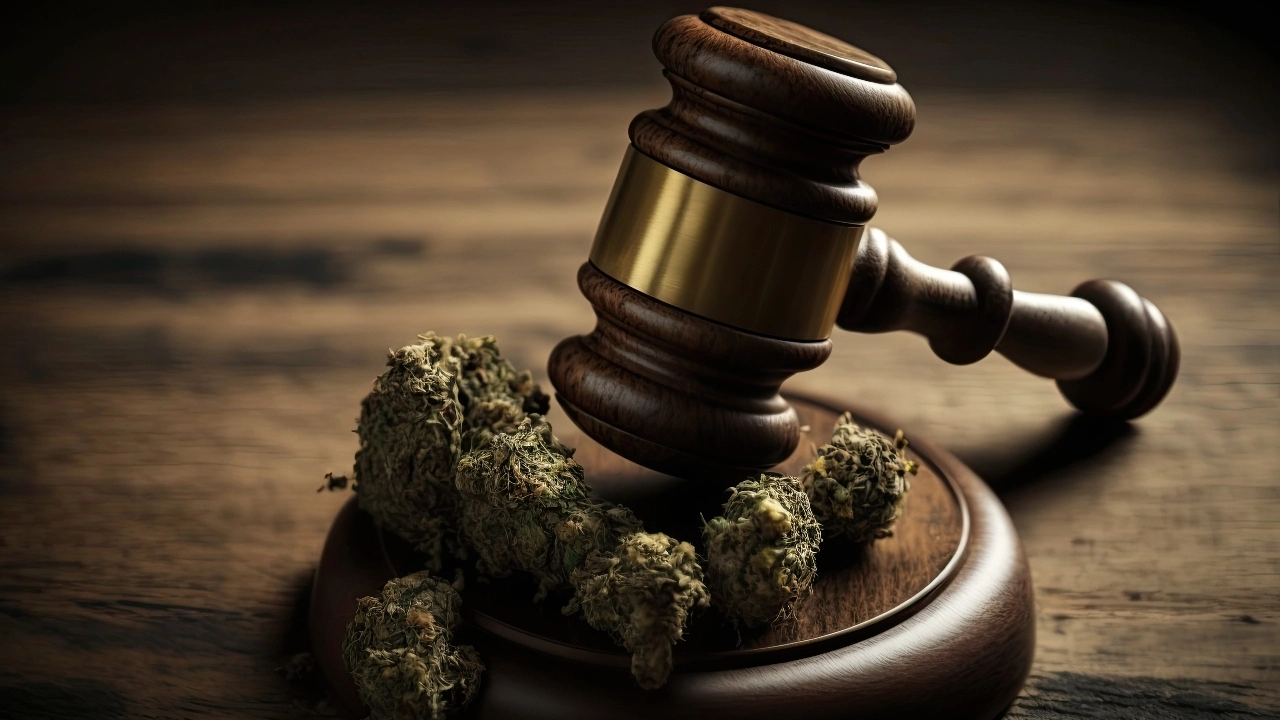
Judge Michael A. Shipp of the U.S. District Court for the District of New Jersey has denied Curaleaf’s request for a preliminary injunction against a state law requiring most licensed marijuana businesses to maintain labor peace agreements with unions as an ongoing condition of licensure, finding that the company had not shown the immediate, irreparable harm needed to justify blocking enforcement while the lawsuit continues.
The decision, which was first reported by Bloomberg Law, does not end the case or determine whether New Jersey’s labor peace requirement is lawful. Instead, it allows the rule to remain in effect as Curaleaf continues its challenge against the New Jersey Cannabis Regulatory Commission.
While Shipp declined to immediately block enforcement of the requirement, he found that Curaleaf had shown a likelihood of success on the merits of its claim that New Jersey’s labor peace agreement mandate is preempted by federal labor law.
Curaleaf is challenging a provision of New Jersey’s marijuana law requiring most licensed cannabis businesses to enter into and maintain labor peace agreements with bona fide labor organizations as an ongoing condition of licensure. Microbusinesses are exempt from the requirement.
Curaleaf argues the mandate interferes with rights protected by the National Labor Relations Act, including employer rights related to union organizing, bargaining and the use of economic pressure during labor disputes.
Shipp agreed, at least at this stage, that Curaleaf had shown the requirement is likely preempted under both Garmon and Machinists preemption, two legal doctrines used to block state interference with areas governed by federal labor law.
The judge rejected the state’s argument that the case should be dismissed under the doctrine of unclean hands because marijuana remains illegal under federal law. Shipp found that Curaleaf’s operation in the marijuana industry was collateral to the central issue in the case: whether New Jersey’s labor peace agreement requirement conflicts with federal labor law.
Shipp also declined to abstain from hearing the case, rejecting state arguments that the federal court should defer to pending state proceedings or New Jersey’s marijuana regulatory system.
However, Shipp denied Curaleaf’s request for emergency relief after finding that the company failed to show irreparable harm. The judge pointed to Curaleaf’s delay in seeking an injunction, noting that the state law was enacted in 2021, Curaleaf signed a labor peace agreement in 2022, the agreement expired in April 2025, regulators issued a violation notice in May, and a $610,000 penalty followed in August.
Curaleaf did not file its lawsuit until October, later seeking a preliminary injunction. Shipp found that the delay undercut the company’s claim that immediate court action was needed.
The dispute stems from Curaleaf’s labor peace agreement with UFCW Local 360, which was signed April 6, 2022, and expired three years later. State regulators said Curaleaf failed to provide proof that the agreement had been extended or replaced.
The New Jersey Cannabis Regulatory Commission issued a notice of violation in May 2025, followed by a $610,000 penalty in August. Regulators said the penalty was based on Curaleaf operating for 122 days without a valid labor peace agreement, calculated at $5,000 per day.
The case remains pending, with the court allowing New Jersey’s requirement to stay in effect for now while Curaleaf continues pursuing its challenge.
Sponsored