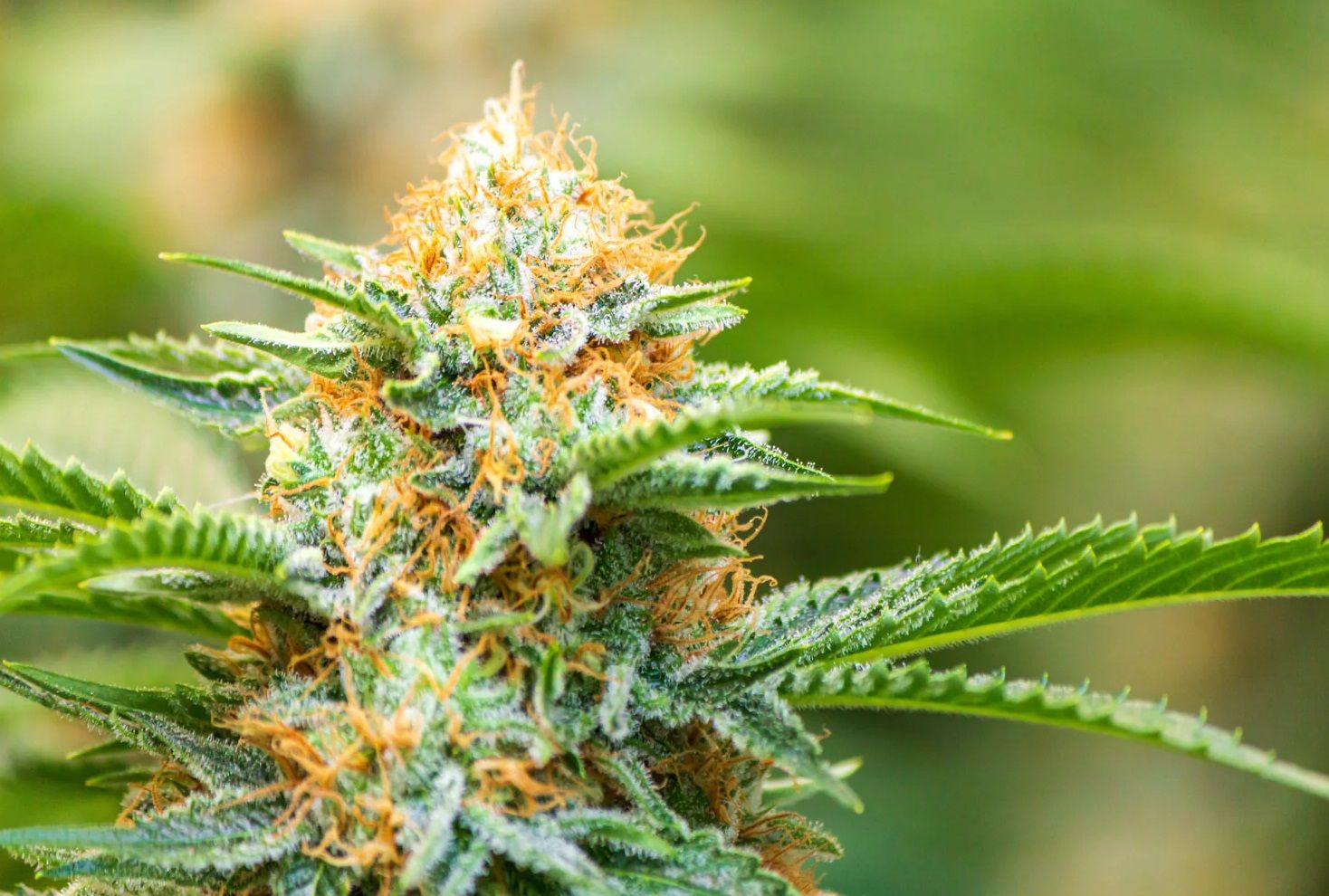
A relatively small number of genetic regions appear to control much of the variation in major cannabinoids and monoterpenes found in marijuana, according to a new preprint study.
Researchers from Southern Cross University, Agriculture Victoria and Australia’s Commonwealth Scientific and Industrial Research Organisation identified one major region of the marijuana genome associated with four cannabinoids and another linked to six prominent monoterpenes.
The findings provide new insight into why marijuana plants produce different chemical profiles and could eventually support more precise breeding of varieties with targeted cannabinoid and terpene characteristics.
Cannabinoids such as THC and CBD are largely responsible for marijuana’s pharmacological effects, while terpenes contribute to the plant’s aroma, flavor and other sensory characteristics. Although the pathways plants use to produce these compounds are relatively well understood, researchers said knowledge of the genetic variation controlling their concentrations remains limited.
To investigate that genetic control, researchers crossed two chemically and genetically distinct Cannabis sativa landraces. One parent, IPK_CAN_36, was a THC-dominant Type I plant, while the other, IPK_CAN_57, was a CBD-dominant Type III plant.
The two plants also had substantially different terpene profiles. The THC-dominant parent had higher concentrations of myrcene and limonene but contained no detectable alpha-terpinolene, alpha-terpinene or gamma-terpinene. The CBD-dominant parent produced higher concentrations of several other monoterpenes.
Researchers used the cross to create an F2 population, meaning a second generation of plants produced from the original pairing. They clonally propagated 155 female plants and analyzed mature flower material grown under two contrasting conditions: a controlled indoor environment and an outdoor shade house.
The plants were tested for six cannabinoids and 10 terpenes. Researchers then conducted quantitative trait loci, or QTL, mapping, which identifies portions of the genome associated with measurable traits such as the concentration of a particular cannabinoid.
The plants grown outdoors generally showed greater variation in cannabinoid and terpene content. Outdoor plants had higher median levels of cannabidiolic acid (CBDA) and cannabichromenic acid (CBCA), while plants grown indoors had higher median levels of cannabigerolic acid (CBGA) and, to a lesser extent, tetrahydrocannabinolic acid (THCA).
Despite those environmental differences, the study’s major genetic findings remained consistent across both growing conditions. Researchers said that stability increased confidence that the identified regions exert strong genetic control over cannabinoid and monoterpene production rather than merely reflecting differences in cultivation conditions.
For four major cannabinoids, CBDA, THCA, CBGA and tetrahydrocannabivarinic acid (THCVA), researchers identified a single QTL for each trait within the same region of chromosome 7.
The chromosome 7 region explained approximately 60% of the variation in THCA and CBDA concentrations and about 36% of the variation in CBGA and THCVA. The same region was detected using data from both the indoor and outdoor plants.
That portion of chromosome 7 overlaps with a cluster of cannabinoid synthase genes, which produce enzymes responsible for converting precursor compounds into cannabinoids such as THCA and CBDA.
Gene-expression analysis of resin-producing glandular trichomes also revealed pronounced differences between the parental plants. A CBDA synthase gene was highly expressed in the CBD-dominant parent but expressed at levels more than 360 times lower in the THC-dominant parent. A THCAs-like gene, meanwhile, was expressed at substantially higher levels in the THC-dominant plant.
Researchers said differences in the activity of THCA synthase and CBDA synthase within the region could explain variation in THCA, CBDA and CBGA. CBGA serves as a precursor used by the plant to produce both THCA and CBDA.
CBCA was the major exception. Instead of being primarily associated with the chromosome 7 cluster, variation in CBCA was linked to regions on chromosomes 3, 4 and 9. Together, those regions explained about 42% of the variation in CBCA concentrations.
An equally prominent finding involved monoterpenes.
Researchers identified a major QTL cluster on chromosome 5 associated with alpha-pinene, beta-pinene, alpha-terpinene, alpha-terpinolene, gamma-terpinene and limonene. The region was consistently associated with all six compounds in both growing environments.
Depending on the terpene, the chromosome 5 QTLs explained between 47% and 66% of the observed variation. A major QTL for myrcene was located nearby and explained approximately 43% of that compound’s variation.
The chromosome 5 region contained multiple terpene synthase genes, several of which were expressed much more heavily in the CBD-dominant parent. Researchers identified possible candidate genes responsible for differences in alpha-pinene, myrcene, alpha-terpinene, gamma-terpinene and alpha-terpinolene production.
Plants that inherited two copies of the chromosome 5 marker from the THC-dominant parent lacked detectable alpha-terpinene, alpha-terpinolene and gamma-terpinene. Plants carrying at least one copy from the CBD-dominant parent produced higher concentrations of the compounds, suggesting that the inherited version of the region had a major influence on whether the terpenes were present.
The genetic control of sesquiterpenes appeared considerably more complicated.
QTLs associated with beta-caryophyllene, farnesene and humulene were scattered across five chromosomes and generally had smaller effects. They were also less stable between the indoor and outdoor environments.
Researchers noted that sesquiterpenes may be more difficult to map because they accumulate earlier in flower development and can volatilize before harvest. Measuring the compounds earlier in the plant’s development could improve the precision of future studies.
Overall, the findings suggest breeders may be able to focus on a limited number of major genomic regions when developing plants with particular cannabinoid or monoterpene profiles. However, the results came from a single population created from two parental landraces, meaning additional research involving a wider range of marijuana genetics will be needed to determine how broadly the findings apply.
“In conclusion, we found that, in our population derived from the Type I landrace IPK_CAN_36 and the Type III landrace IPK_CAN_57, four major cannabinoids were controlled by a single major multi-QTL cluster on chromosome 7 and six major monoterpenes were controlled by a single major multi-QTL cluster on chromosome 5,” researchers said.
The study was co-funded by Southern Cross University and Cymra Life Sciences.
Sponsors: