Why a Trump Executive Order on Marijuana Rescheduling Would Withstand Legal Scrutiny

By Ashley Mitchell, Law Student and Dispensary Manager

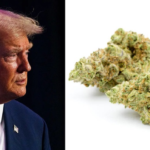
President Trump is expected to issue an executive order directing the Department of Justice to finalize the federal rescheduling of marijuana, a move that has prompted questions about whether such an approach is legally sound. From a legal perspective, however, this pathway is not only defensible but firmly grounded in existing statutory authority and administrative practice.

The Controlled Substances Act gives the attorney general, and by delegation the Drug Enforcement Administration, the authority to add, remove, or transfer substances between schedules. That process is not legislative in nature; it is administrative. While the president cannot unilaterally rewrite the statute, he can direct executive agencies to prioritize, complete, or accelerate actions already authorized by law. An executive order that instructs the DOJ to issue a final rule on rescheduling fits squarely within that framework.

Importantly, this would not represent the start of a new process. The rescheduling review was initiated under the prior administration and has already moved through several procedural stages. An executive order directing the DOJ under Attorney General Pam Bondi to complete that review would be more accurately characterized as continuity of executive action rather than a circumvention of law. Courts have historically been deferential when an administration completes or modifies regulatory actions that were lawfully begun by its predecessor.

Concerns about legality often hinge on the misconception that rescheduling by executive action bypasses Congress. In reality, Congress delegated this authority decades ago when it enacted the Controlled Substances Act. That delegation has been repeatedly upheld by federal courts, including in cases involving controversial or politically sensitive substances. As long as the agency follows required procedures, including notice, justification, and reliance on scientific and medical evaluation, the action is well insulated from legal challenge.

From an administrative law standpoint, directing an agency to finalize a rule already in progress may actually reduce litigation risk. Abandoning or reversing the process would likely invite challenges under the Administrative Procedure Act, particularly if the record already supports rescheduling. Moving forward, by contrast, aligns agency action with the existing evidentiary record.

Critics may argue that rescheduling should be left to Congress, but that is a policy argument, not a legal one. Congress chose this system, and presidents of both parties have used executive authority to shape drug scheduling outcomes. In that context, a Trump executive order directing the DOJ to finalize rescheduling is not an overreach. It is an exercise of authority explicitly contemplated by federal law.

If implemented carefully, this approach would likely take effect quickly and withstand judicial review, providing regulatory clarity while remaining within the bounds of established legal precedent.


Thank you for reading The Marijuana Herald! You can find more news stories by clicking here, and you can sign up for daily news updates by clicking here


More articles from The Marijuana Herald can be found below.

Washington Bill Would Set Framework for Interstate Marijuana Commerce

Washington Bill Would Set Framework for Interstate Marijuana Commerce

Michigan Cannabis Sales Top $3.2 Billion in 2025 as Price Drops to All-Time Low of $58 Per Ounce

Michigan Cannabis Sales Top $3.2 Billion in 2025 as Price Drops to All-Time Low of $58 Per Ounce

Utah Bill Would Remove Criminal Penalties for First-Time Marijuana Possession of Up to 14 Grams, Reduce Penalties for Subsequent Offenses

Utah Bill Would Remove Criminal Penalties for First-Time Marijuana Possession of Up to 14 Grams, Reduce Penalties for Subsequent Offenses

Curaleaf Opens 160th U.S. Retail Location With New Medical Marijuana Dispensary in Florida

Curaleaf Opens 160th U.S. Retail Location With New Medical Marijuana Dispensary in Florida

Study: Cannabis-Infused Beverages Linked to Reduced Alcohol Use and Fewer Binge Drinking Episodes

Study: Cannabis-Infused Beverages Linked to Reduced Alcohol Use and Fewer Binge Drinking Episodes

West Virginia Lawmakers Propose Putting Marijuana Legalization Constitutional Amendment on 2026 Ballot

West Virginia Lawmakers Propose Putting Marijuana Legalization Constitutional Amendment on 2026 Ballot

Colorado Senate Bill Would Require Health Facilities to Allow Medical Marijuana Use by Terminally Ill Patients

Colorado Senate Bill Would Require Health Facilities to Allow Medical Marijuana Use by Terminally Ill Patients

West Virginia Bills Filed to Decriminalize Cannabis Possession, Protect Gun Rights for Medical Cannabis Patients

West Virginia Bills Filed to Decriminalize Cannabis Possession, Protect Gun Rights for Medical Cannabis Patients

Maryland Bill Would Direct Cannabis Tax Revenue to Veterans Trust Fund

Maryland Bill Would Direct Cannabis Tax Revenue to Veterans Trust Fund

Mississippi Senator Files Companion Bill to Decriminalize First-Time Marijuana Possession

Mississippi Senator Files Companion Bill to Decriminalize First-Time Marijuana Possession

Oklahoma Medical Marijuana Program Reports 319,965 Active Patients and 4,500 Licensed Businesses

Oklahoma Medical Marijuana Program Reports 319,965 Active Patients and 4,500 Licensed Businesses

Florida Medical Marijuana Program Reaches 740 Dispensaries

Florida Medical Marijuana Program Reaches 740 Dispensaries

Safe Harbor Expands Into Cannabis Insurance Through New Industry Partnerships

Safe Harbor Expands Into Cannabis Insurance Through New Industry Partnerships

Study: Psilocybin Treatment May Benefit Those With PTSD

Study: Psilocybin Treatment May Benefit Those With PTSD

Psilocybin Found to Significantly Reduce Depression in Cancer Patients, Meta-Analysis Shows

Psilocybin Found to Significantly Reduce Depression in Cancer Patients, Meta-Analysis Shows

Virginia Lawmaker Files Bill to Legalize Licensed Recreational Cannabis Sales, Increase Possession Limit

Virginia Lawmaker Files Bill to Legalize Licensed Recreational Cannabis Sales, Increase Possession Limit

New Jersey Bill Would Create State-Funded Subsidy to Cut Medical Marijuana Costs for Medicaid Patients

New Jersey Bill Would Create State-Funded Subsidy to Cut Medical Marijuana Costs for Medicaid Patients

Survey Finds 59% of Indiana Voters Support Legalizing Recreational Cannabis, 84% Support Medical

Survey Finds 59% of Indiana Voters Support Legalizing Recreational Cannabis, 84% Support Medical