A study published online today by the European Journal of Pharmaceutics and Biopharmaceutics reports that a THC-based buccal spray may offer a promising approach for patients with chronic pain that has not responded to standard treatments.
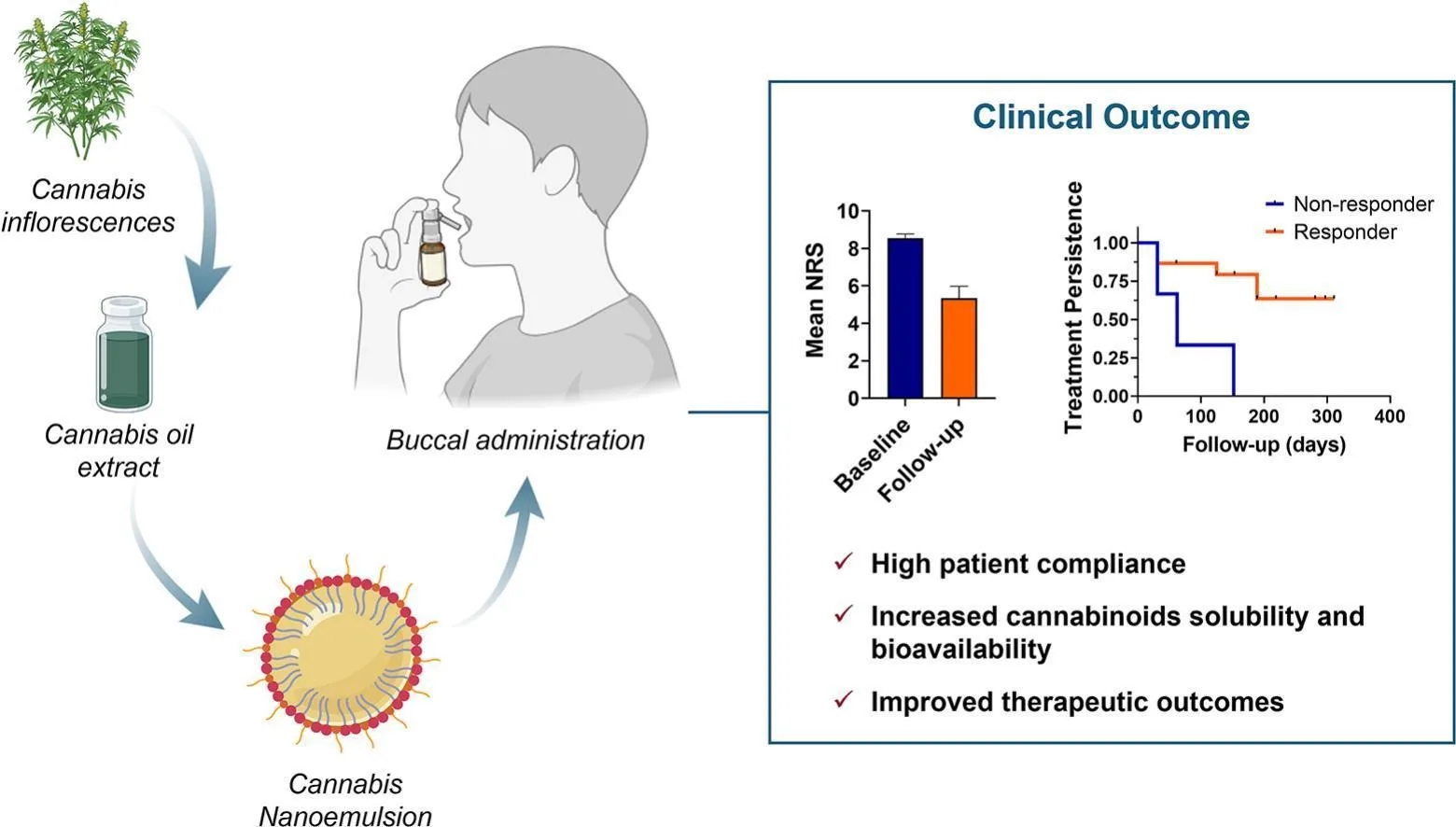
The study, conducted by researchers from the University of Campania “Luigi Vanvitelli” and the University of Naples Federico II, focused on a nanoemulsion formulation designed for buccal administration of a Cannabis sativa extract made from Bedrocan, a high-THC medical cannabis variety.
Researchers said the formulation, referred to as THC-NE, was developed to address common limitations of THC-based therapies, including poor water solubility, variable bioavailability and inconsistent absorption. The nanoemulsion had a narrow droplet size distribution of about 73 nanometers, maintained stability at 4°C for at least 90 days, and remained suitable for delivery through a standard spray device.
Laboratory testing found that the nanoemulsion provided sustained THC release, while the oil-based extract showed negligible release under the same conditions. The formulation also showed stronger mucoadhesive properties and greater THC permeation across porcine buccal mucosa, with researchers reporting roughly nine-fold higher THC levels in the receptor compartment after 24 hours compared to the oil formulation.
An observational clinical study was also conducted involving 18 patients with chronic pain that had not adequately responded to standard treatments. After a median follow-up of 189 days, mean pain scores fell from 8.6 to about 5.4 on the Numeric Rating Scale. Overall, 83% of patients achieved at least a 20% reduction in pain, while responders experienced an average reduction of roughly 45%.
Treatment persistence was also relatively high, with 64% of responders remaining on therapy after six months. The average daily dose was 19.1 puffs, equal to about 10.7 milligrams of THC per day.
A total of 17 adverse events were reported among 11 patients, most of them mild to moderate and temporary. The most common included dizziness, dry mouth, sleepiness, cough and increased appetite. Three patients discontinued treatment due to adverse events, including hallucinations, nausea and dissociative symptoms.
Researchers said the findings indicate that buccal THC nanoemulsion “represents a promising patient-friendly approach” for cannabis-based therapy, while noting that the study was small and exploratory. They said larger, controlled clinical trials with longer follow-up are needed to confirm the findings and better assess long-term safety and efficacy.