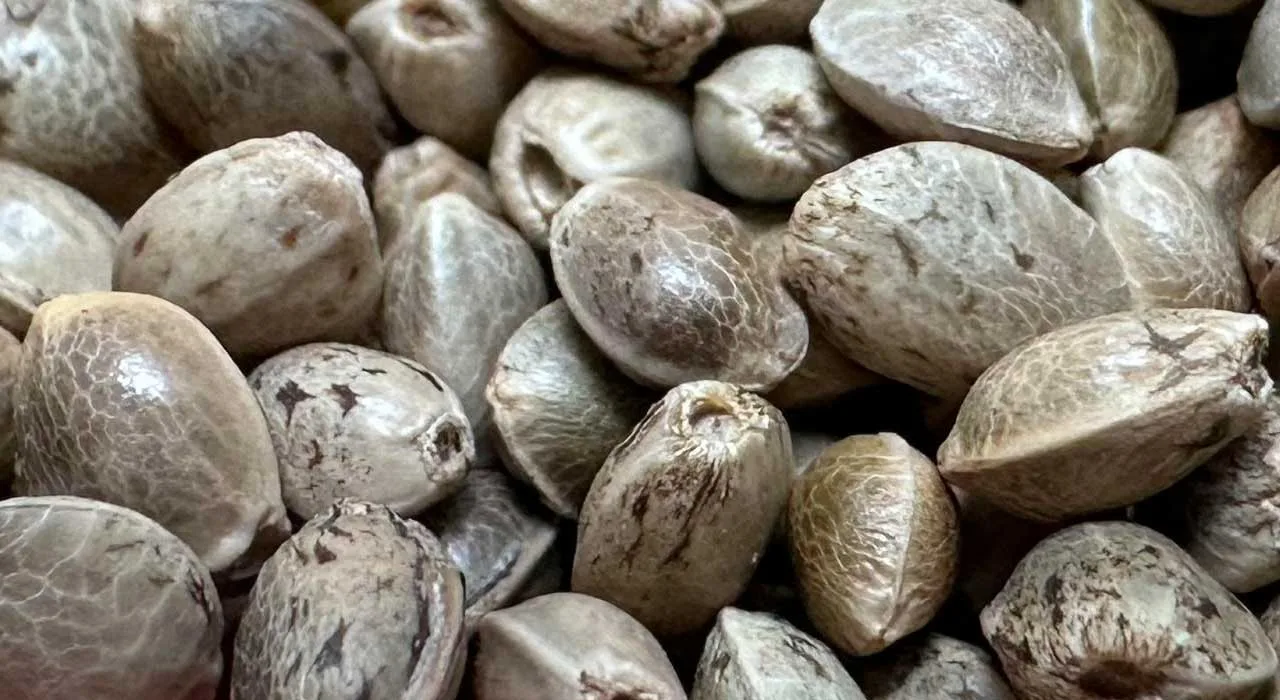
Compounds found in cannabis seeds may help protect nerve cells from damage associated with Parkinson’s disease, according to a new study published in Tissue and Cell.
The research was conducted by scientists affiliated with Northeast Agricultural University, Heilongjiang University of Chinese Medicine and Ningxia Medical University.
Researchers examined phenylpropionamides, a group of naturally occurring compounds found in the seeds of Cannabis sativa. The study combined computer-based analyses with laboratory experiments using human neuroblastoma cells exposed to MPP+, a neurotoxin commonly used to model Parkinson’s-related cellular damage.
The findings suggest that the cannabis seed compounds reduced apoptosis, a form of programmed cell death, while improving mitochondrial function and promoting autophagy. Autophagy is the process cells use to remove damaged proteins and other cellular material.
Researchers found that the compounds affected the AMPK/mTOR/ULK1 signaling pathway, which plays an important role in regulating autophagy. Treatment increased levels of AMPK and ULK1 proteins while reducing levels of mTOR.
The compounds also reduced levels of Bax and cleaved caspase-3, which are associated with cell death, while increasing levels of the protective protein Bcl-2.
Computer modeling indicated that Cannabisin I, one of the primary phenylpropionamides examined, interacted with several proteins involved in apoptosis and autophagy, including caspase-3, Bcl-2, AMPK, mTOR, ULK1 and Beclin-1.
“The research demonstrated that PHS derived from the seeds of Cannabis sativa L. exhibited a protective effect against MPP+-induced toxicity in SH-SY5Y cells,” researchers concluded.