By John Carmichael
Cartridge filling is one of the most critical steps in vape production, yet it’s often the point where small inefficiencies turn into expensive problems. Inconsistent fills, leaking carts, wasted oil, and slow throughput don’t just affect output. They affect brand reputation, compliance confidence, and long-term margins.
As the vape market matures, more producers are moving away from manual or semi-manual methods and investing in dedicated cartridge filling machines. This shift isn’t just about speed. It’s about repeatability, control, and building a production workflow that can scale without constant intervention.
Whether you’re filling hemp-derived oils, cannabinoid distillates, or specialty blends, choosing the right cartridge filling machine has a direct impact on your operation. This guide breaks down five of the best vape cartridge filling machines on the market today, followed by a detailed look at how to choose the right system for your needs.
Beyond production speed, filling machines also play a role in protecting product integrity. Consistent fills help ensure cartridges perform the same way for customers from the first unit to the last, which directly affects brand trust. Poor filling practices can lead to leaking, clogging, or uneven vaporization, all of which result in returns, complaints, and lost accounts.
As competition increases, reliability becomes just as important as output. Investing in the right cartridge filling machine isn’t just a manufacturing upgrade. It’s a quality control decision that impacts how your brand is perceived in the market.
Summary of the Best Vape Cartridge Filling Machines
| Machine | Automation Level | Best For | Production Scale | Key Strength |
| Vape Jet 4.0 | Fully automated | High-volume vape producers | Large-scale, continuous runs | Precision dosing and viscosity adaptability |
| Thompson Duke IZR | Fully automated (piston-based) | Thick oils and distillates | Medium to large-scale | Mechanical precision and durability |
| STM RocketFuel | Fully automated (line-integrated) | Standardized SKUs | Large-scale production | Throughput and workflow integration |
| AVD Alpha-Cat | Semi-automated | Small batches and R&D | Small to medium runs | Flexibility and compact footprint |
| iFill Cartridge Filling Machine | Entry-level automated | Brands leaving manual filling | Small-scale production | Ease of use and accessibility |
1. Vape Jet 4.0
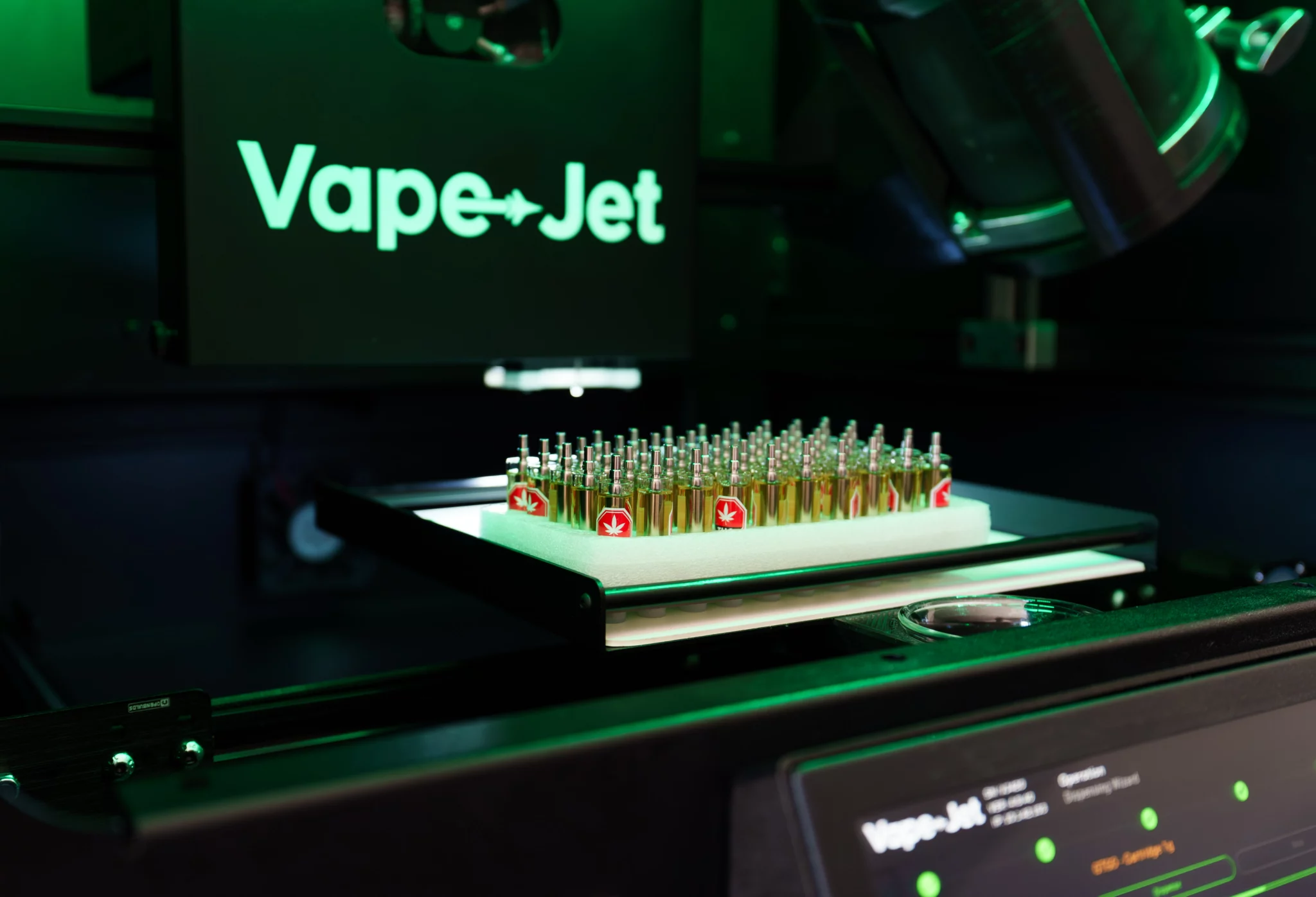
Vape Jet 4.0 earns the top spot because it was built specifically for modern cartridge production environments.
This system uses precision volumetric dispensing to deliver consistent fill weights across large batches. That level of control helps reduce common issues like overfilling, underfilling, and post-fill leaking. When you’re working with expensive oil, minimizing waste becomes just as important as speed.
One of Vape Jet’s biggest strengths is adaptability. Oil viscosity can change based on formulation, temperature, and batch variation. Vape Jet handles these shifts without requiring constant recalibration, which keeps production moving even when conditions change.
The system is also designed with workflow efficiency in mind. Setup is straightforward, and operators don’t need extensive technical training to get reliable results. Cleaning and maintenance are manageable, which helps reduce downtime between runs.
For producers running sustained, high-volume operations or planning to scale in the near future, Vape Jet has become a reference point for what automated cartridge filling should look like.
2. Thompson Duke IZR Cartridge Filler
The Thompson Duke IZR is a long-established machine in licensed cannabis and hemp facilities.
It uses a piston-driven filling mechanism that performs well with thicker oils and high-viscosity distillates. Once properly dialed in, the IZR delivers consistent results and integrates smoothly into existing production lines.
This system is best suited for operations with experienced technicians who are comfortable managing mechanical equipment. It requires more hands-on oversight than newer platforms, particularly during cleaning and calibration.
Many producers choose the IZR for its durability and proven track record. While it may not offer the same level of automation as newer systems, it remains a reliable option for facilities that prioritize mechanical precision.
3. STM RocketFuel Cartridge Filling System
STM’s RocketFuel system is built for throughput and repeatability.
It’s commonly used in facilities where cartridge filling is part of a larger, continuous workflow that includes capping, labeling, and packaging. The system performs best when running standardized cartridge formats and consistent oil formulations.
RocketFuel excels during long production runs where speed matters more than frequent changeovers. It allows teams to maintain steady output without constant adjustments.
That said, flexibility is more limited. Switching between different cartridge styles or oil types can increase setup time. For brands with stable SKUs and predictable demand, this tradeoff often makes sense.
4. AVD Alpha-Cat Cartridge Filler
The AVD Alpha-Cat is designed for smaller-scale operations or facilities with limited floor space.
Despite its compact size, it offers solid accuracy and supports multiple cartridge formats. This makes it a practical option for brands producing smaller batches or specialty runs.
Many producers use the Alpha-Cat as a secondary machine alongside larger systems. It works well for pilot batches, R&D, or limited releases that don’t justify tying up high-capacity equipment.
While it won’t keep pace with large automated systems, the Alpha-Cat fills an important niche for flexibility-focused production.
5. iFill Cartridge Filling Machine
The iFill cartridge filler is often used by brands transitioning away from manual filling methods.
It provides basic automation and reduces human error compared to hand filling. The interface is simple, and training time is minimal, which makes it accessible for newer teams.
Output is limited, and the system isn’t designed for high-volume production. Many producers eventually upgrade as demand increases. Still, iFill works well as an entry-level solution or backup system when primary equipment is offline.
How to Choose the Right Vape Cartridge Filling Machine
Choosing a cartridge filling machine isn’t just a purchasing decision. It’s an operational decision that affects workflow, staffing, and long-term scalability.
Below are the key factors to evaluate before investing in equipment.
Production Volume and Growth Plans
Start by looking at your current output, then think ahead.
If you’re filling a few hundred cartridges per week, a smaller system may be enough for now. If you’re producing thousands per day or planning to scale, underpowered equipment will become a bottleneck quickly.
Buying for future growth often makes sense, especially if demand is trending upward. A machine that meets today’s needs but limits tomorrow’s output can cost more in the long run.
Oil Viscosity and Temperature Sensitivity
Oil behavior matters more than many operators expect.
Thick distillates, terpene-rich blends, and temperature-sensitive formulations all behave differently during filling. Machines that struggle with viscosity changes can cause inconsistent fills and downtime.
Look for systems designed to handle a wide viscosity range without constant manual adjustment. This flexibility becomes especially important when switching between SKUs.
Fill Accuracy and Waste Reduction
Small inconsistencies add up fast at scale.
Overfilling increases cost per unit, while underfilling risks customer dissatisfaction and compliance concerns. Precision dosing protects both margins and reputation.
Machines with adjustable volumetric control and reliable repeatability tend to perform better over long production runs.
Ease of Cleaning and Changeover
Downtime affects throughput just as much as fill speed.
Machines that are difficult to clean or require extensive disassembly can slow production between batches. Consider how often you’ll need to clean the system and how long that process takes.
Quick changeover matters if you produce multiple SKUs or run shorter batches.
Cartridge Compatibility
Not all machines handle all hardware equally.
Some systems are optimized for specific cartridge designs, while others support a broader range of formats. If you plan to offer multiple cartridge styles or anticipate hardware changes, compatibility should be a priority.
Operator Training and Usability
Complex systems aren’t always better.
Machines that require highly specialized training can slow onboarding and increase reliance on specific staff members. Intuitive interfaces and clear controls reduce operator error and improve consistency.
Ease of use becomes especially important as teams grow or turnover occurs.
Technical Support and Manufacturer Reliability
Equipment support doesn’t end at purchase.
Reliable technical support, spare parts availability, and responsive service can save significant time and money. When a machine goes down, fast support matters.
Manufacturers with industry experience tend to understand real-world production challenges better than generic equipment suppliers.
Why Automated Cartridge Filling Matters
Automation improves more than speed.
It creates consistency across batches, reduces operator fatigue, and helps standardize production. That standardization makes quality control easier and improves overall efficiency.
Automated filling also supports better planning. Predictable output allows brands to manage inventory, staffing, and delivery timelines with more confidence.
As regulatory scrutiny increases, automation can also help support compliance by reducing variability and human error.
Common Mistakes When Buying Filling Equipment
One common mistake is underestimating growth.
Many brands buy equipment that meets current demand but can’t scale. This leads to additional purchases sooner than expected.
Another mistake is focusing only on speed. Fill accuracy, ease of maintenance, and compatibility matter just as much over time.
Finally, some buyers overlook support and service. A cheaper machine can become expensive quickly if downtime is frequent and support is slow.
Final Thoughts
Vape cartridge filling machines play a central role in modern production. The right system improves efficiency, consistency, and long-term scalability.
The machines listed here represent some of the strongest options available today, with Vape Jet setting the benchmark for precision, adaptability, and high-volume performance. Whether you’re scaling up or refining an existing operation, choosing the right equipment helps protect margins and product quality.
As the industry continues to evolve, producers who invest thoughtfully in filling technology will be better positioned to compete, adapt, and grow.
Sponsors: