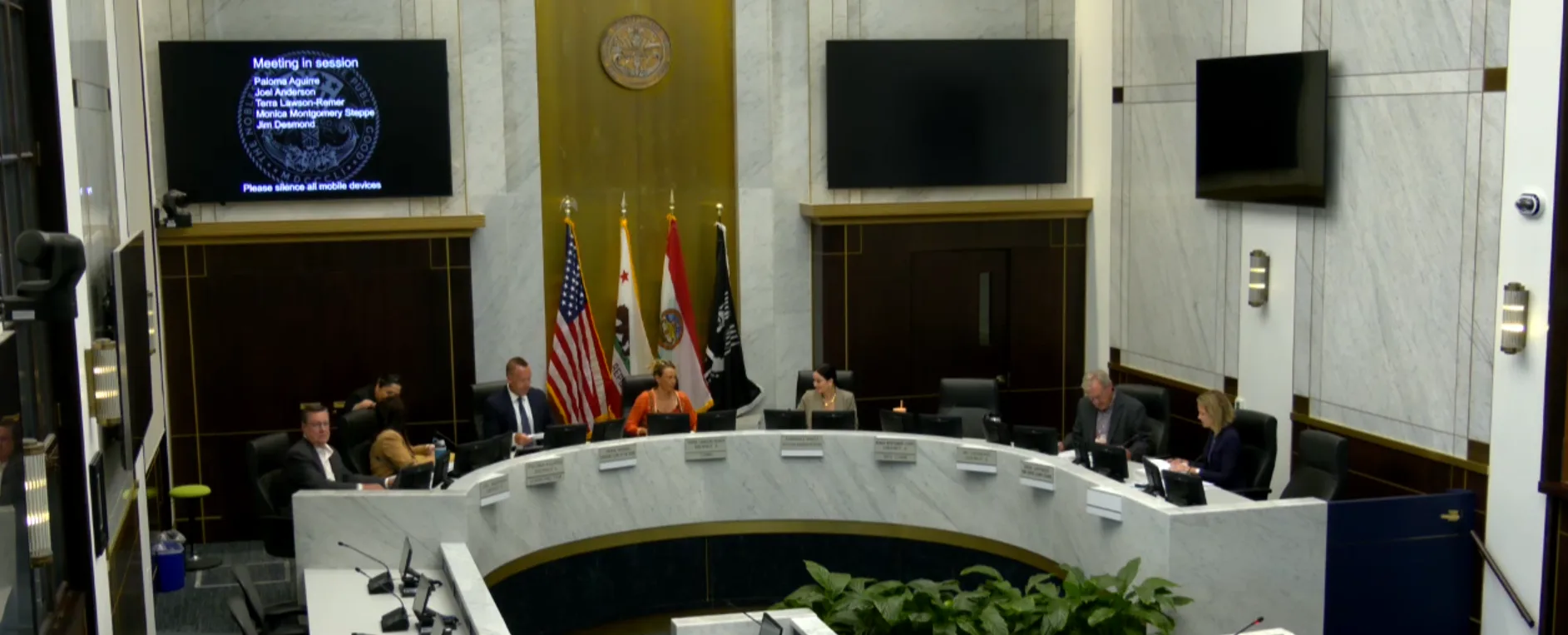
The San Diego County Board of Supervisors voted 3 to 2 today to give final approval to a comprehensive Socially Equitable Cannabis Program, establishing a framework for new marijuana businesses across the county’s unincorporated areas.
Today’s vote was the second and final reading of ordinances governing commercial marijuana licensing, the county’s Social Equity Program and associated permitting and licensing fees. The Board gave initial approval to the measures on August 19.
Under the newly approved framework, San Diego County will allow marijuana cultivation, manufacturing, distribution, testing laboratories, microbusinesses, storefront and delivery retailers, onsite consumption lounges and temporary marijuana events. Consumption lounges will be allowed only as part of a retail facility.
The county will allow a maximum of 25 storefront marijuana retailers, while placing no numerical cap on other license types. At least 50% of storefront retail licenses will be reserved for qualifying social equity applicants.
Social equity applicants will also receive a three-year head start to obtain marijuana licenses before the broader applicant pool can compete for them. Businesses seeking to maintain social equity status must remain at least 51% owned by qualifying social equity applicants.
The county says the program is designed to provide greater business opportunities to people disproportionately affected by marijuana criminalization and the War on Drugs. Assistance available through the Social Equity Program includes training, one-on-one mentorship, help with record expungement, grant opportunities and workforce development assistance.
All marijuana facilities must be located at least 600 feet from schools, day cares and youth centers. Supervisors chose that standard over a recommendation from the county Planning Commission that would have increased the buffer to 1,000 feet and added public parks, public trails and places of worship to the list of protected locations. The Board also rejected the commission’s recommendation to prohibit outdoor marijuana cultivation.
The program permits cultivation in agricultural zones, while manufacturing, distribution and testing facilities can operate in industrial zones. Retailers and temporary marijuana events can operate in commercial and industrial zones, while microbusinesses can operate in certain agricultural, industrial and commercial areas.
Smaller outdoor cultivation operations of up to 5,000 square feet, along with certain manufacturers, distributors, testing laboratories and retailers, may qualify for a streamlined zoning verification process. Larger outdoor grows, indoor and mixed-light cultivation, microbusinesses and consumption lounges generally require an administrative permit.
The final approval represents a major shift in marijuana policy for unincorporated San Diego County. The county has had a moratorium on establishing new marijuana facilities since 2017, with just five existing nonconforming marijuana businesses holding valid operating certificates. Supervisors first directed county officials to develop the new Socially Equitable Cannabis Program in January 2021.
During the program’s initial August 19 vote, Supervisors Paloma Aguirre, Terra Lawson-Remer and Monica Montgomery Steppe supported the proposal, while Supervisors Joel Anderson and Jim Desmond opposed it.
The county says the new system is intended to replace the previous restrictive framework with a regulated commercial market while providing priority opportunities for people harmed by past marijuana enforcement.
Sponsors: