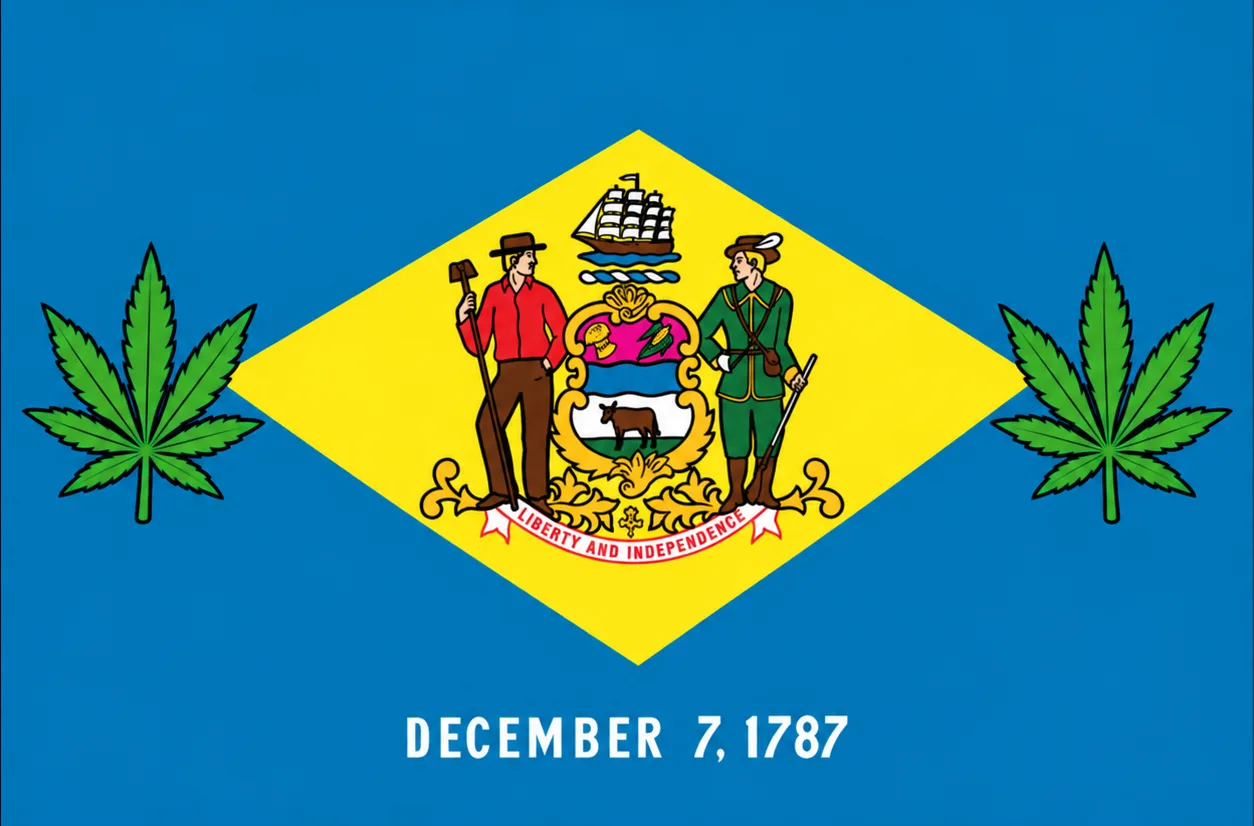
Delaware Governor Matt Meyer has signed legislation formally adding marijuana to the name of the state law enforcement division responsible for overseeing compliance with the state’s marijuana laws.
Meyer signed House Bill 411 on September 16, changing the Division of Alcohol and Tobacco Enforcement to the Division of Alcohol, Tobacco, and Marijuana Enforcement. The law took effect immediately upon the governor’s signature.
The change reflects responsibilities the division has already assumed as Delaware develops its legal adult-use marijuana market. The legislation does not grant the agency new enforcement powers.
The division has been responsible for enforcing the Delaware Marijuana Control Act since recreational marijuana sales began, while legislation enacted in 2024 expanded its administrative inspection authority to include licensed marijuana facilities. The agency works alongside the Office of the Marijuana Commissioner on inspections and compliance.
Adult-use marijuana sales officially launched in Delaware on August 1, 2025, initially through existing medical marijuana businesses that obtained conversion licenses.
House Bill 411 also changes references to division “agents” throughout state law to “officers,” reflecting their role as law enforcement personnel. The measure was sponsored by Representative Ed Osienski, with Senators Trey Paradee and Jack Walsh, and cleared the General Assembly in June.
The name change will carry some implementation costs. A legislative fiscal analysis estimates Delaware will spend at least $56,700 during fiscal year 2027 to update vehicle wraps, signs, uniforms, badges and patches. Additional technology, website and administrative expenses have not yet been determined.
Those costs are expected to be covered by the state’s Marijuana Regulation Fund rather than its general fund.
Meyer signed the measure at the division’s recently opened office in Harrington, which state officials said was established to accommodate additional personnel and resources associated with marijuana enforcement.
“Today we take another step forward in ensuring a safe, legal adult-use marijuana market,” Meyer said, adding that officers are responsible for making sure licensed businesses comply with state law.