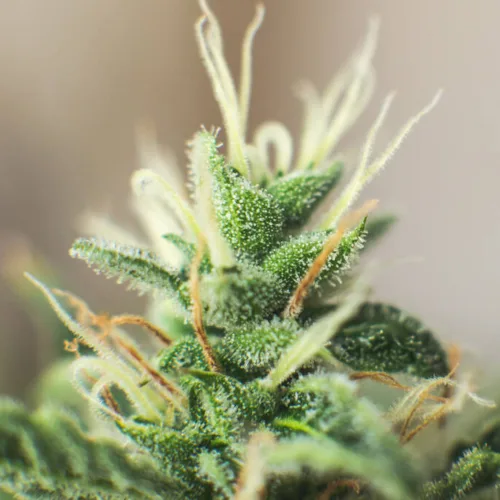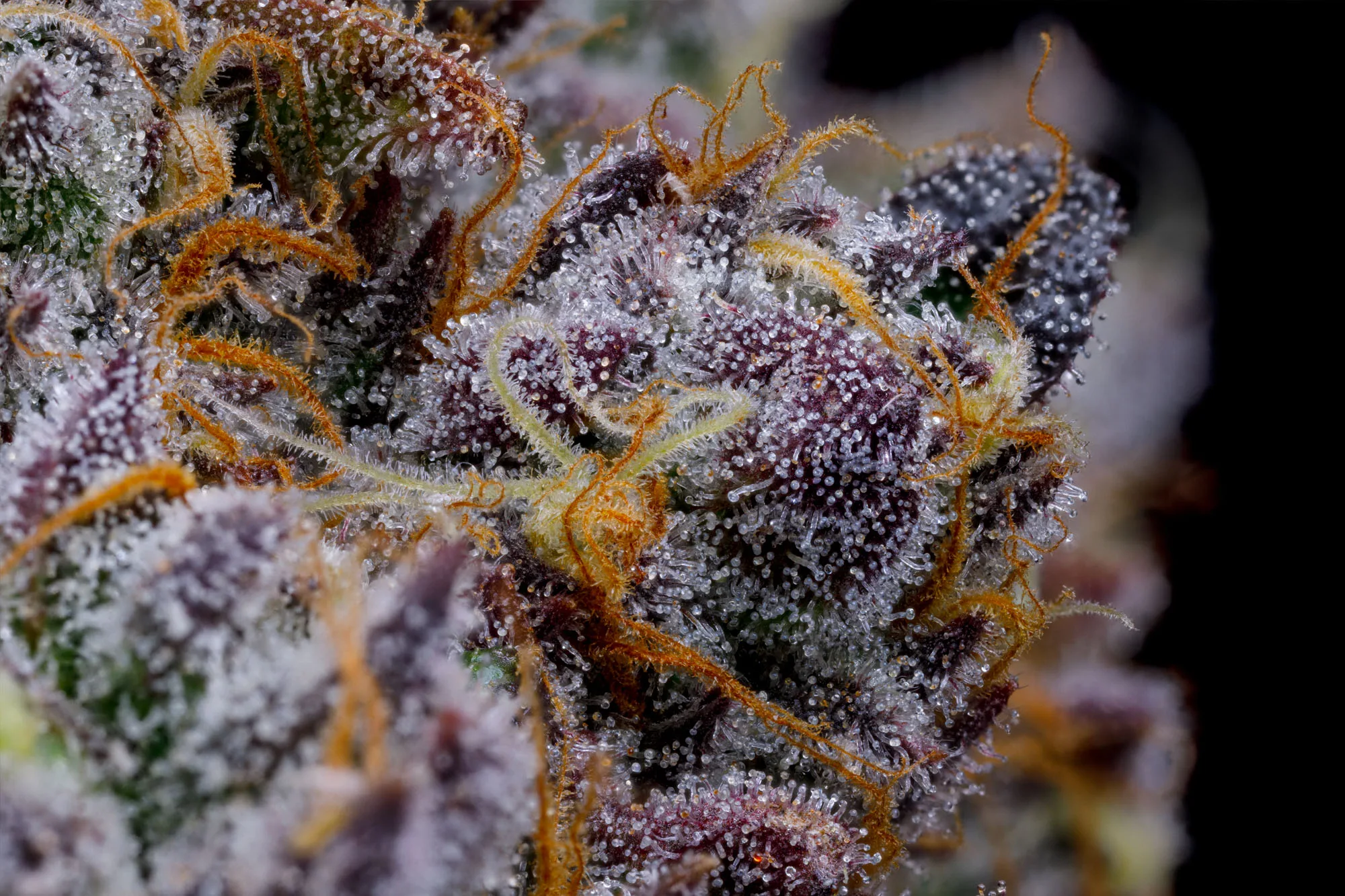
(Photo credit: Craig Barker Photography).
Terpenes are among the most important, and most misunderstood, compounds in marijuana.
They are responsible for much of the citrus, pine, floral, spicy, earthy and fruity aroma associated with different marijuana varieties. But terpenes are more than scent molecules. Many have biological activity of their own, and researchers are increasingly examining whether particular terpenes can influence the effects of THC, CBD and other cannabinoids.
The science is considerably more complicated than the familiar dispensary charts suggesting that myrcene automatically makes marijuana sedating, limonene is always uplifting or pinene guarantees better focus.
A major study published in 2026 illustrates just how complex the subject has become. Researchers identified 227 volatile terpenes in Cannabis sativa, including 88 monoterpenes and 139 sesquiterpenes, while finding substantial differences based on cultivar, plant tissue and stage of development.
Only a fraction of those compounds normally dominate a marijuana flower’s measurable terpene profile. Among the best-known are myrcene, limonene, alpha-pinene, beta-pinene, beta-caryophyllene, linalool, terpinolene, humulene and ocimene.
Understanding those compounds can provide a much more complete picture of a marijuana product’s chemical composition than THC percentage alone — provided terpene results are interpreted realistically.
Last updated September 18, 2026.
Table of Contents
Cannabis Terpenes at a Glance
| Terpene | Common Aroma | Also Found In | What Research Suggests |
|---|---|---|---|
| Myrcene | Earthy, musky, herbal | Hops and numerous aromatic plants | Extensive preclinical research; direct human evidence remains limited |
| Limonene | Citrus, lemon, orange | Citrus peels | Human study found high-dose d-limonene reduced some THC-induced anxiety effects |
| Alpha-pinene / Beta-pinene | Pine, resin, fresh herbs | Pine trees, rosemary and many conifers | Multiple preclinical effects studied; cannabis-specific human evidence is limited |
| Beta-caryophyllene | Peppery, spicy, woody | Black pepper, cloves, hops | Directly activates CB2 cannabinoid receptors; unusually strong mechanistic evidence |
| Linalool | Floral, lavender-like | Lavender, coriander | Substantial research involving lavender preparations; less evidence for isolated cannabis-derived linalool |
| Terpinolene | Floral, herbal, citrus, pine | Numerous herbs and trees | Common in some marijuana cultivars but comparatively little human research |
| Humulene | Hoppy, earthy, woody | Hops | Anti-inflammatory and other effects studied primarily in preclinical research |
| Ocimene | Sweet, herbal, floral | Basil, mint and other plants | Limited clinical research despite occurring in numerous marijuana cultivars |
| Bisabolol | Floral, mildly sweet | Chamomile | Biological activity has been investigated, but marijuana-specific evidence is limited |
The most important word in that table is suggests.
A terpene’s aroma can be established chemically. Its presence in marijuana can be measured. Its interaction with a receptor can sometimes be demonstrated in a laboratory.
Predicting exactly how a marijuana product containing that terpene will make an individual person feel is much harder.
What Are Terpenes?
Terpenes are naturally occurring organic compounds produced by an enormous variety of plants.
They contribute to the scent of citrus fruit, pine trees, lavender, rosemary, hops, mint and countless other plants. They can also serve biological functions for plants, including attracting pollinators or helping defend against insects and environmental stress.
Marijuana produces a particularly diverse mixture.
Terpenes are concentrated heavily in the resin-producing glandular trichomes that cover marijuana flowers. These microscopic structures also produce and store cannabinoids including tetrahydrocannabinolic acid (THCA) and cannabidiolic acid (CBDA).
Research has identified terpene-synthase genes that allow Cannabis sativa to produce compounds including myrcene, limonene, pinene, ocimene, caryophyllene and humulene. Terpene-related genes are expressed particularly strongly in resin-producing trichomes.
The 2026 study that identified 227 volatile terpenes found that flowers and bracts were major centers of terpene production, while terpene composition changed throughout plant development and differed substantially between cultivars.
That helps explain why two marijuana varieties can contain similar concentrations of THC while smelling — and potentially feeling — very different.
How Many Terpenes Are in Marijuana?
The answer has changed as analytical technology has improved.
Older scientific reviews commonly reported more than 100 or more than 150 terpenes in Cannabis sativa.
In 2026, researchers using extensive volatile profiling across six cultivars and multiple stages of plant development identified 227 cannabis volatile terpenes: 88 monoterpenes and 139 sesquiterpenes.
That does not mean every marijuana plant contains all 227.
Quite the opposite.
The study found cultivar-specific and developmental differences, illustrating that each plant can possess a distinctive chemical fingerprint.
It also does not mean terpenes alone account for every marijuana aroma. Research has identified other important volatile compounds, including sulfur-containing compounds that can contribute substantially to the distinctive citrus, tropical and “skunky” aromas of certain cultivars.
Terpenes are therefore a major part of marijuana’s aroma chemistry — but they are not the entire story.
Monoterpenes vs. Sesquiterpenes
Most of the familiar marijuana terpenes fall into two major chemical groups.
Monoterpenes contain 10 carbon atoms and include compounds such as myrcene, limonene, pinene, linalool, ocimene and terpinolene.
Sesquiterpenes contain 15 carbon atoms and include beta-caryophyllene and humulene.
This distinction matters for more than chemistry.
Monoterpenes tend to be more volatile, meaning they evaporate more readily. Drying, curing and storage can therefore alter the balance between monoterpenes and less-volatile sesquiterpenes.
That is one reason the terpene profile of freshly harvested marijuana will not necessarily be identical to the profile of the flower months later.
Terpenes vs. Terpenoids: What’s the Difference?
The terms are frequently used interchangeably, including within the marijuana industry.
Strictly speaking, terpenes are hydrocarbons composed primarily of carbon and hydrogen, while terpenoids are modified terpene-related compounds that may contain oxygen or other chemical changes.
Linalool, for example, contains oxygen and can technically be described as a terpenoid.
In everyday marijuana discussions, however, laboratories, consumers, researchers and retailers often use “terpenes” broadly to describe the entire group of aromatic compounds.
For most consumers, the distinction is less important than understanding the actual compound being measured.
The Major Cannabis Terpenes
Myrcene
Myrcene, usually beta-myrcene, is one of marijuana’s best-known terpenes.
Its aroma is commonly described as earthy, herbal, musky or slightly spicy. Myrcene is not unique to marijuana and is also found prominently in hops and numerous other plants.
It is frequently one of the most abundant terpenes measured in marijuana flower.
A chemical analysis comparing THC-dominant and CBD-dominant cannabis samples found beta-myrcene accounted for approximately 18% to 20% of total measured terpene content across the samples examined.
Does Myrcene Make Marijuana Sedating?
This is probably the most repeated terpene claim in the marijuana industry.
The evidence is considerably weaker than the claim’s popularity would suggest.
Myrcene has demonstrated analgesic, anti-inflammatory, antioxidant and other biological properties in laboratory and animal studies. Reviews of the available evidence describe potentially interesting pharmacological activity.
But direct human research on isolated myrcene remains sparse.
A scientific review specifically examining myrcene concluded that promising findings have been reported in animal research while studies in humans are lacking.
That means it is premature to assume that a high-myrcene marijuana product will automatically be sedating.
THC dose, other cannabinoids, other terpenes, individual tolerance and expectations can all influence the experience.
Does Eating Mango Increase a Marijuana High?
Myrcene’s association with certain fruits has produced a persistent claim that eating mango before consuming marijuana will increase THC’s effects or help THC cross the blood-brain barrier.
There is not good human clinical evidence establishing that eating mango reliably intensifies a marijuana high.
It is a good example of how a plausible-sounding terpene theory can become accepted as marijuana folklore before controlled human research demonstrates the effect.
Limonene
Limonene produces the bright citrus aroma associated with lemons, oranges and other citrus fruits.
It is common in marijuana but also widespread throughout the plant kingdom, particularly in citrus peels.
Limonene is particularly interesting because it is one of the few cannabis-associated terpenes for which researchers have conducted a controlled human experiment directly alongside THC.
Limonene and THC-Induced Anxiety
In a double-blind study involving 20 healthy adults who intermittently used marijuana, researchers administered vaporized THC, d-limonene, combinations of the two or placebo.
THC produced the expected subjective and physiological effects.
As the limonene dose increased, anxiety-related ratings generally declined. Most notably, combining 30 milligrams of THC with 15 milligrams of d-limonene significantly reduced ratings of feeling “anxious/nervous” and “paranoid” compared with 30 milligrams of THC alone.
Limonene did not meaningfully change most of THC’s other measured effects or its pharmacokinetics.
That study provides genuine human evidence that a specific terpene can modify a specific THC effect under controlled conditions.
It does not establish that every limonene-rich marijuana strain reduces anxiety.
The experimental limonene doses and controlled administration also should not be assumed to replicate the concentrations naturally delivered by ordinary marijuana flower.
However, the highest-dose limonene condition included only 12 participants and was always completed last, making replication in a larger randomized study important.
Still, it is one of the strongest pieces of human evidence supporting the broader hypothesis that terpenes can influence the marijuana experience.
Alpha-Pinene and Beta-Pinene
Pinene occurs primarily in two forms commonly discussed in marijuana: alpha-pinene and beta-pinene.
Both produce pine-like aromas, although their sensory profiles differ somewhat.
Pinene is abundant throughout nature, particularly in conifer trees, and also occurs in plants such as rosemary.
Research has investigated pinene for potential anti-inflammatory, antimicrobial, neuroprotective and other properties.
Does Pinene Improve Memory or Counteract THC?
Another frequently repeated marijuana claim is that alpha-pinene may counteract short-term memory impairment caused by THC.
This hypothesis has appeared in terpene discussions for years, but it should not be presented as an established human effect.
There is biological reasoning behind continued investigation of pinene, and laboratory research shows the compound is pharmacologically active.
But controlled human evidence demonstrating that the amount of pinene naturally present in marijuana reliably prevents THC-related memory impairment is lacking.
Consumers therefore should not assume that a high-pinene product allows them to avoid THC’s cognitive effects.
Beta-Caryophyllene
Beta-caryophyllene is one of the most scientifically interesting cannabis terpenes.
It has a peppery, spicy and woody aroma and is abundant in black pepper, cloves, hops and numerous other plants.
What makes beta-caryophyllene unusual is that it does something most terpenes do not:
It directly activates a cannabinoid receptor.
Researchers reported that beta-caryophyllene selectively binds to the CB2 cannabinoid receptor and functions as a CB2 agonist.
CB2 receptors are found extensively in immune and other peripheral tissues and are involved in inflammatory and immune signaling.
Unlike THC, beta-caryophyllene does not produce its primary activity through CB1 receptors, which are heavily involved in marijuana’s intoxicating effects.
This has led researchers to refer to beta-caryophyllene as a “dietary cannabinoid.”
Chemically, however, it remains a terpene.
What Does Research Say About Beta-Caryophyllene?
Beta-caryophyllene has been investigated in laboratory and animal models involving inflammation, pain, neurological conditions, metabolic disease and other areas.
Reviews have found a substantial body of preclinical research supporting biologically meaningful CB2-mediated activity.
Human clinical evidence remains far less developed.
That distinction is important: beta-caryophyllene’s interaction with CB2 is well established, while many proposed therapeutic applications remain experimental.
Linalool
Linalool has a floral aroma most famously associated with lavender.
It is also found in coriander and numerous other aromatic plants.
Research on linalool is somewhat unusual because there is a significant human literature involving lavender essential oil, in which linalool is an important component, but considerably less human evidence establishing the effect of isolated linalool as it occurs in marijuana.
Systematic reviews and randomized trials involving lavender preparations have reported reductions in anxiety in various settings, although study quality and formulations vary substantially.
Research on isolated linalool also identifies numerous biological mechanisms and potential anxiolytic, anti-inflammatory, neuroprotective and other effects, but much of that evidence remains preclinical.
For marijuana consumers, the defensible conclusion is therefore not “linalool equals relaxation.”
It is that linalool is a biologically active terpene with interesting evidence from other botanical preparations, while researchers still need stronger cannabis-specific human studies.
Terpinolene
Terpinolene has one of the harder cannabis aromas to describe because it can combine floral, herbal, citrus and pine-like characteristics.
Although less universally abundant than myrcene or caryophyllene, it can dominate the terpene profiles of certain marijuana cultivars.
One chemical analysis of cannabis flower found terpinolene represented approximately 7% of total measured terpenes in THC-dominant samples and more than 12% in CBD-dominant samples.
Terpinolene is considerably less studied in humans than limonene, and claims assigning it specific stimulating or sedating effects should be treated cautiously.
Its importance to marijuana is currently clearer from a chemical and sensory standpoint than from clinical research.
Humulene
Alpha-humulene, usually shortened to humulene, has an earthy, woody and distinctly hoppy aroma.
That resemblance is not coincidental: humulene occurs prominently in hops, a close botanical relative of Cannabis sativa.
Humulene and beta-caryophyllene are both sesquiterpenes and commonly appear together in marijuana.
Preclinical research has investigated humulene for anti-inflammatory and other biological effects. A large scoping review examining hundreds of publications found substantial laboratory and animal research but emphasized that clinical translation remains limited.
Claims that humulene reliably suppresses appetite or produces another specific marijuana effect in humans are not established enough to use as purchasing guarantees.
Ocimene
Ocimene contributes sweet, herbal and floral aromas and appears in numerous cannabis cultivars.
A 2026 analysis found trans-beta-ocimene among the prevalent volatile terpenes across the cultivars researchers examined.
Ocimene has received far less clinical attention than compounds such as limonene and beta-caryophyllene.
It may meaningfully contribute to aroma and the overall chemical profile of particular marijuana varieties, but strong human evidence supporting the many effects sometimes attributed to it online remains lacking.
Bisabolol
Alpha-bisabolol is a floral, mildly sweet terpene best known as a component of chamomile.
It is generally a minor terpene in marijuana rather than a dominant one.
Laboratory research has investigated bisabolol for anti-inflammatory, antimicrobial and other biological activity, but cannabis-specific human evidence remains limited.
Its presence on a marijuana laboratory report can help describe that product’s chemical profile, but it should not be treated as a proven prediction of how the product will affect a particular person.
Other Cannabis Terpenes and Terpenoids
The compounds above are among the most familiar, but marijuana contains many additional terpenes and terpene-related compounds.
Some technically fall into the category of terpenoids rather than strict hydrocarbons, although they are commonly grouped together as “terpenes” in marijuana laboratory reports and consumer discussions.
| Compound | Common Aroma | What to Know |
|---|---|---|
| Nerolidol | Floral, woody | A sesquiterpenoid found in marijuana and numerous aromatic plants; research remains primarily preclinical |
| Geraniol | Rose-like, floral, citrus | An oxygen-containing monoterpenoid found in many plants; cannabis-specific human research is limited |
| Eucalyptol / 1,8-cineole | Minty, eucalyptus-like | A monoterpenoid detected in some marijuana varieties and widely found in eucalyptus and other plants |
| Borneol | Camphor-like, pine | An oxygenated monoterpenoid that generally occurs as a minor component of marijuana terpene profiles |
| Guaiol | Woody, pine-like | A sesquiterpenoid that can occur prominently in certain cultivars while remaining minor or absent in others |
| Fenchol | Pine, camphor, earthy | A monoterpenoid found in some marijuana samples and numerous other plants |
| Caryophyllene oxide | Woody, spicy | An oxidized derivative of beta-caryophyllene that is chemically distinct from beta-caryophyllene itself |
Like the better-known compounds, the presence of these terpenes and terpenoids can help characterize a product chemically without establishing that any one of them will produce a guaranteed effect in humans.
Do Terpenes Change the Marijuana High?
Possibly — and evidence supporting some specific interactions is becoming stronger — but the answer is not as simple as dispensary marketing sometimes makes it sound.
The broad theory is commonly called the entourage effect.
The entourage effect proposes that THC, CBD, minor cannabinoids, terpenes and other marijuana compounds can interact in ways that alter the overall effects of the plant.
For years, much of the terpene side of that theory was based primarily on biochemical plausibility, animal studies and anecdotal observations.
The evidence is now more interesting.
The controlled human limonene study found that a sufficiently large dose of d-limonene could selectively reduce some anxiety-related effects of THC.
Laboratory research published online in late 2025 also found that individual cannabis terpenes and terpene mixtures could interact with cannabinoid receptors in terpene-specific ways. Researchers examining 16 terpenes reported CB1 and CB2 activity and found interactions varied considerably depending on the terpene, receptor and mixture.
That work adds to previous studies suggesting possible receptor-level interactions.
But scientific findings have not been universally consistent.
Earlier receptor experiments involving myrcene, pinene, caryophyllene and limonene found little evidence that most of the tested terpenes directly altered cannabinoid activity at CB1 or CB2 under those experimental conditions.
A comprehensive review of entourage-effect research concluded that terpenes clearly possess biological activity, but true clinically meaningful synergy between cannabinoids and terpenes has not yet been established broadly enough to treat the entourage effect as a universal rule.
And a critical review published in 2026 found that controlled clinical research involving THC and individual cannabis constituents remains limited beyond CBD, although limonene now provides an important example of a terpene selectively altering one of THC’s effects in humans.
The best interpretation of the evidence in 2026 is therefore:
The entourage effect should neither be dismissed as a myth nor marketed as a proven formula.
Specific cannabinoid-terpene interactions are biologically plausible, some have been demonstrated experimentally and at least one has now been shown in controlled human research.
What has not been established is that a simple terpene label can reliably predict an individual’s overall experience.
Are Terpenes Responsible for Indica and Sativa Effects?
Not in the simple way those labels are commonly marketed.
Dispensaries often describe “indica” marijuana as relaxing or sedating and “sativa” marijuana as energizing or uplifting.
Modern chemical research has repeatedly shown that those categories are poor substitutes for actual cannabinoid and terpene measurements.
A study of 140 medicinal cannabis flower products examined their terpene profiles using gas chromatography-mass spectrometry and found no statistical correlation between terpene profiles and whether products were classified as sativa, indica or hybrid.
Different products carrying the same broad label can possess very different chemical profiles.
For someone interested in the composition of a marijuana product, an actual laboratory report showing THC, CBD and major terpenes provides considerably more information than the words “indica” or “sativa” alone.
That still does not make terpene results a guaranteed effects chart.
It simply makes them objective chemical data.
Why Different Marijuana Strains Smell So Different
Genetics are a major part of the answer.
Cannabis contains numerous terpene synthase genes responsible for producing different volatile compounds.
The 2026 study examining six cultivars found extensive genetic diversity in this terpene-producing machinery. Researchers identified 41 full-length terpene synthase genes in the genome they analyzed most closely and found major differences in how individual genes were expressed.
The result is a highly variable chemical landscape in which different cultivars can produce substantially different mixtures of terpenes.
Environment matters too.
Previous research has shown that light conditions can alter terpene concentrations. One study reported increases in linalool, limonene and myrcene under a particular ultraviolet-light treatment without significantly changing cannabinoid concentrations.
Plant maturity also matters, as do drying, curing and storage.
This is why even genetically similar marijuana can develop somewhat different aroma and terpene profiles depending on how it was grown, harvested and handled.
Terpenes Are Not the Only Compounds Responsible for Marijuana’s Smell
For years, marijuana aroma was discussed almost entirely in terms of terpenes.
Research has complicated that picture.
Scientists have identified volatile sulfur compounds and other low-concentration aromatic molecules that can have a disproportionately large influence on odor.
Some sulfur compounds help create the characteristic “skunky” aroma of marijuana, while other compounds have been associated with tropical, citrus and chemically distinctive scents.
This explains something consumers may have noticed already:
Two products can have superficially similar major-terpene laboratory reports while smelling dramatically different.
A terpene panel is useful, but it does not necessarily capture every aroma-active molecule in the flower.
How to Read a Marijuana Terpene Lab Report
Terpene laboratory reports are commonly expressed as a percentage by weight.
For example:
1% myrcene = approximately 10 milligrams of myrcene per gram of product.
A flower containing 0.5% limonene contains approximately 5 milligrams per gram.
Laboratories may then report a total terpene percentage, calculated by adding the measured terpenes.
Consumers should keep several limitations in mind.
First, laboratories do not necessarily test for the same number of terpenes.
A panel measuring 20 compounds may report a different “total terpene” value than a method capable of measuring a much broader set of volatile compounds.
Second, the dominant terpene is only one piece of the chemical profile.
A product that is “myrcene-dominant” may also contain significant concentrations of caryophyllene, limonene, humulene and numerous minor compounds.
Third, a higher terpene percentage does not automatically mean a product will be stronger.
THC is still the principal intoxicating compound in conventional marijuana, and effects are shaped by dose, tolerance, route of administration, other cannabinoids and individual biology.
Terpene percentages are best understood as chemical information, not a guaranteed prediction of effects.
What Is a High Terpene Percentage in Marijuana?
There is no scientifically established percentage at which marijuana officially becomes “high terpene.”
A large analysis of commercial marijuana flower from six U.S. states found that total terpene content averaged approximately 2% by weight. Individual terpenes were rarely present at concentrations above 0.5%, while most individual terpenes occurred below 0.2% in the majority of samples.
That does not mean 2% should be treated as a universal dividing line between low- and high-terpene marijuana.
Terpene concentrations vary by genetics, cultivation conditions, maturity, drying, curing, storage and analytical method. Laboratories also differ in which compounds they measure, meaning two laboratories could potentially report different “total terpene” values for otherwise similar material.
A total terpene percentage is therefore most useful when considered alongside the individual compounds detected, the laboratory’s testing panel and the freshness and condition of the flower.
A product above or below the 2% average found in that large dataset may still possess a distinctive aroma and chemical profile.
Do Higher Terpene Levels Mean Better Marijuana?
Not necessarily.
A strong terpene profile can contribute greatly to aroma and flavor, and some consumers actively seek flower with substantial aromatic content.
But more is not automatically better.
Quality also depends on cannabinoid composition, cultivation, curing, freshness, contaminants, moisture, genetics and personal preference.
A flower with an extremely high concentration of one terpene is not inherently superior to a more chemically balanced product.
Likewise, a product with a modest THC percentage but a rich terpene profile may deliver a more distinctive sensory experience than higher-THC flower with little remaining aroma.
THC percentage and total terpene percentage are therefore different measures, and neither alone defines marijuana quality.
Do Terpenes Get You High?
Terpenes do not produce the classic THC intoxication associated with marijuana.
THC activates CB1 cannabinoid receptors strongly enough to produce its characteristic intoxicating effects.
Most cannabis terpenes do not behave that way.
Some terpenes can influence biological systems, and beta-caryophyllene directly activates CB2 receptors. Certain terpenes may also modify aspects of THC’s effects.
But a terpene’s biological activity should not be confused with THC-like intoxication.
Terpenes on their own generally do not produce a conventional marijuana high.
Can Terpenes Affect Anxiety, Pain or Sleep?
Researchers are investigating all three areas.
But this is where separating levels of evidence becomes particularly important.
For anxiety, limonene now has controlled human evidence showing that a sufficiently high dose can reduce certain anxiety-related effects produced by THC. Linalool is also associated with a sizable research literature involving lavender preparations.
For pain, numerous terpenes — including myrcene, beta-caryophyllene, limonene, pinene, linalool and humulene — have shown potentially relevant activity in laboratory and animal research. Reviews continue to investigate their possible role in pain management.
For sleep, terpene-specific human cannabis research remains much weaker than online strain descriptions often imply.
It is therefore reasonable to say certain terpenes are being investigated for effects involving anxiety, inflammation, pain and neurological activity.
It is not reasonable to claim that a particular terpene concentration guarantees sleep, pain relief, energy or relaxation.
Why Freshness Matters for Terpenes
Terpenes are volatile.
That means they can evaporate or degrade as marijuana is dried, cured, stored and exposed to air or heat.
Monoterpenes are particularly volatile and may be lost more readily than heavier sesquiterpenes.
Research examining marijuana storage has documented changes in individual compounds including limonene, alpha-pinene, beta-pinene, terpinolene, myrcene, caryophyllene-related compounds and humulene over time.
Studies of drying methods have likewise found that processing conditions can substantially affect retention of volatile compounds.
This means a terpene result from an old batch may not perfectly describe the product months later if the flower has been poorly stored.
Keeping marijuana in a sealed container away from excessive heat and light can help preserve its volatile profile.
Why “Boiling Point” Terpene Charts Can Be Misleading
Online marijuana guides often list a specific boiling point next to every terpene and suggest consumers should set a vaporizer precisely to that temperature.
The real chemistry is more complicated.
A compound does not suddenly remain completely trapped below its boiling point and instantly appear once that temperature is reached.
Evaporation depends on vapor pressure, the composition of the product, airflow, heating method, time and other factors.
Researchers studying marijuana vaporization have specifically cautioned that simple boiling-point explanations can misrepresent what happens during real-world vaporization. More volatile monoterpenes can begin leaving a marijuana matrix before less-volatile cannabinoids.
For that reason, terpene boiling-point charts can be useful chemistry references but should not be treated as precise instructions for selectively inhaling individual compounds.
Are Added Terpenes the Same as Natural Marijuana Terpenes?
Chemically, a molecule of d-limonene is d-limonene regardless of whether it was isolated from citrus or produced naturally by a marijuana plant.
But that does not mean every product containing added terpenes is chemically equivalent to marijuana flower.
Natural flower contains a complex mixture of cannabinoids, major terpenes, minor terpenes and additional volatile compounds.
Commercial concentrates or vape formulations may contain terpenes added back after extraction, sometimes at concentrations or ratios that do not mirror the original plant.
That matters because biological effects depend partly on dose and mixture.
“Contains cannabis terpenes” and “chemically reproduces the original cannabis flower” are not necessarily the same claim.
Are Terpenes Safe?
Terpenes are widespread in foods, fragrances and plants, and humans encounter many of them routinely.
But route and concentration matter.
Eating a food containing limonene is not chemically equivalent to inhaling highly concentrated limonene from a heated vape formulation.
Laboratory studies have shown that heating terpene-containing cannabis concentrates can generate degradation products, particularly at higher temperatures.
This does not mean naturally occurring terpene levels in marijuana flower are inherently dangerous.
It does mean that safety conclusions from ordinary dietary exposure cannot automatically be applied to every highly concentrated or heated terpene formulation.
How Should Consumers Use Terpene Information?
The best use of terpene data is as one part of a product’s chemical fingerprint.
A consumer who consistently prefers products rich in limonene and caryophyllene may find that information useful when trying something new.
Someone who dislikes strongly myrcene-dominant flower may likewise use a laboratory report to choose another product.
Over time, tracking actual cannabinoid and terpene profiles alongside personal experience may prove more useful than choosing products simply because they are labeled indica, sativa or hybrid.
But consumers should be skeptical of absolute claims such as:
“Myrcene will put you to sleep.”
“Pinene prevents memory problems.”
“Limonene always gives energy.”
“Caryophyllene eliminates pain.”
Those conclusions go well beyond the current scientific evidence.
Terpene profiles are valuable precisely because they provide real chemical information.
There is no need to turn that information into promises the research does not support.
What Is the Best Cannabis Terpene?
There is no scientifically established “best” terpene.
The answer depends on what is being measured.
Beta-caryophyllene arguably has some of the strongest mechanistic evidence because its direct activation of CB2 receptors is well established.
Limonene currently has particularly interesting human evidence because a controlled trial demonstrated that it could alter specific THC-induced anxiety effects.
Myrcene is exceptionally common and has a large body of preclinical research.
Linalool has extensive research through lavender and other botanical preparations.
Pinene is widespread and biologically active, but many popular cannabis-specific claims remain unproven.
And compounds such as terpinolene, humulene, ocimene and bisabolol may meaningfully contribute to individual products despite having much thinner human evidence.
The most scientifically useful question is therefore not “Which terpene is best?”
It is:
What compounds are actually present in this marijuana product, at what concentrations, and what does high-quality research say about them?
Frequently Asked Questions About Cannabis Terpenes
What is the most common terpene in marijuana?
There is no single terpene that dominates every marijuana variety.
Myrcene and beta-caryophyllene are among the most commonly abundant terpenes, while limonene, pinene, humulene, terpinolene and ocimene are also prominent in many cultivars.
A 2021 analysis found beta-caryophyllene and myrcene among the largest components of both THC-dominant and CBD-dominant samples. A much broader 2026 study found beta-myrcene, trans-beta-ocimene, terpinolene and pinene compounds among the prevalent terpenes across six cultivars.
Which terpene is best for sleep?
No cannabis terpene has been established through strong clinical evidence as universally “best for sleep.”
Myrcene and linalool are frequently marketed for relaxation or sleep, but those claims are much stronger than the cannabis-specific human evidence.
THC dose and individual response are likely to matter substantially.
Which terpene is best for anxiety?
There is not enough evidence to declare a single terpene best for anxiety.
Limonene currently has noteworthy direct human evidence because a controlled experiment found that high-dose d-limonene reduced certain anxiety-related effects of THC.
That does not mean ordinary limonene-rich marijuana will reliably treat anxiety.
Does myrcene make you sleepy?
Possibly under some circumstances, but this has not been established adequately in humans.
Myrcene has shown numerous biological effects in animal and laboratory research, while direct human studies remain limited.
Can pinene make you more alert?
Pinene is frequently marketed as promoting alertness or focus, but robust cannabis-specific human evidence supporting those claims is lacking.
Does beta-caryophyllene interact with cannabinoid receptors?
Yes.
Beta-caryophyllene selectively activates CB2 cannabinoid receptors, making it unusual among common cannabis terpenes.
Can two strains with the same THC percentage feel different?
Yes.
THC percentage does not describe the entire chemical composition of marijuana.
Products with similar THC concentrations can contain different quantities of CBD, minor cannabinoids, terpenes and other compounds. Dose, tolerance and individual biology also influence the experience.
Are terpene profiles more useful than indica and sativa labels?
From a chemical standpoint, yes.
A laboratory-measured terpene profile describes compounds actually detected in the product, whereas research has found poor correspondence between traditional sativa/indica classifications and terpene chemistry.
That does not mean terpene percentages can perfectly predict effects.
Can marijuana lose terpenes over time?
Yes.
Terpenes are volatile, and drying, curing, heat, air exposure and storage can alter the terpene profile of marijuana.
Monoterpenes tend to be particularly susceptible to loss.
The Bottom Line
Terpenes are far more than the molecules that make marijuana smell like citrus, pine, flowers, herbs or pepper.
They represent an extraordinarily diverse portion of Cannabis sativa chemistry.
Research published in 2026 identified 227 volatile cannabis terpenes, including 88 monoterpenes and 139 sesquiterpenes, while demonstrating substantial differences between cultivars and stages of plant development.
Among the best-known marijuana terpenes are myrcene, limonene, pinene, beta-caryophyllene, linalool, terpinolene, humulene and ocimene.
Some possess well-established biological activity. Beta-caryophyllene directly activates CB2 cannabinoid receptors. Controlled human research has shown that sufficiently high doses of limonene can selectively reduce certain anxiety-related effects of THC. Numerous other terpenes have produced anti-inflammatory, pain-modulating, neurological and other effects in laboratory and animal research.
But the evidence does not support reducing this complex science to a chart in which each terpene produces one guaranteed feeling.
THC dose, other cannabinoids, terpene combinations, minor compounds, route of administration, tolerance and individual biology all matter.
The emerging science instead points toward a more useful way of understanding marijuana: not simply as “indica versus sativa” or a single THC percentage, but as a complex chemical profile containing hundreds of compounds whose interactions researchers are only beginning to fully understand.
Sources
- Expansion and Functional Diversification of Terpene Synthases Shape Volatile Terpenoid Landscape in Cannabis sativa, Acta Pharmaceutica Sinica B, 2026 — 227 volatile terpenes across six cultivars, including 88 monoterpenes and 139 sesquiterpenes. Full study
- Booth et al., Terpene Synthases From Cannabis sativa, PLOS ONE — cannabis terpene-synthase genes, trichomes and major terpenes. PLOS ONE
- Spindle et al., Vaporized D-Limonene Selectively Mitigates the Acute Anxiogenic Effects of Δ9-THC in Healthy Adults Who Intermittently Use Cannabis — controlled human limonene/THC trial. PubMed
- Gertsch et al., Beta-Caryophyllene Is a Dietary Cannabinoid, Proceedings of the National Academy of Sciences — beta-caryophyllene’s selective CB2 agonism. PubMed
- Classification of Cannabis Strains Based on Their Chemical Fingerprint — A Broad Analysis of Chemovars in the German Market — analysis of 140 medicinal cannabis flower products and sativa/indica/hybrid classifications. PubMed
- Smith et al., The Phytochemical Diversity of Commercial Cannabis in the United States, PLOS ONE — nearly 90,000 commercial samples, common terpene profiles and approximately 2% average total terpene content. PLOS ONE
- Oswald et al., Minor, Nonterpenoid Volatile Compounds Drive the Aroma Differences of Exotic Cannabis, ACS Omega — sulfur compounds and other molecules contributing to cannabis aroma beyond terpenes. ACS Omega
- Is Nitrogen-Modified Atmosphere Packaging a Tool for Retention of Volatile Terpenes and Cannabinoids in Stored Cannabis sativa Inflorescence?, Journal of Cannabis Research — changes in myrcene, limonene, pinene, terpinolene, humulene and other compounds during storage. Journal of Cannabis Research
- Vapor Pressure, Vaping, and Corrections to Misconceptions Related to Medical Cannabis’ Active Pharmaceutical Ingredients’ Physical Properties and Compositions — why simplistic terpene boiling-point charts can be misleading. Full study
- Raz et al., Synergistic and Additive Terpene-THC Interactions in Cannabinoid CB1 and CB2 Receptors, Biochemical Pharmacology, 2026 — receptor-level terpene/THC interactions. PubMed
- A Critical Review of the Interactions Between Δ9-THC and Other Naturally Occurring Phytochemical Constituents of Cannabis sativa, 2026 — current review of clinical and preclinical evidence concerning cannabinoid-terpene interactions and the entourage effect. PubMed