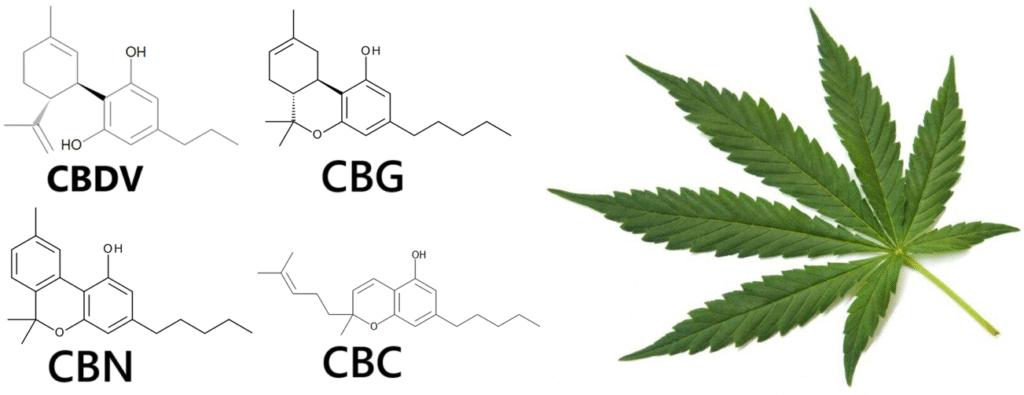
A newly published study in the journal Cannabis and Cannabinoid Research has found that cannabigerol (CBG), one of the lesser-known cannabinoids gaining popularity in consumer markets, does not exhibit acute or long-term toxicity in preclinical models. In fact, researchers observed evidence that CBG may increase thermotolerance, preserve late-life mobility, and extend mean lifespan in a …
Category: Cannabinoid Studies
Research and studies on minor cannabinoids like CBG, CBN, THCV and others, covering their potential effects, medical uses and scientific findings.
Study: Cannabigerol (CBG) Shown to Reduce Liver Fibrosis by Targeting Lipid Build-Up and Inflammation
Cannabigerol (CBG), a non-psychoactive cannabinoid, may offer a new treatment pathway for liver fibrosis by addressing both fat accumulation and inflammation, according to the results of a new study from researchers in South Korea. The study, published in the journal Biomedicine & Pharmacotherapy and conducted by scientists at Ewha Womans University and The Catholic University of …
Study: Topical Use of Cannabigerol (CBG) Shown to Reduce Rosacea Symptoms
A new study published in the International Journal of Molecular Sciences finds that topical application of cannabigerol (CBG) may effectively reduce symptoms of rosacea by targeting inflammation and vascular dysfunction. Researchers from The Catholic University of Korea used a mouse model induced with LL-37 to mimic rosacea-like skin inflammation. Mice treated with CBG showed significant …
Study: Cannabigerol (CBG) Reduces Fat Accumulation and Improves Heart Cell Function Under Lipid Overload
According to the results of new study, cannabigerol (CBG), a non-psychoactive cannabinoid, may help protect heart cells from lipid-induced damage by reducing fat accumulation and modulating fatty acid metabolism. Researchers from the Medical University of Bialystok evaluated how different concentrations of CBG (2.5 µM, 5 µM, and 10 µM) affected heart-derived H9c2 cells under lipid …
Study: Cannabidivarin (CBDV) May Help Improve Motor Coordination and Cognitive Function in Rhett Syndrome Patients
Researchers from Universidade de Lisboa and the Gulbenkian Institute of Molecular Medicine have found that chronic administration of cannabidivarin (CBDV), a non-intoxicating cannabinoid, may help alleviate some symptoms of Rett Syndrome in a female mouse model of the disorder. Rett Syndrome is a rare neurodevelopmental condition caused primarily by mutations in the MECP2 gene, which …
Study: Minor Cannabinoids Like CBN and CBC Show Potent Anti-Cancer Effects in Breast Cancer Models
Researchers from the Universidade do Porto have identified promising anti-cancer properties in four lesser-known cannabinoids: cannabigerol (CBG), cannabidivarin (CBDV), cannabinol (CBN), and cannabichromene (CBC). The study, published in Biochimica et Biophysica Acta (BBA) – Molecular and Cell Biology of Lipids, finds that these cannabinoids may play a potential role in treating estrogen receptor-positive (ER+) breast …
Study: Cannabinol (CBN) May Support Neuronal Health and Reduce Cell Stress
New research finds that cannabinol (CBN), a lesser-known compound found in marijuana, could play a protective role in treating neurodegenerative diseases by reducing cell stress and promoting neuronal survival. The study, conducted by scientists from the University of Eastern Piedmont and the University “G. d’Annunzio” Chieti-Pescara and published in the journal Antioxidants, explored the effects …
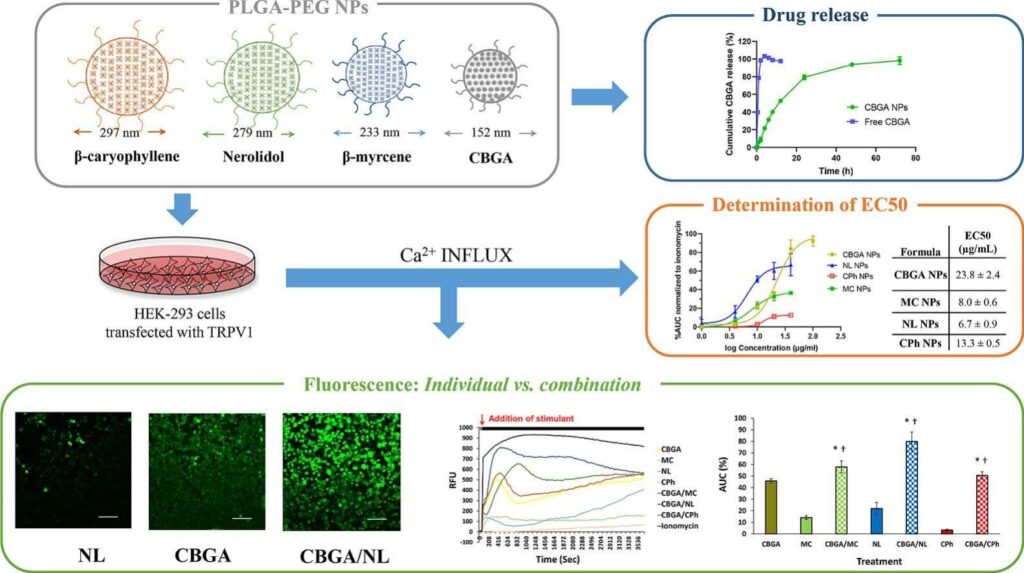
Study: Combining CBGA and Terpenes in Nanoparticle Form May Boost Pain Relief While Lowering Dose Requirements
A study published in the International Journal of Pharmaceutics suggests that combining cannabinoid and terpene nanoparticles could offer enhanced pain-relief effects while requiring lower doses. For the study, researchers encapsulated cannabigerolic acid (CBGA) and three cannabis-derived terpenes—myrcene, nerolidol, and caryophyllene—into biodegradable nanoparticles, then tested them alone and in combination for their ability to activate the …