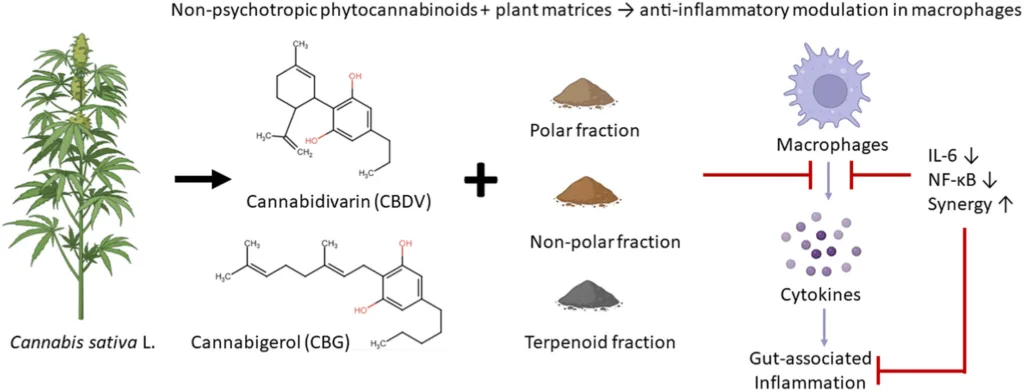
A new study published by the Journal of Ethnopharmacology suggests that several non-intoxicating compounds found in marijuana may have meaningful anti-inflammatory effects, particularly when combined with other components naturally present in the plant. The research was conducted by scientists from the University of Chemistry and Technology and the Academy of Sciences of the Czech Republic.
Category: Cannabinoid Studies
Research and studies on minor cannabinoids like CBG, CBN, THCV and others, covering their potential effects, medical uses and scientific findings.

Study: Cannabinoids Show Selective Antibacterial Effects Against Common Dental Pathogens
A new study published by the International Journal of Molecular Sciences reports that several cannabinoids may have antibacterial activity against specific bacteria commonly linked to persistent endodontic infections.
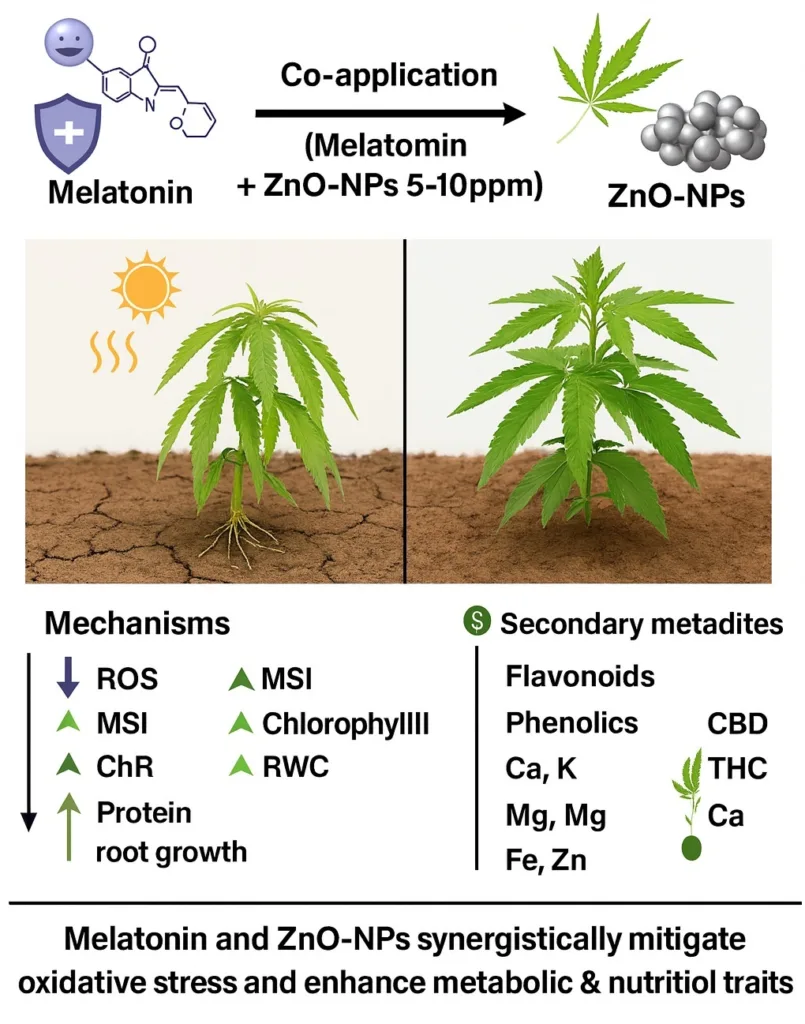
Study: Melatonin and Zinc Oxide Nanoparticles Boost Growth, Stress Tolerance, and Cannabinoid Production in Cannabis sativa
Researchers from the Graduate University of Advanced Technology in Iran report in a new study that a combined treatment of melatonin and zinc oxide nanoparticles can significantly improve growth, stress tolerance, nutrient uptake, and cannabinoid production in Cannabis sativa. The study, published in the journal Plant Nano Biology, is titled Synergistic Effects of Melatonin and …

Study: Rare Varin Cannabinoids Show Potent Anticancer Activity in Lab Tests
A new study published in Natural Product Research reports that two rare varin-type cannabinoids may offer meaningful anticancer potential, with researchers identifying strong cytotoxic effects in breast and colon cancer cell lines. The work was conducted by a team at the Indian Institute of Integrative Medicine, who developed a method to generate hard-to-access cannabinoids from …

Study: Cannabinoids Like CBGA, CBN, and CBG May Reduce HIV-Related Pain
Researchers at the University of Mississippi have found that several minor cannabinoids may help alleviate HIV-associated pain, offering potential new directions for personalized treatment. The study, published in NeuroImmune Pharmacology and Therapeutics, explored how cannabinoids interact with the HIV-1 regulatory protein Tat, which plays a role in chronic pain among people living with HIV (PLWH). …

Study: Cannabigerol (CBG) Shown Safe in Preclinical Models, May Boost Lifespan and Mobility
A newly published study in the journal Cannabis and Cannabinoid Research has found that cannabigerol (CBG), one of the lesser-known cannabinoids gaining popularity in consumer markets, does not exhibit acute or long-term toxicity in preclinical models. In fact, researchers observed evidence that CBG may increase thermotolerance, preserve late-life mobility, and extend mean lifespan in a …
Study: Cannabigerol (CBG) Shown to Reduce Liver Fibrosis by Targeting Lipid Build-Up and Inflammation
Cannabigerol (CBG), a non-psychoactive cannabinoid, may offer a new treatment pathway for liver fibrosis by addressing both fat accumulation and inflammation, according to the results of a new study from researchers in South Korea. The study, published in the journal Biomedicine & Pharmacotherapy and conducted by scientists at Ewha Womans University and The Catholic University of …
Study: Topical Use of Cannabigerol (CBG) Shown to Reduce Rosacea Symptoms
A new study published in the International Journal of Molecular Sciences finds that topical application of cannabigerol (CBG) may effectively reduce symptoms of rosacea by targeting inflammation and vascular dysfunction. Researchers from The Catholic University of Korea used a mouse model induced with LL-37 to mimic rosacea-like skin inflammation. Mice treated with CBG showed significant …
Study: Cannabigerol (CBG) Reduces Fat Accumulation and Improves Heart Cell Function Under Lipid Overload
According to the results of new study, cannabigerol (CBG), a non-psychoactive cannabinoid, may help protect heart cells from lipid-induced damage by reducing fat accumulation and modulating fatty acid metabolism. Researchers from the Medical University of Bialystok evaluated how different concentrations of CBG (2.5 µM, 5 µM, and 10 µM) affected heart-derived H9c2 cells under lipid …

Study: Cannabidivarin (CBDV) May Help Improve Motor Coordination and Cognitive Function in Rhett Syndrome Patients
Researchers from Universidade de Lisboa and the Gulbenkian Institute of Molecular Medicine have found that chronic administration of cannabidivarin (CBDV), a non-intoxicating cannabinoid, may help alleviate some symptoms of Rett Syndrome in a female mouse model of the disorder. Rett Syndrome is a rare neurodevelopmental condition caused primarily by mutations in the MECP2 gene, which …
Sponsored