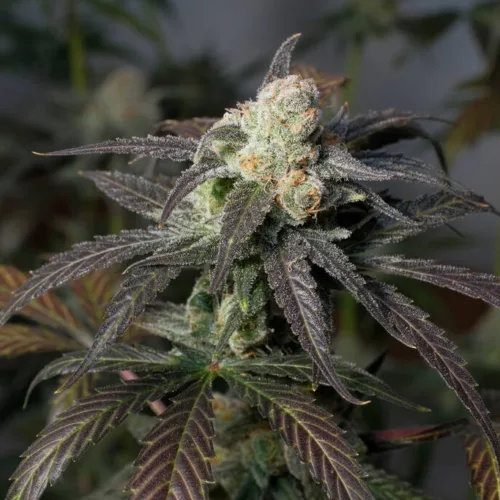
(Photo credit: Releaf).
A cannabis extract rich in cannabidiolic acid produced substantially stronger inhibition of sodium channels associated with epilepsy than purified CBDA alone, according to a laboratory study published by Phytomedicine.
The research was conducted by scientists from the National University of La Plata, Argentina’s National Scientific and Technical Research Council and the Scientific Research Commission of Buenos Aires Province.
CBDA is the acidic precursor to cannabidiol, commonly known as CBD. It occurs naturally in raw cannabis and is converted into CBD when exposed to heat through a process known as decarboxylation.
For the study, researchers examined the effects of purified CBDA and a CBDA-rich ethanolic cannabis extract on human NaV1.2 voltage-gated sodium channels. These channels help regulate electrical signaling in the brain and are considered a clinically relevant molecular target in epilepsy.
Purified CBDA significantly reduced NaV1.2 electrical currents, with a half-maximal inhibitory concentration of 1.4 micromolar. It did not change the voltage required to activate the channels but stabilized them in their inactive state, slowed their recovery and produced a pronounced use-dependent blockade.
A use-dependent blockade means the inhibitory effects became stronger as the channels were repeatedly activated, a mechanism that may be relevant to the excessive neuronal activity associated with seizures.
The CBDA-rich extract produced similar effects but inhibited the sodium channels considerably more strongly than purified CBDA.
Researchers also separately evaluated two major components of the extract — its essential oil fraction and neutral CBD — to determine whether either could explain the enhanced activity. Neither altered channel activation, while only the relatively low concentration of CBD present in the extract produced a significant change in channel inactivation.
The findings suggest the stronger effects of the extract may result from interactions among multiple cannabis compounds rather than CBDA, CBD or the essential oil fraction acting independently.
Researchers said the results identify NaV1.2 channels as a molecular target of CBDA and provide a possible biological explanation for reports of stronger anticonvulsant activity from CBDA-enriched cannabis preparations compared with isolated compounds.
They said the findings support further preclinical evaluation of specifically defined cannabis varieties and extracts as multicomponent treatments for disorders involving abnormal neuronal sodium-channel activity.