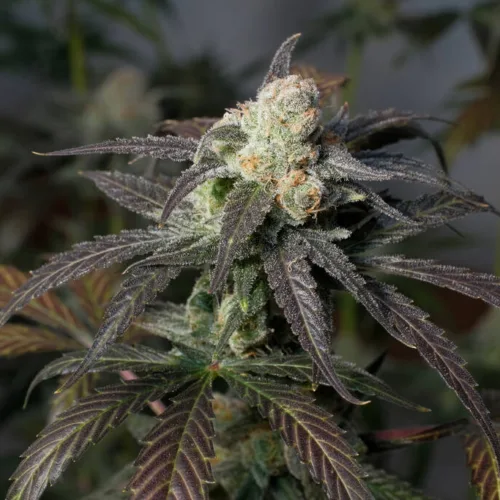
The Georgia Supreme Court has revived a lawsuit from a licensed hemp grower seeking compensation for about $37,000 in crop damage allegedly caused by low-flying state aircraft during a drug-suppression operation.
In a September 9 ruling, the state Supreme Court reversed a Georgia Court of Appeals decision that had dismissed the case, finding that the state’s exercise of its broad “police power” does not automatically exempt the government from constitutional requirements to compensate property owners when private property is taken or damaged for a public purpose.
The case was brought by Blue 42 Organics, which operates a licensed hemp farm in Dahlonega and was properly registered with both the Georgia Department of Agriculture and U.S. Department of Agriculture. As part of the registration process, the company had provided the GPS coordinates of its operation.
According to the lawsuit, the Georgia Department of Public Safety, acting through the Governor’s Drug Suppression Task Force, conducted an operation near the farm in July 2021. Blue 42 alleges that helicopters and a fixed-wing aircraft flew at low altitude over the property, destroying two rows of hemp crops valued at approximately $37,000.
The company also alleges that cattle grazing on the property were harassed by the low-flying aircraft, potentially jeopardizing its ability to renew leases for grazing land.
Blue 42 subsequently sued the Department of Public Safety through an inverse condemnation claim, which allows a property owner to seek compensation when the government allegedly takes or damages property for a public purpose without formally using eminent domain.
The state sought dismissal on sovereign immunity grounds, arguing that Blue 42 did not have a viable inverse condemnation claim because the damage allegedly occurred while officials were exercising the state’s police powers. A trial court agreed, and the Georgia Court of Appeals upheld that decision in 2025.
The Supreme Court rejected the broader legal rule applied by the lower courts.
“Nothing in the text or history of the Just Compensation Clause supports a categorical exemption for all exercises of the police power,” Chief Justice Nels Peterson wrote for the court.
Georgia case law does recognize limited circumstances in which government can destroy property without compensating its owner, the court said. Those include the destruction of property during situations of urgent necessity, such as stopping a spreading fire, and the destruction or abatement of property that constitutes a nuisance.
But the allegations in Blue 42’s complaint did not establish either circumstance.
The court noted that Blue 42 was operating a lawful, licensed hemp farm and that, at this stage of the case, there was no indication that the farm constituted a nuisance. The complaint also did not describe an emergency requiring immediate destruction of the crops.
The justices also overruled a 1966 Court of Appeals precedent, McCoy v. Sanders, along with similar decisions to the extent they held that Georgia’s constitutional compensation protections do not apply simply because government officials were acting under the state’s police power. The Supreme Court said such a sweeping exemption could effectively “swallow the just compensation rule.”
The ruling does not mean Blue 42 has established that it is entitled to the $37,000 or any other compensation. The Supreme Court stressed that further proceedings could determine that another legal exception applies or that the company’s inverse condemnation claim fails for another reason.
Instead, the decision means the lawsuit cannot be dismissed solely because the alleged damage occurred during a law enforcement operation.
“Because the allegations show only that DPS was conducting a routine law enforcement exercise,” the court concluded, the lower court erred in treating police power as a categorical bar to the claim. The judgment was reversed, with all participating justices concurring. Justice Benjamin Land was disqualified from the case.