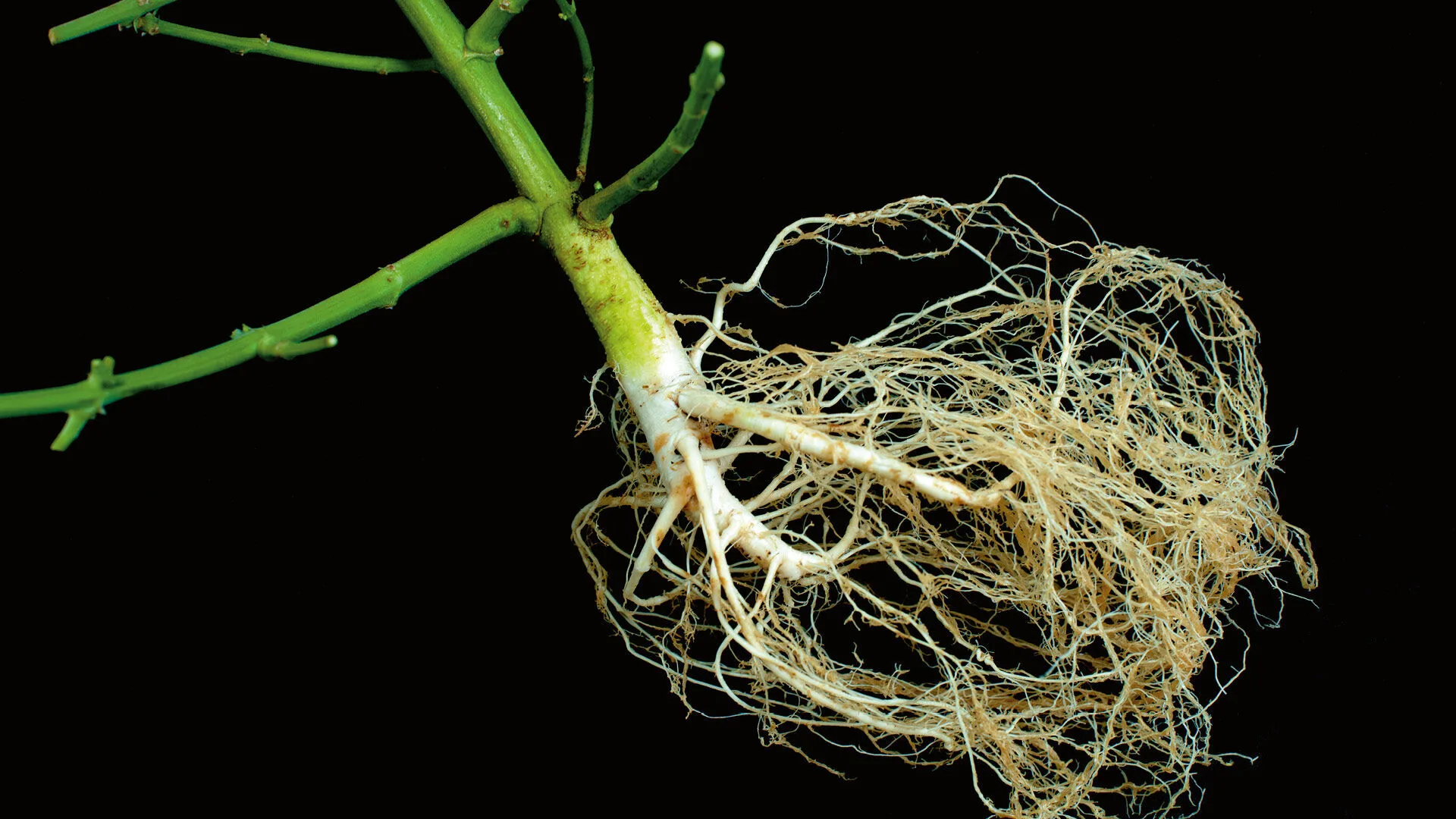
Cannabis root (photo credit: Hanafsan).
A new study found that nanovesicles derived from Cannabis sativa roots suppressed tumor growth and restored key immune responses in mice, suggesting potential future use in cancer immunotherapy.
The study, published September 14 in npj Science of Food, was conducted by researchers from the Korea Research Institute of Bioscience and Biotechnology and Chungnam National University in South Korea. The researchers examined nanovesicles isolated from cultivated Cannabis sativa hairy roots, a plant-tissue system often used in biotechnology research.
According to the study, the cannabis root-derived nanovesicles had an average diameter of 113 nanometers and remained structurally stable under simulated gastrointestinal conditions, indicating they may be suitable for oral administration.
Researchers found the nanovesicles promoted the maturation of dendritic cells through Toll-like receptor 2 and Toll-like receptor 4 signaling without causing cytotoxicity. Dendritic cells play a critical role in activating immune responses.
In animal testing, the nanovesicles also appeared to counter the effects of cyclophosphamide-induced immunosuppression. Mice given the treatment showed restored T-cell populations, along with stronger T helper 1 and cytotoxic T lymphocyte responses. The treatment also reduced elevated alanine aminotransferase levels and restored catalase activity, suggesting a protective effect against some chemotherapy-related physiological damage.
In a tumor-bearing mouse model, the nanovesicles significantly suppressed tumor progression. Researchers said this was associated with increased tumor-fighting Th1 and cytotoxic T-cell responses, along with reductions in Th2 and regulatory T-cell populations, which can dampen anti-tumor immune activity.
The researchers concluded that “C. sativa hairy root-derived nanovesicles represent a stable immunomodulatory platform with potential applications in cancer immunotherapy and other diseases requiring enhanced cellular immune responses.”
The full text of the study can be found by clicking here.