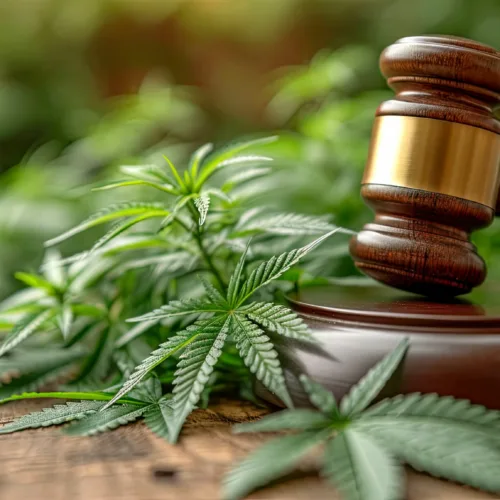
Thailand’s Cabinet has approved legislation that would restrict marijuana use primarily to medical purposes and research while prohibiting recreational consumption, advancing a major overhaul of the country’s marijuana laws.
The Cabinet approved the proposed Cannabis Control Act on Tuesday, September 22, according to the Thailand Ministry of Public Health. The measure would establish a dedicated national regulatory framework for marijuana and impose new restrictions on cultivation, sales, advertising and consumption.
Under the proposal, marijuana and marijuana extracts could be used to treat medical conditions under the supervision of authorized health professionals or for legally authorized research. Recreational use would not be allowed.
The bill would require licenses for the cultivation, production, import, export and sale of marijuana. Licenses would be issued by the director-general of Thailand’s Department of Thai Traditional and Alternative Medicine and would remain valid for three years.
Sales of certain parts of the plant, including roots, branches, leaves, stems and seeds, would be exempt from the licensing requirement.
The legislation would also prohibit marijuana sales to people younger than 20, pregnant women and breastfeeding women.
Sales would be prohibited at a variety of locations considered particularly sensitive, including temples, educational institutions, dormitories, public parks, zoos and amusement parks.
Advertising, promotion and marketing involving marijuana flower, marijuana resin and smoking equipment would also be prohibited.
The proposal establishes criminal and civil penalties for violations. People who manufacture, import, export or sell marijuana without the required authorization, as well as those who illegally sell to minors or pregnant women, could face imprisonment and fines. Unauthorized marijuana use would be subject to fines.
Public Health Minister Pattana Promphat said the legislation is intended to create a comprehensive marijuana regulatory system while balancing medical use with protections against inappropriate consumption.
The Cabinet vote follows a months-long process that included public consultation and a regulatory impact assessment. The Thai government opened a second round of public comments on the legislation in June before sending the measure to the Ministry of Public Health and subsequently to the Cabinet.
Cabinet approval does not make the proposal law. Bills in Thailand must still go through the country’s legislative process before taking effect, including consideration by the House of Representatives and Senate.
The Ministry of Public Health said the legislation is intended to close gaps in Thailand’s existing marijuana regulations and create a clearer nationwide system governing the industry.
If enacted, the measure would represent a significant tightening of Thailand’s marijuana policy, establishing in statute that legal use is centered on medical treatment and research rather than recreational consumption.