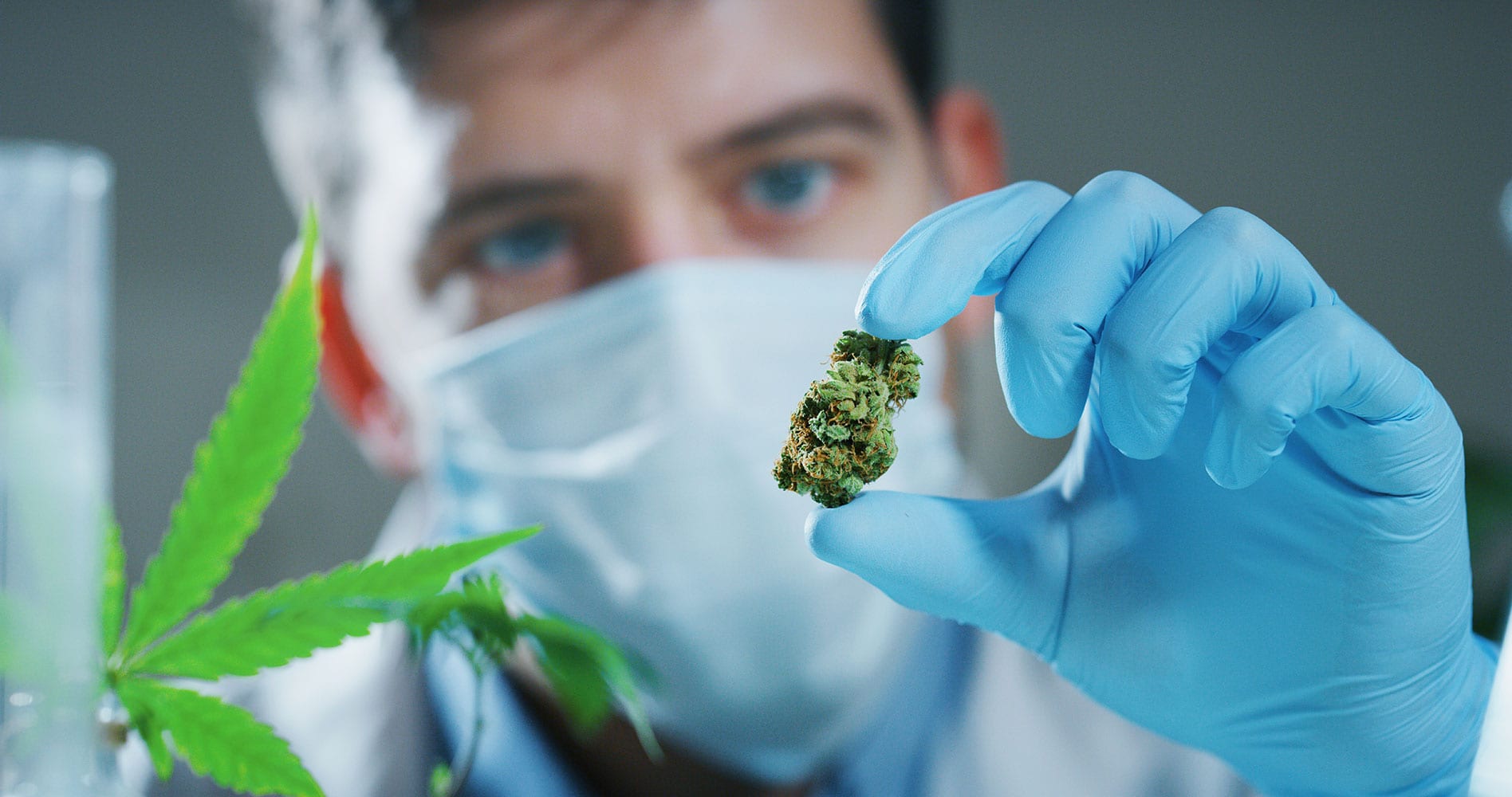
The Oregon Health Authority (OHA) has proposed a broad set of changes to the state’s marijuana testing rules, including a new pathway for processors to retest cannabinoid products when potency results fall more than 10% outside an intended target.
OHA filed the proposed amendments September 30, covering testing rules in Oregon Administrative Rules Chapters 333, Divisions 7 and 64. The agency says the changes are intended to improve accuracy and consistency across laboratories while addressing ambiguities and outdated provisions.
One of the most significant changes would allow marijuana businesses to provide laboratories with a “target potency” before a cannabinoid product is sampled. If testing comes back more than 10% above or below that target — but the product otherwise remains within legal potency limits — the business could request a reanalysis or retest.
Current rules do not allow retesting solely because a product missed its intended potency target. Before requesting another test under the proposal, the business would have to investigate the discrepancy, document the investigation and any corrective action, and make that documentation available to OHA or the Oregon Liquor and Cannabis Commission (OLCC) upon request.
OHA says the change could improve labeling accuracy and reduce unnecessary product waste. The final potency result obtained through the process would become the official result.
The proposal would also clarify that a cannabinoid product fails potency testing if even one individual sample exceeds the maximum concentration allowed under OLCC rules, even when the average of multiple samples remains within the legal limit. OHA says that provision had inadvertently been removed during an earlier rule change.
Other changes would establish new standards for products containing relatively low levels of CBD. Concentrates, extracts, finished inhalable products and hemp-derived vapor items containing at least 10 milligrams but less than 50 milligrams of total CBD would fail homogeneity requirements when the relative percent difference or relative standard deviation exceeds 50%. Products failing under that provision could be remediated through remixing.
Pesticide-testing provisions would also be clarified. Abamectin would be measured as the combined residue of avermectin B1a and B1b, while spinosad would be measured using the combined residues of Spinosyn A and Spinosyn D. OHA says the changes are intended to better align testing with federal approaches and reduce inaccurate results.
Laboratories would face additional data-integrity requirements. The proposed rules would prohibit practices including fabricating or misrepresenting testing data, unjustified manipulation of samples or analytical conditions and manipulating laboratory software to force calibration or quality-control data into acceptable ranges. Labs would also be required to train personnel on those prohibitions.
The rules would require laboratories to avoid rounding results during intermediate calculation steps, while setting new quantitation requirements for individual THC and THCA measurements. Additional changes scheduled for March 1, 2027, would require marijuana flower to be homogenized to a maximum particle size of 1 millimeter and would expand information required on laboratory reports.
OHA will hold a public hearing on the proposal October 19 at 1 p.m. Pacific time. Written comments will be accepted through 5 p.m. October 21, with final rules to be filed after the agency considers public input.



Related posts:

Maryland Issues Guidance Allowing Dispensaries to Continue Selling Hemp-Derived Products That Don't ...

California Proposes Ending Random Marijuana Testing for State Corrections Officers, Expanding Off-Du...