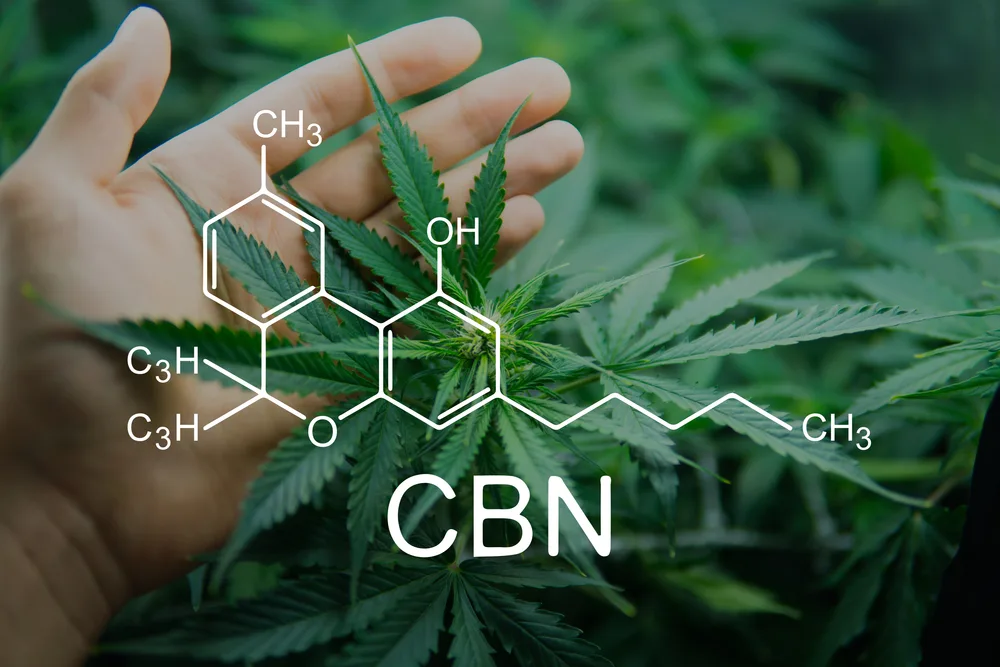
Cannabinol (CBN) reduced the severity of eczema-like skin disease in mice, including abnormal skin thickening and inflammatory activity, according to a study published this month in Mediators of Inflammation. The research also examined human patient samples and laboratory-grown skin cells to investigate how the cannabinoid works.
The study focused on atopic dermatitis, a chronic inflammatory skin condition. According to its abstract, researchers found elevated levels of two receptors, TRPV1 and CB2, in affected patients’ skin and blood immune cells, with receptor expression associated with disease severity.
Researchers then tested CBN in mice with chemically induced dermatitis. Treatment reduced clinical severity, excessive growth of the skin’s outer layer and infiltration by mast cells, which participate in inflammatory responses.
CBN also reduced several inflammatory signals and suppressed activation of JAK2 and STAT6, proteins involved in transmitting immune signals within cells. Other signaling proteins showed less consistent changes.
Experiments using human skin cells provided additional evidence of the mechanism. Reducing expression of either TRPV1 or CB2 eliminated CBN’s additional suppression of JAK2/STAT6 signaling.
“Collectively, these findings suggest that CBN attenuates AD‐like inflammation in association with TRPV1/CB2R‐dependent modulation of JAK2/STAT6 signaling and support further investigation of CBN as a potential therapeutic candidate for AD”, concludes the study.
The study’s full abstract can be found below:
Background Atopic dermatitis (AD) is a chronic inflammatory skin disease driven by dysregulated Th2 immunity and impaired skin barrier function. Transient receptor potential vanilloid 1 (TRPV1) and cannabinoid receptor type 2 (CB2R) are implicated in cutaneous neuroinflammation and immune dysregulation in AD. Cannabinol (CBN), a phytocannabinoid with anti‐inflammatory properties, represents a candidate therapeutic agent; however, its effects on TRPV1/CB2R expression and downstream JAK/STAT signaling in AD have not been characterized. Objective To examine TRPV1 and CB2R expression in AD patient skin and peripheral blood mononuclear cells (PBMCs), and to evaluate the therapeutic effects of CBN in a murine AD model and cytokine‐stimulated keratinocytes. Methods TRPV1 and CB2R expression was assessed by immunofluorescence in skin biopsies and by western blotting in PBMCs from healthy controls and AD patients stratified by disease severity. 2,4‐Dinitrochlorobenzene (DNCB) ‐induced BALB/c mice were treated with CBN (5 or 50 μg/kg) or tacrolimus (0.03%) and evaluated by clinical scoring, histology, qRT‐PCR, and western blotting. IL‐4/IL‐13–stimulated HaCaT keratinocytes were used to assess CBN effects in vitro. Results TRPV1 and CB2R expression was elevated in AD patient skin, PBMCs, and murine lesions, correlating with disease severity. CBN reduced clinical severity, epidermal hyperplasia, mast cell infiltration, and expression of Tslp , Il4 , Il13 , Il31 , Ifng , Il1b , Il6 , and Il22 . CBN significantly attenuated JAK2 and STAT6 phosphorylation in DNCB‐induced skin, whereas JAK1, STAT1, and STAT3 showed less consistent changes. In IL‐4/IL‐13‐stimulated keratinocytes, siRNA‐mediated knockdown of TRPV1 or CB2R eliminated the additional suppression of JAK2/STAT6 phosphorylation observed with CBN treatment, supporting TRPV1/CB2R‐dependent regulation of this signaling axis. Conclusion Collectively, these findings suggest that CBN attenuates AD‐like inflammation in association with TRPV1/CB2R‐dependent modulation of JAK2/STAT6 signaling and support further investigation of CBN as a potential therapeutic candidate for AD.