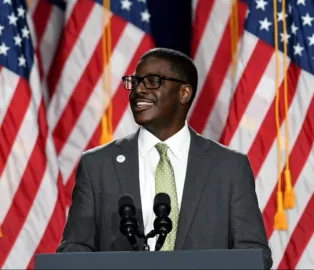
Democrat Troy Jackson has defeated longtime Republican Senator Susan Collins in Maine’s U.S. Senate race, sending to Washington a former state Senate president who supports recreational marijuana legalization and has voted to urge Congress to expand banking access for legal marijuana businesses.
Jackson, who served in the Maine Legislature for roughly two decades and was president of the state Senate from 2018 to 2024, has supported implementing Maine’s voter-approved recreational marijuana law, decriminalization and expanded medical marijuana access. His record places him among incoming lawmakers with experience supporting state-level marijuana reform.
One of the clearest indications of Jackson’s position on federal marijuana policy came in January 2020, when he voted in favor of a joint resolution urging Congress to provide banking and insurance protections to legal marijuana businesses. The resolution passed the Maine Senate 24 to 8, with Jackson among those voting in support.
The resolution called on Congress to address the conflict between state and federal marijuana laws, which has prevented many marijuana businesses from obtaining traditional banking and insurance services. It noted that operating primarily in cash creates financial inefficiencies and public safety concerns, while urging federal lawmakers to adopt protections that respect state marijuana laws.
Jackson has also supported allowing marijuana to be used for post-traumatic stress disorder, reflecting his broader record on medical marijuana access. During his time in the Legislature, Maine continued implementing and expanding its regulated marijuana market following voters’ approval of legalization in November 2016.
Collins, who was first elected to the Senate in 1996, also supported certain federal marijuana reforms, including cosponsoring marijuana banking legislation and backing protections for state medical marijuana programs. However, she opposed nationwide recreational marijuana legalization, creating a distinction between her approach and Jackson’s support for adult-use legalization at the state level.