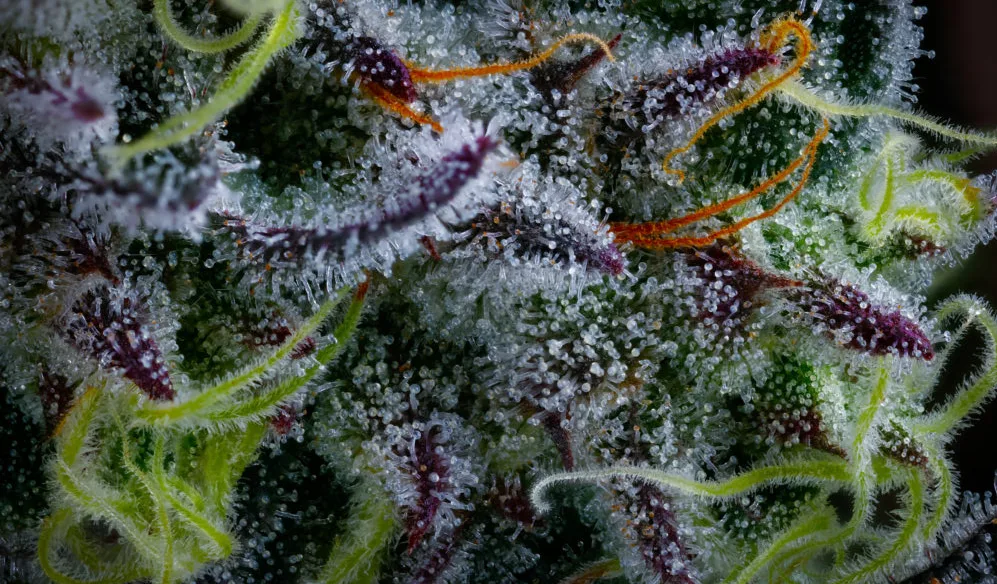
(Photo credit: Craig Barker Photography).
A new review of 28 randomized clinical trials involving 3,058 adults has found that THC significantly reduces chronic pain compared with a placebo, while a combination of THC and cannabidiol (CBD) significantly improves sleep quality among patients experiencing persistent pain.
The study, published November 3 in the peer-reviewed journal Frontiers in Pharmacology, was conducted by researchers affiliated with Hubei University of Medicine, Taihe Hospital, Guilin Medical University and Sinopharm Dongfeng General Hospital in China. Researchers conducted a systematic review and network meta-analysis to compare the effectiveness of different cannabinoid treatments for chronic pain, including how results varied by the type of pain and method of administration.
The analysis examined randomized controlled trials involving patients with chronic pain lasting longer than three months, including neuropathic pain, cancer-related pain, fibromyalgia and other conditions. Researchers compared treatments containing tetrahydrocannabinol (THC), CBD, combinations of the two cannabinoids and palmitoylethanolamide (PEA), a naturally occurring lipid compound involved in pain signaling.
For pain relief, THC demonstrated a statistically significant advantage over placebo, with a standardized mean difference of -0.41 and a 95% confidence interval ranging from -0.74 to -0.07. Researchers classified the evidence supporting this finding as low certainty, reflecting limitations in the underlying clinical studies.
The findings for sleep were particularly notable. Across 13 trials involving 1,679 participants, THC-CBD combination treatments significantly improved sleep quality compared with placebo, with a standardized mean difference of -0.43. The evidence supporting this result was rated moderate certainty, a stronger classification than that assigned to the overall pain-relief finding for THC.
The THC-CBD combination also ranked highest among the evaluated treatments for improving sleep quality. This finding was consistent with additional analyses examining patients with different types of chronic pain and those receiving cannabinoids through different administration methods.
Researchers found that the method of administration appeared to influence pain relief. THC-CBD combinations delivered through sprays and sublingual formulations, which are administered under the tongue, demonstrated statistically significant improvements in pain compared with placebo in subgroup analyses. The findings suggest that both cannabinoid composition and administration method may influence treatment outcomes, although the researchers described these comparisons as preliminary.
The analysis also identified differences between cancer-related and non-cancer-related pain. CBD demonstrated a significant benefit for cancer-related pain in a subgroup analysis, while its overall effect across all chronic pain conditions was not statistically significant.
PEA produced the strongest overall ranking for pain relief, although researchers rated the evidence for its effectiveness as very low certainty. Unlike THC and CBD, PEA is not a cannabinoid derived from marijuana, but a naturally occurring compound associated with the body’s endocannabinoid-related signaling systems.
Researchers also evaluated treatment-related adverse events. THC-containing treatments were associated with higher rates of dizziness and drowsiness, while THC-CBD combinations were additionally associated with increased nausea. However, the analysis found no statistically significant differences for several other outcomes, including physical functioning, emotional functioning, anxiety and depression.
Of the 28 randomized trials examined, 15 were rated as having a low risk of bias, while 13 raised some concerns, primarily involving missing follow-up data. None was classified as having a high overall risk of bias. The studies also varied considerably in their treatment formulations, underlying pain conditions and administration methods, and none followed patients for longer than five and a half months.
The researchers concluded that THC and certain cannabinoid-based treatments can provide measurable benefits for chronic pain and related sleep disturbances, with the strongest evidence in the review supporting improvements in sleep quality from THC-CBD combinations.
The findings add to a growing body of clinical research examining marijuana-derived treatments for persistent pain, while providing a more detailed comparison of individual cannabinoids, combinations and administration methods than traditional reviews that assess marijuana-based treatments as a single category.