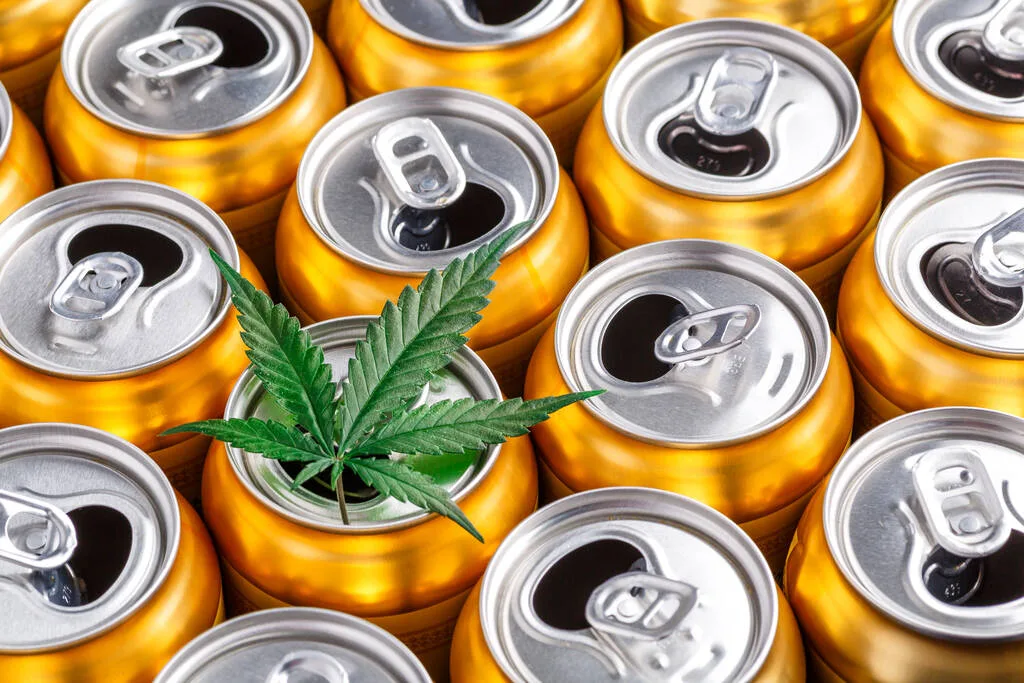
Delaware’s new law regulating THC-infused beverages takes effect tomorrow, October 21, allowing approved businesses to manufacture, distribute and sell THC drinks through licensed liquor stores, marijuana dispensaries and certain microbreweries.
The law, established under House Bill 373 and signed on July 23, creates a regulated market for nonalcoholic beverages containing delta-9 THC. According to the Delaware Office of the Marijuana Commissioner, the products will be subject to requirements covering potency, testing, labeling, packaging and distribution. Sales will be restricted to adults 21 and older, with consumption prohibited at the point of sale.
Under the new regulations, individual beverage containers can contain up to 10 milligrams of THC, while multipacks can contain a combined maximum of 60 milligrams. Larger 750-milliliter bottles may contain up to 170 milligrams. The beverages cannot contain alcohol, and the intoxicating THC must come from qualifying delta-9 extracts.
Unlike traditional marijuana products, which are generally restricted to licensed dispensaries, the new framework allows THC beverages to be sold through liquor stores and authorized microbreweries. Businesses must obtain the appropriate state authorizations before participating, meaning the law taking effect Wednesday does not necessarily mean products will immediately be available at every eligible retailer.
Manufacturers and importers seeking a standard infused beverage endorsement face an initial application fee of $1,500 and a $1,000 renewal fee. Reduced fees of $600 initially and $400 for renewal apply to qualifying social equity and microbusiness applicants.
Delaware will also impose a tax of $0.50 per single-serving beverage container and $8.50 per 750-milliliter bottle. However, those taxation provisions will not take effect until February 1, 2027, giving businesses additional time before the new taxes begin.
The regulations require THC beverages to undergo testing and comply with state safety standards, while manufacturers and distributors must follow tracking and reporting requirements. The Office of the Marijuana Commissioner will oversee the infused beverage endorsement program, with the state’s alcohol regulatory authorities also involved in authorizing sales through liquor stores and microbreweries.
The changes follow Delaware’s launch of legal adult-use marijuana sales in August 2025 and establish a separate retail channel for THC beverages that extends beyond the state’s marijuana dispensaries.