A federal appeals court has ordered a lower court to reconsider a man’s request to withdraw his guilty plea for possessing firearms while using controlled substances, citing the U.S. Supreme Court’s June ruling that the government cannot automatically prohibit someone from owning guns simply because they regularly use marijuana.
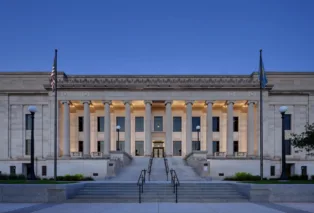
In a seven-page opinion issued Monday, October 26, the U.S. Court of Appeals for the 11th Circuit directed a federal district court in Georgia to reconsider the case of David Gibson, who pleaded guilty to violating 18 U.S.C. § 922(g)(3), a federal law prohibiting unlawful users of controlled substances from possessing firearms.
Gibson received a 30-month prison sentence after authorities executing a search warrant at his residence in November 2022 discovered 26 firearms. According to court records, Gibson acknowledged using marijuana and methamphetamine, including smoking methamphetamine the night before and the morning of the search.
He subsequently challenged his guilty plea, arguing that he had not been adequately informed of the legal requirements for a conviction and that his plea was involuntary.
While his appeal was pending, the Supreme Court issued its June 18 decision in United States v. Hemani, finding that federal prosecutors could not automatically strip a person of their Second Amendment rights based solely on regular marijuana use without evidence establishing a constitutionally sufficient justification.
The 11th Circuit said the Supreme Court’s ruling raised questions about whether Gibson’s original guilty plea was legally valid, particularly regarding what prosecutors must establish to secure a conviction under the federal firearms prohibition.
The appeals court noted that the Supreme Court left several questions unresolved, including whether prosecutors can enforce the prohibition against individuals whose drug use demonstrates that they pose a danger to themselves or others.
The judges also acknowledged that no federal appeals court had yet established a clear standard for determining what evidence is constitutionally sufficient to support a conviction under the statute following Hemani.
Because of that uncertainty, the court directed the district judge to reconsider Gibson’s request to withdraw his plea after receiving additional arguments from both sides.
The appeals court did not overturn Gibson’s conviction or find the federal firearms prohibition unconstitutional in all circumstances. It specifically rejected his broader constitutional challenge and his claim that the prosecution’s evidence was insufficient, while retaining jurisdiction over the remaining appeal.
The decision represents another application of the Supreme Court’s marijuana-related firearms ruling, with the Gibson case raising additional questions because it involves methamphetamine use as well as marijuana.
The district court must now reconsider the plea withdrawal request and notify the 11th Circuit of its decision before the appeals court determines how to proceed.



Related posts:
U.S. Supreme Court Gives Washington Just Four More Days in Marijuana Residency Case After State Requ...
Washington Seeks Second Delay in U.S. Supreme Court Marijuana Residency Case, Drawing Opposition Fro...